
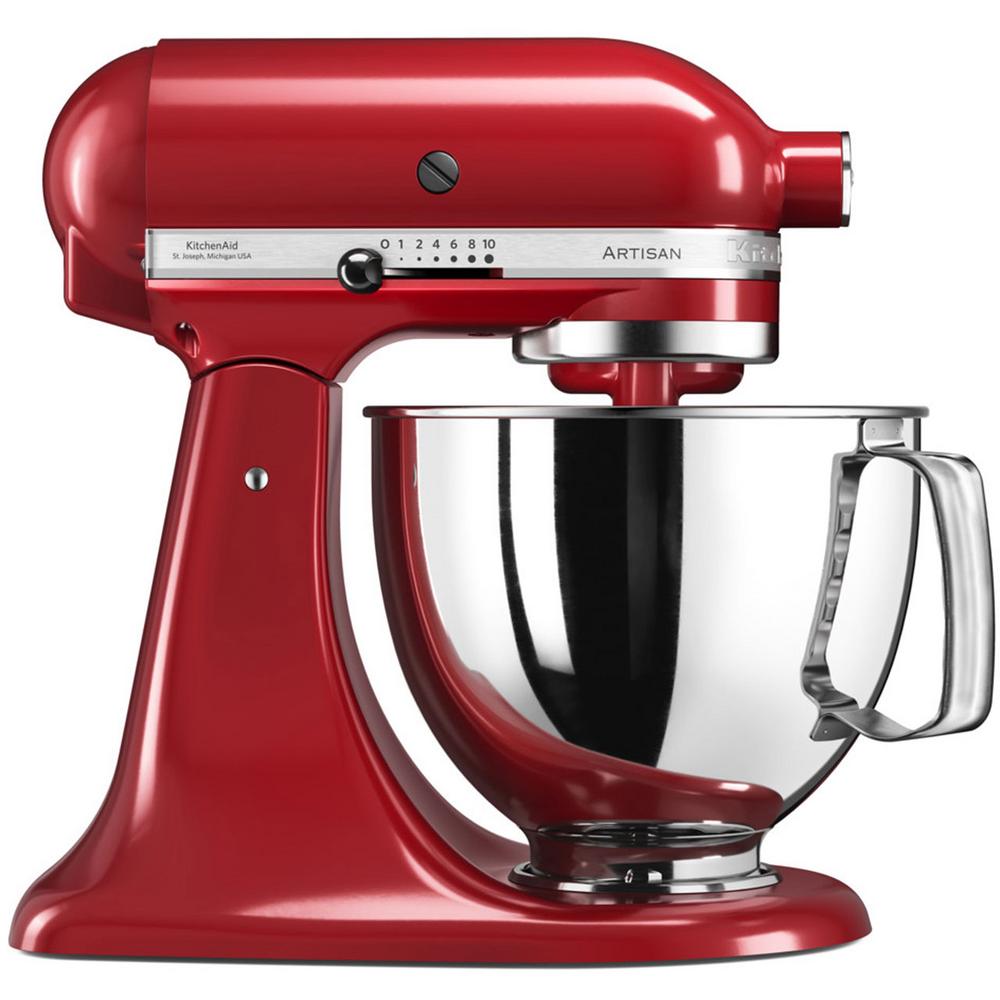
If you love to bake, a stand mixer can quickly become the hardest-working appliance in your kitchen. The KitchenAid Artisan 5KSM125BAC Stand Mixer in Almond Cream is a classic example: solid, stylish and designed to sit permanently on the worktop rather than be dragged in and out of a cupboard. This guide looks at what it’s like to live with a mixer of this style, how to choose between similar Artisan models, and how to get the most out of your investment over the long term.
Why the KitchenAid Artisan style of stand mixer is so popular
The KitchenAid Artisan range has become a bit of an icon in home baking. The 5KSM125BAC Stand Mixer in Almond Cream pairs that familiar curved, retro shape with a robust metal body and a generous bowl that suits everyday family baking.
Rather than diving into every last technical detail here, it’s worth saying up front that this style of mixer is about three things: consistent results, ease of use and long-term ownership. If you want to dig into performance, attachments and user feedback in more depth, you can always read our full review of the KitchenAid Artisan 5KSM125BAC Stand Mixer.
Choosing the right Artisan stand mixer for your kitchen
Once you’ve decided an Artisan mixer is for you, the next question is which specific model to bring home. With several very similar options in different colours and bundles, it can be confusing at first glance.
Core features you can expect across Artisan-style mixers
Most Artisan stand mixers in this family share a common foundation. You’ll typically get a tilting head for easy bowl access, a substantial stainless steel bowl around the 4.8-litre mark, and the familiar trio of attachments: a beater, dough hook and whisk. Speeds are usually stepped, giving fine control from slow stirring up to fast whipping.
That means if you’re comparing, say, the Almond Cream KitchenAid Artisan 5KSM125BAC with the KitchenAid Artisan 5KSM125BCU Stand Mixer in Silver, you’re mainly choosing on colour and how the mixer will look in your space. Under the paintwork, they’re designed to deliver a very similar day-to-day experience.
When to look at bundle models instead
Some Artisan mixers come in “bundle” variants, often indicated by slightly different model numbers. For instance, the KitchenAid Artisan 5KSM175PSBAC Stand Mixer with 4.8 Litre Bowl adds extra accessories compared with a simpler base package. The same goes for colourful alternatives like the KitchenAid Artisan 5KSM175PSBER Stand Mixer with 4.8 Litre Bowl in Empire Red and the KitchenAid Artisan 5KSM175PSBOB Stand Mixer with 4.8 Litre Bowl in Onyx Black.
Bundle models often include useful additions such as a second bowl, a pouring shield or a flexible-edge beater. If you bake often and hate stopping to wash a bowl halfway through a recipe, or you want to switch between batters and meringue quickly, those extras can be genuinely helpful rather than just nice-to-have.
Living with the KitchenAid Artisan 5KSM125BAC Stand Mixer
The 5KSM125BAC is designed to stay out on the worktop, which is part of its appeal. The Almond Cream finish has a soft, neutral tone that fits nicely with both modern and traditional kitchens, without drawing the eye as much as a bright red or black model.
Owners often find that having a mixer permanently on display changes how they cook. Instead of debating whether it’s worth getting a gadget out for a quick bake, you simply lock the bowl in place and go. For a closer look at how it behaves with different recipes, you can read our full review of the KitchenAid Artisan 5KSM125BAC Almond Cream mixer, which focuses specifically on performance and ease of use.
Typical tasks it handles well
A mixer of this style really earns its keep if you regularly tackle:
- Cake batters, from light sponges to denser traybakes
- Whipped cream and meringue using the balloon whisk
- Bread and pizza dough with the dough hook
- Cookie doughs and brownie mixes that can be tough on a hand mixer
The planetary mixing action is designed to reach all areas of the bowl, reducing the need to scrape down as often. That said, for thicker mixtures or when you’re mixing small quantities, it’s still worth pausing occasionally to check the sides and base.
Capacity and batch sizes
With a bowl of around 4.8 litres, the Artisan format is well suited to most households. You can mix enough batter for a generous layer cake or a big batch of cupcakes in one go, yet it’s not so huge that smaller bakes feel lost at the bottom.
If you usually bake for one or two, you may prefer smaller batch recipes rather than trying to scale down huge quantities. Conversely, if you regularly bake for a large extended family or for events, it might be worth looking at a larger-capacity mixer or planning your recipes around two batches.
Comparing colours and styles: Almond Cream vs Silver, Red and Black
One of the biggest decisions with an Artisan mixer isn’t technical at all – it’s colour. Because this kind of mixer is intended to sit out on display, many buyers treat it as a semi-permanent part of the kitchen design.
Almond Cream vs Silver
The Almond Cream 5KSM125BAC and the KitchenAid Artisan 5KSM125BCU Stand Mixer in Silver will appeal to different tastes. Almond Cream feels warm and soft, ideal if your kitchen has wood, stone and softer hues. Silver has a more contemporary, metallic feel that pairs well with stainless steel ovens and extractors.
In practical terms, lighter cream shades can be good at hiding flour and icing sugar dust, while metallic tones often disguise minor scuffs a little better. Whichever you choose, wiping the body regularly with a soft cloth will keep it looking smart.
Bolder colours: Empire Red and Onyx Black
If you prefer your mixer to make a statement, bundle models like the KitchenAid Artisan 5KSM175PSBER Stand Mixer in Empire Red and the KitchenAid Artisan 5KSM175PSBOB Stand Mixer in Onyx Black are worth considering. Red adds a vibrant focal point and works particularly well in more neutral kitchens where you want a single pop of colour. Black feels sleek and dramatic, especially in industrial or monochrome schemes.
The 5KSM175 bundle configuration for these models means you’re not just choosing a colour; you’re also getting additional accessories compared with a simpler 125 package. If you’ve already fallen for the Almond Cream shade but don’t want to miss out on those extras, the KitchenAid Artisan 5KSM175PSBAC Stand Mixer in Almond Cream bridges that gap neatly.
How to get the best results from an Artisan-style mixer
Owning a stand mixer is one thing; getting consistently great bakes from it is another. A few small habits make a big difference.
Start slow, then build speed
It’s tempting to go straight to a high speed when you’re in a hurry, but starting on the lowest setting helps ingredients combine evenly and stops flour clouds or splashes. Once everything is roughly mixed, you can nudge the speed up to the level your recipe suggests.
For bread doughs and heavier batters, a medium speed is usually more than enough. Pushing the mixer at its highest speeds with very heavy mixtures can put unnecessary strain on the motor and gearbox.
Use the right attachment for the job
The standard attachments each have their strengths:
- Flat beater – for most cake batters, cookie doughs and mashed potatoes.
- Dough hook – for kneading bread, pizza and enriched doughs.
- Wire whisk – for whipping cream, egg whites and light mousses.
Using the wrong attachment can lead to overworking mixtures or under-mixing them, so it’s worth double-checking your recipe’s recommendation before you start.
Don’t overload the bowl
Even though an Artisan mixer bowl is generous, there is a limit to what it can handle comfortably. Overfilling the bowl with very heavy doughs can cause the mixer head to wobble and may shorten the life of the motor if done regularly.
As a rule of thumb, it’s better to mix two medium batches than one enormous one, especially with bread dough. This also gives you more control over kneading time and texture.
Looking after your stand mixer for long-term use
A good stand mixer should be a long-term companion, not a short-lived gadget. A little basic care goes a long way.
Cleaning after each use
After use, remove the bowl and attachments and either rinse them straight away or pop them in the dishwasher if they’re suitable. Wipe down the mixer body with a damp cloth, paying special attention to any splashes around the head, speed control and base.
Avoid harsh scourers or abrasive cleaners, as these can dull the paintwork over time. If anything dries on, soften it with a warm, damp cloth before wiping away.
Checking the beater-to-bowl clearance
Over time, or if the mixer has been moved, you may notice the beater doesn’t quite reach the ingredients at the bottom, or that it taps the bowl. Many tilt-head mixers allow you to adjust the beater height using a small screw (usually located where the head meets the body).
Making small, cautious adjustments can restore that sweet spot where the beater scrapes the mixture cleanly without hitting the bowl. Always refer to your manual for the exact procedure for your model.
When to consider a different Artisan model instead
The Almond Cream KitchenAid Artisan 5KSM125BAC will be a perfect fit for many home bakers, but there are a few reasons you might opt for one of the close alternatives instead.
You want extra accessories out of the box
If your budget stretches to it and you like the idea of a more complete set from day one, the Artisan 175-style bundles are worth a look. The 5KSM175PSBAC, 5KSM175PSBER and 5KSM175PSBOB variants follow the same general format but can include those handy extras like multiple bowls and shields.
That can work out better value than buying certain accessories separately later, particularly if you know you’ll be using the mixer several times a week.
You want the mixer to match your existing appliances
If your kitchen features a lot of stainless steel, chrome or dark finishes, the KitchenAid Artisan 5KSM125BCU in Silver or the Onyx Black 5KSM175 bundle may sit more naturally alongside them than the softer Almond Cream shade.
On the other hand, if you’re trying to soften a very modern kitchen or bridge between white cabinets and natural wood, Almond Cream or Empire Red can add warmth. Colour is a very personal choice, so it’s worth taking your time and picturing how the mixer will look in real life, not just in a product photo.
Making the most of your new stand mixer
Whichever Artisan-style stand mixer you ultimately choose, the key is to integrate it into your regular cooking habits. Keep the bowl and attachments clean and accessible, store frequently used ingredients such as flour and sugar nearby, and don’t be afraid to use the mixer for everyday dishes as well as special bakes.
Beyond cakes and bread, you can use a stand mixer to make mashed potatoes, shred cooked chicken (with care), mix burger mince and even bring together pastry doughs without overworking them. The more you use it, the more you’ll discover small ways it can save time and improve consistency.
Next steps
If you’re leaning towards the Almond Cream KitchenAid Artisan 5KSM125BAC Stand Mixer, it’s well worth exploring how it performs in detail, how owners rate it and what to expect from day-to-day use. You can find that in our in-depth hands-on write-up – simply read our full review of the KitchenAid Artisan 5KSM125BAC Stand Mixer here.
For those still weighing up colour, accessories and budget, the closely related alternatives we’ve mentioned – from the Silver 5KSM125BCU to the 175-series bundles in Almond Cream, Empire Red and Onyx Black – are all strong contenders. Take a little time to compare them, think about how you really cook, and you’ll be well on your way to choosing a stand mixer that earns its place on your worktop for years to come.