
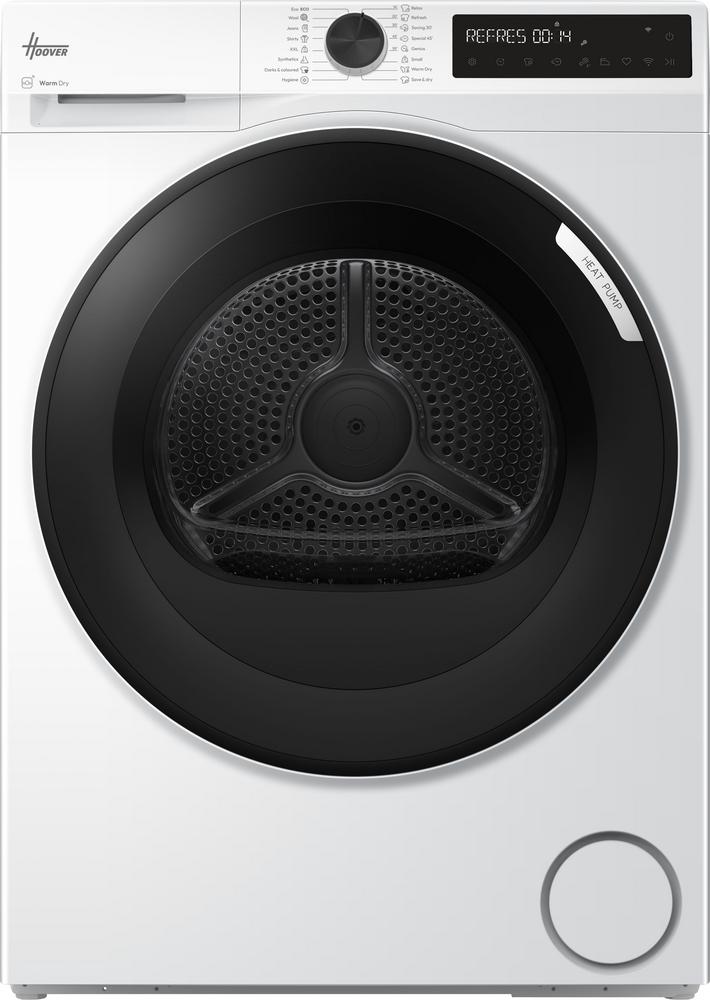
Heat pump tumble dryers have gone from a niche choice to a mainstream essential for homes that want warm, soft laundry without sky-high energy bills. One of the most popular options around right now is the Hoover H-DRY 300 HLEH8A2DE Wifi Connected 8Kg Heat Pump Tumble Dryer in white, an A++ rated machine that promises lower running costs, smart control and a family-friendly drum size.
In this guide we’ll look at what living with an 8kg heat pump dryer like the Hoover H-DRY 300 is actually like, who it suits best, and how it compares with a few strong alternatives. If you’re weighing up which size, brand or feature set to go for, this walkthrough will help you decide with confidence.
Understanding heat pump tumble dryers
Heat pump tumble dryers work differently to old-school vented and condenser models. Instead of blasting clothes with very hot air and then dumping all that warmth outside or into a water tank, they recycle the heat in a closed loop. The result is much lower energy use, which is why so many models – including the Hoover H-DRY 300 – carry A+ or A++ ratings.
There are a couple of trade-offs to be aware of. Drying cycles are usually longer than older, less efficient dryers, and the machines often cost a bit more upfront. However, for typical UK households that use their dryer regularly throughout autumn and winter, the running-cost savings can be substantial over a few years.
If you want a deeper dive into the technology and user experience, it’s worth reading our full review of the Hoover H-DRY 300 HLEH8A2DE, where we focus on real-world performance, noise and ease of use.
Is an 8kg drum the right size for you?
Capacity is one of the first decisions you’ll need to make. The Hoover H-DRY 300 offers an 8kg drum, which tends to be the sweet spot for many UK households. Here’s how to think about it:
- Singles/couples: An 8kg dryer is more than enough, and you’ll appreciate the extra space for bedding and towels.
- Small families (3–4 people): 8kg is usually ideal, matching common 8–9kg washing machines and handling daily laundry without overfilling.
- Larger families (4+ people): A 9–10kg dryer may be more convenient to cut down on the number of loads.
If you’re regularly tackling large mixed loads, heavy towels or king-size bedding, looking slightly bigger can make sense. A good alternative from the same brand is the Hoover Pro Dry Series 3 HBR 10N2BX-80, a 10kg A++ heat pump tumble dryer that’s geared towards busier homes. You can see how it compares in detail in our review of the Hoover Pro Dry Series 3 HBR 10N2BX-80.
Energy ratings and what A++ really means day to day
The Hoover H-DRY 300 HLEH8A2DE carries an A++ energy rating, which immediately puts it in the efficient camp compared with most older dryers. In practice, this means it uses notably less electricity per cycle than typical vented or basic condenser machines.
However, it’s worth thinking beyond the label:
- Frequency of use: If you dry clothes several times a week, a more efficient model can pay for itself faster.
- Programme choice: Eco or standard cottons cycles will give you the advertised efficiency; rapid or extra-dry modes will usually use more.
- Load size: Consistently running tiny loads wastes energy, even in an efficient machine.
Nearly all the alternatives here are also efficient heat pump machines. For example, the Beko SteamCure BM3T3833W 8Kg Heat Pump Tumble Dryer and the Indesit C YSD 83D WW UK 8Kg Heat Pump Tumble Dryer both offer A++ ratings too, so you can shop around on features and brand feel without sacrificing efficiency.
Living with a WiFi-connected tumble dryer
Smart features are no longer limited to top-end appliances. The Hoover H-DRY 300 HLEH8A2DE is a WiFi-connected dryer, meaning you can link it to a companion app on your phone. Once set up, typical benefits include remote start and stop, checking how long is left on a programme, and sometimes access to extra cycles or care tips.
There are a few everyday advantages:
- Timing around your schedule: Load the drum before work and start the cycle later via the app so clothes aren’t left creased in the drum all day.
- Cheaper-rate electricity: If you’re on a time-of-use tariff, you can start drying during cheaper slots without being physically at the machine.
- Maintenance reminders: Some smart systems prompt you to clean filters or check the water tank, helping keep performance up.
If you like the idea of smart features but need more capacity, the Hoover Pro Dry Series 3 HBR 10N2BX-80 also offers WiFi connectivity with a bigger 10kg drum. Those who prefer a simpler approach might lean towards options from Beko or Indesit, which often focus on clear controls and solid programmes rather than app-connected extras.
Comparing key alternatives to the Hoover H-DRY 300
While the Hoover H-DRY 300 sits at the heart of this guide, it’s always wise to compare a few other models before deciding. Here’s how the main alternatives mentioned stack up from a usage point of view.
Hoover Pro Dry Series 3 HBR 10N2BX-80: the bigger sibling
If you like the idea of the Hoover H-DRY 300 but worry that 8kg isn’t quite big enough, the 10kg Hoover Pro Dry Series 3 HBR 10N2BX-80 is a natural upgrade. It keeps the A++ efficiency rating and WiFi connectivity but gives you extra drum space for larger items and bulk washes.
This makes it attractive for households that regularly wash duvets, large towel loads or multiple school uniforms. To see how its programmes, noise levels and real-world performance compare, take a look at our in-depth look at the Hoover Pro Dry Series 3 HBR 10N2BX-80.
Beko SteamCure BM3T3833W: fabric care focus
Staying at the 8kg size, the Beko SteamCure BM3T3833W is an A++ heat pump dryer that puts a lot of emphasis on fabric care features. Steam-assisted functions aim to reduce creases and freshen up garments, which can cut down your ironing pile and help delicate fabrics last longer.
This model will appeal if you value gentler drying, often wear shirts or workwear, or want a straightforward control panel with practical cycles. It’s a strong rival to the Hoover H-DRY 300 for households who like the 8kg size but fancy a slightly different feature set.
Indesit C YD 92D SS UK: extra room with A+ efficiency
If you’re happy to trade a small amount of efficiency for extra space, the Indesit C YD 92D SS UK 9Kg Heat Pump Tumble Dryer is worth a look. It offers a 9kg drum and an A+ energy rating, sitting just below the A++ models but still firmly in the efficient league.
This could be a great middle ground if you don’t quite need 10kg but want more than 8kg, particularly for larger bedding or family loads. The brushed silver finish can also be appealing if you’re matching to other appliances in a modern kitchen or utility room.
Indesit C YSD 83D WW UK: simple, efficient 8kg option
Lastly, the Indesit C YSD 83D WW UK 8Kg Heat Pump Tumble Dryer gives you A++ efficiency in the same 8kg drum size as the Hoover H-DRY 300, but with Indesit’s straightforward, value-focused approach. It’s a good option if you’d prefer something that focuses on the basics with an easy learning curve.
For many buyers, choosing between these 8kg models will come down to brand preference, specific programmes and how much you want features like WiFi connectivity or steam cycles.
Everyday tips to get the best from an 8kg heat pump dryer
Whatever model you go for, a few simple habits can make a big difference to drying times, energy use and fabric care.
- Spin well first: Use a higher spin speed on your washing machine so clothes go into the dryer as dry as possible. This can shave a surprising amount off cycle times.
- Don’t overload: Resist the temptation to cram the drum completely full. Clothes need space to tumble properly; overloading can leave items damp and extend running time.
- Sort by fabric and thickness: Drying light t-shirts and heavy towels together forces the dryer to run longer. Separate bulky items when possible.
- Use the right programme: Eco cottons are best for everyday towels and bedding, while mixed or synthetics cycles suit everyday clothing. Quick programmes are useful occasionally but use more energy per minute.
- Clean filters regularly: Empty the lint filter after every load or two, and follow the manual’s advice on condenser and heat exchanger cleaning. This keeps airflow strong and energy use down.
Noise, placement and installation considerations
Heat pump tumble dryers tend to run at slightly lower temperatures than older types, but the mechanical noise of the drum and compressor is still something to think about. If your dryer will live in a kitchen or open-plan space, it’s worth checking our individual product reviews for comments on noise levels.
With the Hoover H-DRY 300 HLEH8A2DE, you’re looking at a typical freestanding heat pump footprint, suitable for most utility rooms, kitchens or garages with power and ventilation. You don’t need an external vent, which is a big plus compared with vented models, but you should:
- Ensure there’s enough space around the machine for airflow.
- Make sure the floor is level, so the drum runs smoothly and quietly.
- Position it where you can easily remove and empty the water tank if it’s not plumbed in.
For more detail on how the H-DRY 300 behaves in real homes, including installation experiences, our full Hoover H-DRY 300 HLEH8A2DE review is well worth a read.
Price, value and how to choose between similar models
With so many A+ and A++ heat pump dryers around the £300–£400 mark, it’s easy to feel that they all blur into one. Instead of comparing every tiny spec, focus on the areas that will genuinely affect your day-to-day use:
- Capacity: 8kg like the Hoover H-DRY 300 suits smaller families; 9–10kg models such as the Indesit C YD 92D SS UK or Hoover Pro Dry Series 3 HBR 10N2BX-80 work better for bigger households.
- Smart vs simple: Decide whether WiFi connectivity is something you’ll use regularly, or whether you’d rather stick to intuitive dials and buttons.
- Fabric care extras: Features like Beko’s SteamCure can make a difference if you often dry shirts, blouses or delicate items that you’d prefer to keep in great condition.
- Aesthetics and brand: Matching existing appliances, or choosing a brand you’ve had good experiences with, is also a valid consideration.
All of the dryers mentioned here sit in a broadly similar price and performance bracket, so it’s more about choosing the model that aligns with your routine than chasing theoretical differences on a spec sheet.
Making your final decision
Choosing a new tumble dryer is a balance between size, efficiency, features and budget. The Hoover H-DRY 300 HLEH8A2DE Wifi Connected 8Kg Heat Pump Tumble Dryer in white hits a very appealing middle ground: efficient A++ performance, a family-friendly 8kg drum, and smart features for those who want them.
If you need more space, prefer a different feature set, or are loyal to another brand, the alternatives from Hoover, Beko and Indesit listed here are all well worth considering. Once you’ve narrowed it down to two or three favourites, the best next step is to dive into the detailed write-ups and user feedback.
For a closer look at real-world use, programmes and build, start with our full review of the Hoover H-DRY 300 HLEH8A2DE and then explore the linked reviews of the alternative models. With the right information, you can choose a heat pump tumble dryer that will keep your laundry routine running smoothly for years to come.