
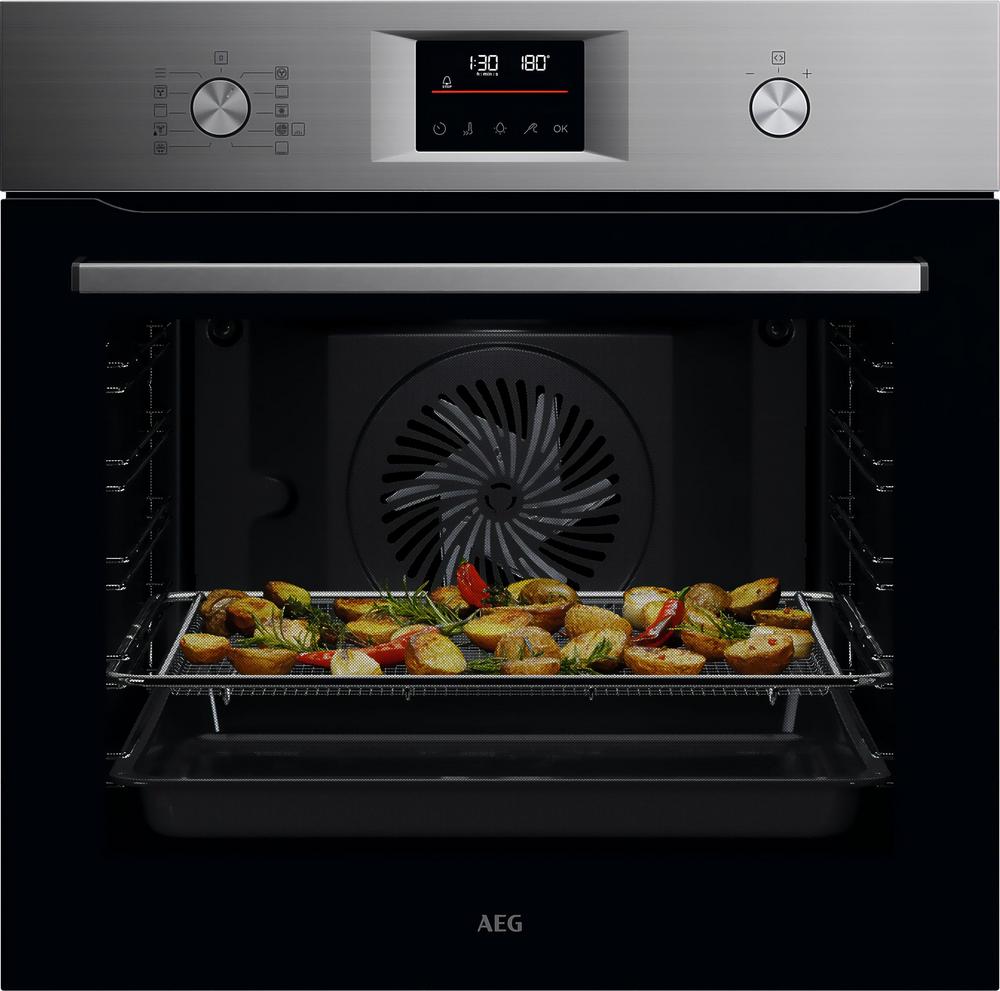
Choosing a new built-in single oven can feel like a bigger decision than it first appears. You’re not just picking a box that gets hot – you’re deciding how easy weeknight dinners will be, whether Sunday roasts are a joy or a juggle, and how much time you’ll spend scrubbing burnt-on splashes. The AEG Steambake BPS355061M sits in a very popular sweet spot: a sleek stainless-steel single oven with steam-assisted cooking and pyrolytic self-cleaning. In this guide, we’ll look at what those features actually mean in real kitchens, how this model fits into the wider market, and which alternative ovens are worth a look if your priorities lean more towards design, budget or a particular brand style.
Why steam-assisted cooking is becoming a must-have
Steam in an oven used to be the preserve of serious bakers, but it’s now becoming a mainstream feature for a reason. A touch of moisture in the cavity helps doughs rise better, meats stay succulent and leftovers come back to life without drying out. The idea behind Steambake-style ovens is to give you some of these benefits without asking you to learn a whole new way of cooking.
If you’re curious about how this works in practice, our hands-on full review of the AEG Steambake BPS355061M walks through everyday recipes and results. The key takeaway is that you can largely cook as normal, but switch on a dedicated programme when you want that extra lift and juiciness.
Everyday benefits of steam-assist
Most households will notice the advantages of steam-assisted baking and roasting in familiar dishes rather than anything fancy. Think along these lines:
- Bread and rolls – better oven spring and a crisper crust without the need for trays of water in the bottom of the oven.
- Roast chicken and joints – meat that stays moist even if you’re juggling timings and side dishes.
- Cakes and sponges – a more even rise with less risk of a dry, overbaked edge.
- Reheating – yesterday’s pizza or roast potatoes revived with less chewiness and more crunch.
Importantly, steam-assist doesn’t lock you into one way of cooking. You still have all the usual fan, grill and conventional options for quick traybakes, cheese on toast and frozen foods.
Understanding pyrolytic cleaning and why it matters
Pyrolytic cleaning is one of those features that can sound too good to be true until you’ve lived with it. Instead of scrubbing the cavity with harsh chemicals, you run a self-clean cycle that heats the oven to an extremely high temperature, reducing baked-on residue to a fine ash that you can simply wipe away once it’s cooled.
On a model like the A+ rated AEG Steambake BPS355061M, pyrolytic cleaning is there to keep the interior looking fresh with far less effort, which makes a big difference if you cook often or roast at high temperatures. In real use, that usually means:
- You’re more relaxed about splashes and spills, knowing you can deal with them later.
- The oven stays looking newer for longer, which matters in an open-plan kitchen.
- You can avoid strong oven cleaners, which is good news if you’re sensitive to chemicals or just hate the smell.
If you want a closer look at how the cleaning cycles work in day-to-day use, you can read our full review of the AEG Steambake BPS355061M for timings, noise levels and how often you’re likely to use it.
AEG single ovens: where the Steambake model sits in the range
The Steambake BPS355061M is part of a broader family of built-in ovens that share a similar look and user interface but prioritise slightly different features. That’s useful if you like the general design but don’t need every bell and whistle, or if you’re trying to match an existing appliance line-up.
Looking at alternative AEG single ovens
If you’re drawn to the brand but aren’t sure the Steambake model is the one, there are a couple of noteworthy AEG alternatives worth comparing.
The AEG 6000 SenseCook OS6AB50AK is another built-in electric single oven, finished in black rather than stainless steel. It shares the same A+ energy rating and similar capacity territory, but leans into more advanced temperature control with its SenseCook approach. That makes it a strong contender if you like the idea of more precise results for meat and baking, and prefer a more minimal all-black aesthetic that blends into darker cabinetry.
For a slightly more straightforward option in stainless steel, the AEG 6000 Series BCX335L11M sits as a sensible, modern single oven that focuses on solid everyday performance. It’s rated A for energy and is a good fit if you want a reliable, good-looking cavity without necessarily paying extra for the full combination of steam-assist and pyrolytic cleaning. Think of it as a strong all-rounder if you’re upgrading from an older appliance and just want something intuitive and efficient.
When a classic look matters more than advanced functions
Not every kitchen suits a modern, industrial stainless-steel finish. If you’re planning a more traditional or country-style scheme, a vintage-inspired oven can make a big difference to the feel of the room without sacrificing performance.
The Smeg Victoria SF6905P1 is a great example of this, with its cream finish and heritage styling that sits beautifully alongside shaker cabinets and warm woods. It’s an A-rated electric single oven, so you’re not trading away efficiency just to get the look. Inside, it’s still a multifunction oven that can handle roasts, bakes and everyday tray meals, but the real appeal is visual – it’s an appliance that reads more like part of the furniture than a block of metal.
If you love the Victoria styling but want a more neutral or contemporary twist, the Smeg Victoria SF6905X1 brings the same design language in stainless steel. That makes it easier to pair with modern hobs and extraction while keeping the rounded knobs and door design that define the range. Both Smeg Victoria models suit buyers who care just as much about the look of the kitchen as they do features on paper.
Energy ratings and running costs in everyday use
Energy labels are easy to overlook when you’re comparing features, but they make a real difference over the lifetime of an oven. The AEG Steambake BPS355061M and the black AEG 6000 SenseCook model both carry an A+ rating, which is at the more efficient end for this type of appliance, while the other alternatives here sit at A.
In practical terms, the biggest savings come from how you use the oven:
- Using fan settings smartly so you can cook at slightly lower temperatures.
- Cooking multiple dishes at once when possible, rather than heating the cavity for a single tray.
- Avoiding long preheats for foods that don’t strictly need it, like frozen items.
- Keeping the door seal clean so heat stays where it should.
If you cook several times a week, choosing an A or A+ rated single oven can take the edge off your bills compared to an older, less efficient model, and you’re likely to notice more even results into the bargain.
Practical features to prioritise when choosing a single oven
Once you get beyond broad categories like “steam” and “self-cleaning”, some smaller design touches make a big contribution to how pleasant an oven is to live with. When you’re comparing models like the AEG Steambake BPS355061M, its 6000 Series siblings and the Smeg Victoria alternatives, pay attention to the following areas.
Controls and interface
Look for clear, legible symbols and a layout that makes sense at a glance. Modern digital displays can be helpful for setting exact temperatures and timings, but can also hide features in menus. If you’re not especially techy, you may prefer a simpler dial-based setup with a few well-chosen functions.
AEG’s current built-in range tends to balance knobs with a central display, while Smeg’s Victoria line leans harder into tactile knobs and more traditional styling. There’s no right or wrong here – it’s about what you’ll find least frustrating after a long day.
Shelving, rails and capacity
Manufacturers quote capacity in litres, but what really matters is how many shelves you can use at once and how easy they are to move when the oven is hot. Telescopic runners, for example, let you pull a shelf fully out while it’s still supported, which is particularly handy for basting roasts and checking bakes.
If you regularly cook for a family, look for a cavity that can comfortably take a large roasting tray plus at least one extra shelf for sides or dessert. Built-in single ovens like those covered here tend to offer plenty of space, but the exact layout and rack positions can vary.
Cleaning and maintenance
Beyond pyrolytic cleaning, think about the details that affect how easy the oven is to keep looking good:
- Removable door glass – makes it much simpler to clean between the panes.
- Enamel quality – smoother, higher-quality enamel tends to resist staining.
- Tray design – deep-sided trays catch more drips and can double as roasting tins.
If you’re someone who hates cleaning, then investing in pyrolytic cleaning, like you get on the Steambake BPS355061M, can be one of the most meaningful upgrades you make – more so than an extra niche cooking function you might rarely use.
Fitting a built-in single oven into your kitchen plan
Because most built-in single ovens share a standard footprint, it’s easy to assume they’re all identical in terms of installation, but there are a few points to keep in mind when planning.
- Cabinet housing – check the manufacturer’s diagram against your existing unit, especially if your kitchen is older.
- Ventilation space – leave the recommended gaps so the oven can cool itself properly and avoid overheating.
- Door swing – make sure there’s space for the door to open fully without clashing with an island, wall or tall unit.
- Electrical supply – confirm whether the model needs a dedicated circuit and arrange a professional installation if required.
If you’re replacing an existing built-in oven with something like the AEG Steambake BPS355061M or the AEG 6000 Series alternatives, the swap is usually straightforward, but a quick double-check of measurements and power requirements before ordering can save headaches later.
Which type of cook is the AEG Steambake BPS355061M best suited to?
Different ovens suit different households. Thinking about which camp you fall into can help narrow the field considerably.
- Frequent bakers and roast lovers – will likely make good use of the Steambake functionality and benefit from the even heat and moisture balance. The combination of steam-assist and pyrolytic cleaning makes sense here.
- Busy households that cook daily but simply – may still value pyrolytic cleaning the most, as it takes the sting out of constant use. In this case, compare whether you’d fully exploit steam or if a solid model like the AEG 6000 Series BCX335L11M covers everything you realistically do.
- Design-led kitchen renovators – might lean more towards the Smeg Victoria SF6905P1 in cream or SF6905X1 in stainless steel, where the oven becomes a focal point of the room.
- Tech-curious cooks – who like the idea of more guided or precise cooking could appreciate an oven like the AEG 6000 SenseCook OS6AB50AK, which aims to take some of the guesswork out of temperatures and doneness.
None of these choices is wrong; it’s about matching features and style to how you realistically cook, clean and live.
Final thoughts
A well-chosen built-in single oven should quietly get on with its job for years, helping you turn out everything from quick midweek pasta bakes to special-occasion roasts. A model like the AEG Steambake BPS355061M shows how far modern ovens have come, combining steam-assisted functions, efficient performance and hands-off cleaning in a sleek stainless-steel package. But as we’ve seen, there are excellent alternatives if you care more about classic styling, a particular colour, or a more stripped-back feature set.
Before you make a final decision, it’s worth looking beyond the spec sheet to see how these ovens behave in real homes. Our in-depth review of the AEG Steambake BPS355061M and the linked reviews of the AEG 6000 series and Smeg Victoria models will give you a clearer sense of noise levels, heat-up times, controls and everyday usability. With a little comparison, you can choose the oven that will quietly make life easier every time you switch it on.