
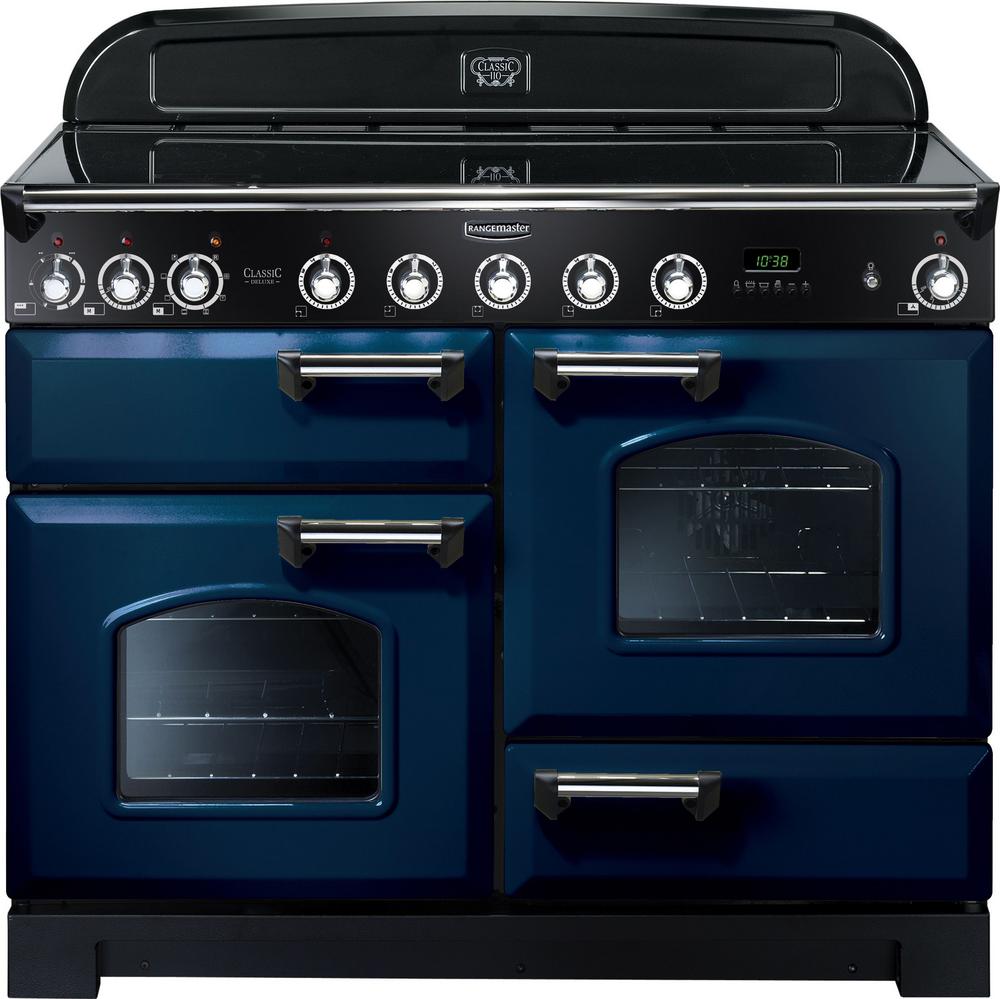
If you’re planning a serious kitchen upgrade, a 110cm range cooker instantly changes how your space looks and how it works. The Rangemaster Classic Deluxe CDL110EIRG/C Electric Range Cooker with Induction Hob in Racing Green is the kind of appliance that turns a run of units into a focal point, combining a traditional aesthetic with modern induction technology. This guide walks you through what to think about before buying a large electric range cooker like this, and how it compares with a few closely related alternatives in the same family.
Why choose a 110cm electric range cooker with induction?
A 110cm range cooker is a step up from standard 60cm ovens in both presence and practicality. Going for an all-electric model with induction brings a few specific advantages that suit modern homes and busy households.
First, induction is exceptionally quick and responsive. It can boil water faster than many gas hobs, yet still hold a gentle simmer without fuss. Because induction heats the pan directly, rather than the glass surface, it’s also more efficient than radiant ceramic or gas in everyday use.
Second, a 110cm chassis usually brings at least two oven cavities, often with dedicated grill space and extra functions. For keen cooks, bakers, or anyone who loves hosting Sunday roasts and Christmas dinners, this can transform how easy it is to juggle multiple dishes.
The Classic Deluxe CDL110EIRG/C takes these benefits and wraps them in a classic, heritage look. If you’d like the fine detail on its layout, controls and day-to-day performance, you can read our full review of the Rangemaster Classic Deluxe CDL110EIRG/C once you’ve finished this guide.
Design: making a statement with colour and style
One of the main reasons people gravitate towards this model is the Racing Green and chrome finish. Traditional-style ranges are about more than cooking; they become part of how the whole kitchen feels.
The Classic Deluxe line uses bevelled doors, curved windows and chunky knobs to create a timeless look. The Racing Green colour is deep enough to feel sensible and grown-up, but distinctive enough that the cooker doesn’t disappear into pale cabinetry. Chrome trim keeps things feeling crisp rather than rustic.
If you love the traditional look but prefer a slightly different twist, there are closely related models worth considering. For instance, the dual fuel Rangemaster Classic Deluxe CDL110DFFRG/B in Racing Green and Brass swaps the chrome for warmer brass accents and combines gas hobs with electric ovens. The Classic Deluxe CDL110DFFOG/B in Olive Green and Brass offers a softer, more muted green that pairs beautifully with natural woods and stone worktops.
Layout and cooking flexibility
Range cookers at this width are all about flexibility. A typical 110cm configuration will give you:
- Multiple oven cavities for different temperatures and cooking styles
- A full-width or large dedicated grill
- An expansive hob area for several pans at once
While exact cavity sizes and functions vary by model, you can reasonably expect to roast in one oven while baking in another, all while grilling sides above. This separation is ideal if you frequently cook for family gatherings or enjoy batch cooking different dishes in one go.
The Classic Deluxe CDL110EIRG/C uses an induction hob, which creates discrete cooking zones beneath the glass. These zones only heat when they detect a compatible pan, which adds a layer of safety as well as efficiency. For a closer look at how the oven cavities are arranged and what they’re like to live with, you can read our in-depth review of the CDL110EIRG/C here.
Induction versus dual fuel: which suits your cooking style?
A key decision at this level is whether to choose full electric with induction, or go for dual fuel with a gas hob and electric ovens. The Classic Deluxe CDL110EIRG/C is firmly in the all-electric camp, but its closest siblings include dual fuel options.
Induction hobs suit cooks who want:
- Fast heat-up times and very fine temperature control
- A flat, easy-to-wipe surface
- Improved efficiency and a cooler-feeling kitchen
Dual fuel models appeal if you love the visible flame and pan-handling feel of gas. Two examples in this family are the Classic Deluxe CDL110DFFRG/B and the Classic Deluxe CDL110DFFOG/B, both using gas hobs but retaining the multi-oven layout of a 110cm range. They keep the same A/A oven efficiency rating but give you instant flame control on top.
If you favour a more contemporary aesthetic and want the choice of dual fuel in a sleeker design, the Rangemaster Nexus SE NEXSE110DFFIV/C is worth examining. It pairs dual fuel practicality with cleaner lines and a smart Ivory and chrome finish.
Traditional versus contemporary styling
Beyond the question of fuel type, styling is where these ranges really diverge. The Classic Deluxe family leans into traditional cues: framed doors, handy towel rails and period-inspired handles. The Racing Green and Olive Green finishes emphasise that heritage look.
If you like traditional cookers but prefer a more continental, professional feel, the Rangemaster Elise ELS110EISL is an interesting electric induction alternative. It maintains a premium feel but with more angular, modern lines and a Slate (graphite) finish that fits seamlessly into minimal or industrial-style kitchens. Spec-wise it’s in the same 110cm induction category, so the difference is mostly look and feel, not capability.
The Nexus SE NEXSE110DFFIV/C takes contemporary even further. Its sleeker fascia, defined control layout and lighter Ivory colour lend themselves to modern open-plan spaces where you want the cooker to feel integrated rather than vintage. If you’re torn between a statement piece and something subtler, contrasting the Nexus SE with the Classic Deluxe can help clarify your taste.
Is a 110cm range right for your kitchen?
Before falling for a green enamel finish or a stylish chrome rail, it’s worth confirming that a 110cm range makes practical sense for your room. Consider:
- Width and clearance: You need enough space for the cooker plus recommended gaps either side, and room for doors to open fully.
- Extraction: A suitable hood or extraction system above is essential, especially in open-plan spaces.
- Electrics or gas supply: An induction or all-electric model will need an adequate electrical supply and correct circuit; dual fuel models also require a gas connection.
- Workflow: Think about how you move between sink, prep area and hob; the cooker should sit naturally within that triangle without obstructing walking routes.
If your kitchen is on the smaller side, you may still be able to accommodate a 110cm range by adjusting cabinetry. But if that means sacrificing essential storage, a slightly narrower model could be wiser. For medium and larger kitchens, a 110cm range can actually help zone the space, especially when combined with an island or peninsula opposite.
Energy efficiency and running considerations
When you’re buying an appliance of this size, it’s sensible to look beyond the purchase price and consider how it will behave over the years. The Classic Deluxe CDL110EIRG/C is A/A rated for its ovens, in line with its close siblings in the range. That means its electric ovens are designed to be reasonably efficient given their capacity.
Induction hobs are generally more energy-efficient than gas or traditional electric hobs because they transfer heat directly into the pan base. In practice, this means shorter cooking times and less wasted heat. For a busy household that cooks most days, those marginal savings can add up over a year compared to a similar-sized cooker with gas burners.
Dual fuel alternatives like the Nexus SE NEXSE110DFFIV/C or the Classic Deluxe CDL110DFF models split usage between gas and electric. Depending on your tariff, that may or may not be more cost-effective. If your main priority is clean, fast, controllable heat with minimal waste, induction usually wins out.
Real-world usability: what owners care about most
Looking at statistics helps, but user feedback is often the most reassuring sign that a big-ticket appliance is worth installing. The Rangemaster Classic Deluxe CDL110EIRG/C carries a very high average owner rating, based on well over two hundred reviews. That suggests that not only the performance, but also the fit, finish and day-to-day usability, meet people’s expectations.
Other models in this 110cm family also attract strong feedback. The Elise ELS110EISL, for example, has a particularly large number of reviews while maintaining a high rating, reflecting its popularity as a stylish induction option. The Nexus SE NEXSE110DFFIV/C and Classic Deluxe dual fuel models also perform very strongly in owner satisfaction.
If you care about long-term reliability and user experience, it’s worth exploring these reviews in more depth. Our dedicated article on the Classic Deluxe CDL110EIRG/C highlights how real owners have got on with everything from bake quality to cleaning routines.
Cleaning and maintenance: induction’s secret advantage
Large range cookers can look imposing, but maintaining them doesn’t have to be a chore. Here, induction models have a clear edge over their gas counterparts.
Because the induction zones only heat up under the pan, spills are less likely to bake onto the glass. A quick wipe once the surface has cooled is often enough to keep it looking fresh. There are no pan supports or burners to dismantle, so you save time on fiddly cleaning.
Inside the ovens, the same basic rules apply as with any cooker: deal with spills quickly, use good-quality trays and consider lining them for messy roasts. Choosing a model with easy-clean enamel or assisted-clean features will make a noticeable difference if you cook a lot. The precise cleaning technology may differ between the Classic Deluxe, Elise and Nexus SE lines, so if low-maintenance is a priority, it’s sensible to compare them using our detailed product reviews before deciding.
Colour, finish and matching your kitchen
The colour of your range cooker has a bigger impact on the room than you might first think. Racing Green, as seen on the CDL110EIRG/C, works particularly well with:
- Cream, off-white or stone-coloured cabinets
- Warm woods such as oak and walnut
- Brass, bronze or brushed metal hardware
Olive Green, used on the CDL110DFFOG/B, offers a more subtle, earthy feel that pairs beautifully with natural textures like timber and concrete. Slate and graphite finishes, such as on the Elise ELS110EISL, are more neutral and slot easily into modern, monochrome schemes.
If you’re unsure, gather samples of your worktops, flooring and cabinet colours, then compare them against photos and swatches of the range colours you’re considering. Remember that a large cooker will read slightly darker in person than on a small screen, especially in corners or under deeper worktops.
When to choose an alternative model
The Rangemaster Classic Deluxe CDL110EIRG/C is a strong contender if you want an induction range with a traditional look and an eye-catching Racing Green finish. However, there are sensible reasons to lean towards one of its close relatives:
- You want contemporary styling with induction: Look at the Elise ELS110EISL in Slate for a sleeker, more modern aesthetic while keeping the benefits of an induction hob.
- You prefer gas on top: The Nexus SE NEXSE110DFFIV/C, Classic Deluxe CDL110DFFRG/B and Classic Deluxe CDL110DFFOG/B all offer dual fuel layouts with gas hobs.
- You want a different colour tone: Olive Green or Ivory can be easier to coordinate with lighter, airier kitchens than a deep Racing Green, depending on your cabinetry and lighting.
By weighing up style, fuel type and colour, you can narrow down to the model that not only fits your space but also suits the way you cook.
Final thoughts
Investing in a 110cm electric range cooker with induction is as much a lifestyle decision as a practical one. The Rangemaster Classic Deluxe CDL110EIRG/C combines generous oven capacity, efficient induction technology and a distinctive Racing Green finish to create a focal point that’s built for everyday family cooking and special occasions alike.
Whether you lean towards this model, a contemporary alternative like the Elise ELS110EISL, or a dual fuel option such as the Nexus SE NEXSE110DFFIV/C, the key is to match fuel type, layout and style to how you actually cook. Once you’ve clarified those priorities, you can dive into the details of each appliance in our dedicated reviews — starting with the full review of the Classic Deluxe CDL110EIRG/C — and choose a range cooker that will earn its place at the heart of your home for years to come.