
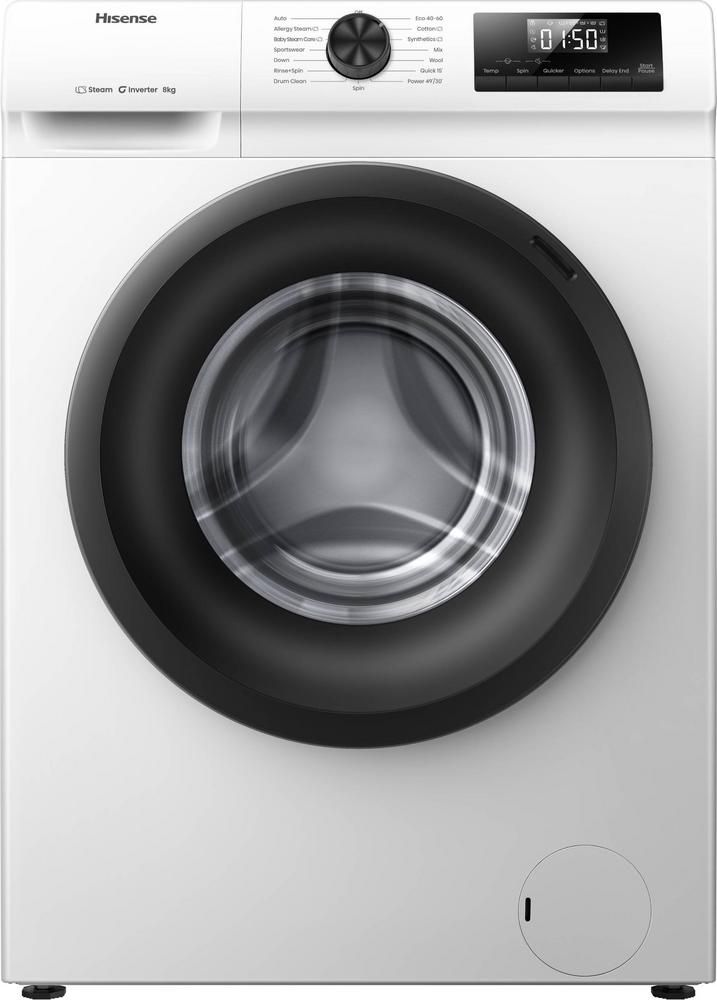
WiFi-connected washing machines have quietly moved from being a novelty to a really practical upgrade for busy UK homes. The Hisense 3S Series WF3S8043BB3 8kg WiFi Connected Washing Machine with 1400 rpm in black is a good example of that shift – it combines a family-friendly drum size, modern smart control and an A energy rating in a sleek dark finish that suits most kitchens.
In this guide we’ll use the WF3S8043BB3 as a starting point to explore what to look for in a connected washing machine, how to choose the right drum size for your household, and when a bigger (or smaller) Hisense model might make more sense. If you want all the nitty-gritty technical details, you can read our full review of the Hisense 3S Series WF3S8043BB3 here once you’ve got the bigger picture.
Understanding the Hisense 3S WF3S8043BB3: where it fits
The Hisense 3S Series WF3S8043BB3 sits in that sweet spot many UK households are after: an 8kg capacity, 1400 rpm spin speed, WiFi connectivity and an A energy rating, all wrapped up in a tidy black design. It’s aimed squarely at people who want something modern and efficient without going overboard on size or price.
With a very strong user rating and well over a thousand customer reviews, it’s clearly struck a chord. That makes it a useful “benchmark” model to compare other Hisense options against, such as the larger 3S Series 9kg and 10.5kg versions, or more traditional white machines from the same brand.
If you’re curious about how it performs in real homes, including noise levels, programme times and stain removal, you can dive into our in-depth hands-on review of the Hisense WF3S8043BB3 after you’ve finished this buying guide.
What size drum do you really need?
Before you get carried away with WiFi controls and stylish finishes, it’s worth nailing the most important decision: drum size. The WF3S8043BB3 gives you 8kg to play with, which is often the best all-rounder for smaller families, but it’s not the only option.
When 8kg (like the WF3S8043BB3) is the right choice
An 8kg drum is typically ideal if:
- You’re a couple or a small family of up to four people.
- You wash a steady mix of everyday clothes, school uniforms and a few towels.
- You prefer to run one reasonably full load most days rather than a big blitz at the weekend.
It’s also a nice size if space is tight and you want to avoid a machine that encourages half-empty loads. An 8kg washer still has enough room for double bedding and a few bath sheets, as long as you don’t expect to cram in a whole household’s bedding in one go.
Considering 9kg: a little extra headroom
If you like the sound of the WF3S8043BB3 but suspect you’ll regularly bump up against the 8kg capacity, it’s worth looking at the Hisense 3S Series WF3S9043BB3 9kg WiFi Connected Washing Machine. It’s very similar in style – black finish, 1400 rpm, A energy rating – but with that extra kilo of space that can make a difference for families with older children or chunkier school uniforms.
To get a feel for the differences in day-to-day use, including how the 9kg drum handles bulky items, you can read our full review of the Hisense 3S Series WF3S9043BB3 here.
Going big at 10.5kg: for larger families and bedding
For bigger households, or anyone who washes a lot of bedding, the Hisense 3S Series WF3S1043BB3 10.5kg WiFi Connected Washing Machine offers seriously generous capacity while keeping the same 1400 rpm spin and black, WiFi-enabled design. This kind of drum size lets you do fewer, larger loads and cope more easily with towels, sports kits and sheets all at once.
Of course, a 10.5kg washer can invite you to throw small items in more frequently, so it’s best suited to homes where you’re genuinely filling that drum most of the time. You’ll find a detailed breakdown of how it compares in real-world use in our full review of the Hisense 3S Series WF3S1043BB3.
Integrated vs freestanding: when the machine needs to disappear
Not everyone wants to see their washing machine at all. If you’re planning a sleek, handleless kitchen or a minimalist open-plan space, an integrated model like the Hisense 3 Series WF3M741BWI 7kg Integrated Washing Machine can be a better fit. It sits behind a kitchen door, giving you a built-in look, but with a slightly smaller 7kg capacity that can still work well for singles, couples or compact households.
To understand how an integrated design compares on usability and maintenance, take a look at our in-depth review of the Hisense 3 Series WF3M741BWI.
Freestanding or integrated, black or white?
The WF3S8043BB3 is a freestanding machine in black, which will either perfectly match your style or make you think twice. Colour and installation type might seem like small details, but they do affect how happy you’ll be with your purchase in the long term.
Why choose a black freestanding machine?
Black washing machines like the WF3S8043BB3 tend to suit modern kitchens with dark counters or black ovens and hobs. They also work well in utility rooms where everything’s coordinated in darker tones. Freestanding models are easier to slide out for cleaning, maintenance or replacement, and you don’t need specialist cabinetry to fit them.
The Hisense 3S range in black makes it easy to scale up or down in size without changing the look. If you like the style of the WF3S8043BB3 but want more room, the 9kg WF3S9043BB3 and the 10.5kg WF3S1043BB3 keep that consistent appearance so your laundry space still feels planned-out.
Sticking with classic white
If you prefer the traditional crisp look, the Hisense 1Q Series WF1Q9041BW 9kg Washing Machine in white offers a similar 1400 rpm spin and A rating, in a more neutral finish. A white machine can blend in better with older kitchens or rented homes where you’re trying not to draw attention to the appliances.
To see how the more classic white 9kg model compares on features and everyday usability, have a look at our full review of the Hisense 1Q Series WF1Q9041BW.
Smart features and WiFi: are they worth it?
WiFi connectivity on a washing machine can sound like a gimmick, but used well it genuinely makes life easier. Machines like the WF3S8043BB3 let you control key functions from a smartphone app, so you can get on with your day while the laundry quietly takes care of itself.
Everyday advantages of a WiFi-connected washer
Once set up on your home network, a WiFi-connected machine will typically let you:
- Start or pause a cycle remotely – so you can line up a load before you get home from work.
- See how long is left on a programme without going back to the kitchen or utility room.
- Receive notifications when a cycle has finished, helping to prevent damp-smelling laundry left in the drum.
- Browse and select programmes more easily, with explanations and tips for each mode.
For households trying to run more washes overnight or in cheaper off-peak tariff windows, app control can also make it easier to plan start times more accurately.
Is WiFi right for every household?
If you’re not especially interested in smart features, you might not use the app after the novelty wears off, and the machine will still work perfectly from the front panel alone. However, for busy families or shift workers, even simple notifications and remote start can make a noticeable difference to how smoothly laundry fits into the week.
When comparing models, consider whether all your shortlists are WiFi-enabled or if you’re mixing connected and non-connected options. The Hisense 3S Series range, including the WF3S8043BB3, WF3S9043BB3 and WF3S1043BB3, makes it easy to keep the same connectivity and design while varying capacity.
Spin speed, energy rating and running costs
Specification sheets can be overwhelming, but there are only a few numbers you really need to focus on: spin speed and energy rating. For most households, the Hisense 3S Series’ 1400 rpm and A rating are more than enough.
Why 1400 rpm works well in practice
A 1400 rpm spin speed, as found on the WF3S8043BB3 and its close relatives, strikes a good balance between effective water removal and noise. It leaves laundry noticeably drier than slower machines, which means shorter tumble-drying times or less time hanging indoors in winter. You rarely gain much by going higher than 1400 rpm unless you’re washing very heavy fabrics regularly.
Making the most of an A-rated machine
An A energy rating is a strong indicator of efficiency on the latest energy labels. Over years of use, that can add up to meaningful savings, particularly if your household runs several loads a week. To get the best from an efficient machine:
- Use eco or longer programmes when you can – they’re designed to save energy and still clean well.
- Wash at 30°C or 40°C for most everyday loads, saving hotter cycles for heavily soiled items.
- Try to run full, but not jam-packed, loads to avoid wasting water and electricity.
Seeing an A rating across options like the WF3S8043BB3, WF3S9043BB3, WF3S1043BB3, WF1Q9041BW and WF3M741BWI is reassuring – you can safely choose based on drum size and style without feeling you’re compromising efficiency.
Programmes, noise and usability: choosing what suits your routine
Once you’ve narrowed things down by drum size, colour and connectivity, it’s time to think about how each machine actually feels to use. With models like the WF3S8043BB3, you’re typically getting a good spread of programmes covering everyday cottons, synthetics, mixed loads, delicates and quick-wash options.
Look for programmes that fit your lifestyle
In broad terms, consider:
- Quick wash options – handy for school uniforms or lightly soiled outfits you need in a hurry.
- Mixed-load cycles – ideal when you don’t have time to separate fabrics, but want a safe, all-round programme.
- Delicates or wool modes – a must if you wear a lot of knits or gentle fabrics.
- Intensive or hygiene cycles – useful for bedding, towels or when someone in the home has allergies.
Machines in the same range often share a similar programme set, so moving up or down in capacity (for example from the 8kg WF3S8043BB3 to the 9kg WF3S9043BB3) usually doesn’t mean sacrificing everyday cycles you rely on.
Noise and placement in the home
Noise levels will matter more if your washer is in an open-plan kitchen-diner or near bedrooms. Direct-drive or inverter motors, common in modern machines, generally keep operating sounds smoother and less intrusive than older designs. Reading real-user feedback in our reviews will help you judge how each model behaves during spin, especially if you have wooden floors or thin internal walls.
Caring for your new washing machine
Whether you choose the Hisense 3S Series WF3S8043BB3 or a larger or smaller alternative, a little basic care will keep your new machine running efficiently and smelling fresh.
Simple maintenance habits
- Run a hot maintenance wash once a month with an empty drum and a cleaner or white vinegar.
- Wipe the door seal and glass after runs to remove trapped water and lint.
- Rinse the detergent drawer and housing occasionally to prevent buildup.
- Check pockets before washing to avoid coins and small items damaging the drum or pump.
WiFi-connected models can sometimes nudge you towards maintenance reminders, but it’s still worth building these habits into your routine, especially if you mostly wash at low temperatures.
Which Hisense washer is right for you?
To recap, here’s how the key options stack up conceptually:
- Hisense 3S Series WF3S8043BB3 8kg: a balanced choice for smaller families who want WiFi, a black finish, 1400 rpm and an A rating without going oversized.
- Hisense 3S Series WF3S9043BB3 9kg: similar look and features but with extra drum space, great for growing families or bulkier laundry.
- Hisense 3S Series WF3S1043BB3 10.5kg: big capacity for large households, heavy bedding and those who prefer fewer, larger loads.
- Hisense 1Q Series WF1Q9041BW 9kg: a white, freestanding 9kg option that blends into classic kitchens while keeping modern performance.
- Hisense 3 Series WF3M741BWI 7kg Integrated: for smaller households who want their washer hidden behind a cupboard door.
If the 8kg size and smart features of the WF3S8043BB3 sound right for your home, it’s well worth taking the next step and reading our full, in-depth review of the Hisense 3S Series WF3S8043BB3 for more detail on performance, noise and long-term user feedback.
Whichever model you end up with, choosing the right drum size, finish and feature set now will pay off every week you use it. Take your time, explore the detailed reviews linked throughout this guide, and you’ll be far more likely to find a washing machine that quietly gets on with the job, load after load.