Home » Product Reviews » Computing » Monitors & Projectors » Monitors » MSI MAG 321CUP QD-OLED 4K Ultra HD 165Hz OLED Curved Gaming Monitor review
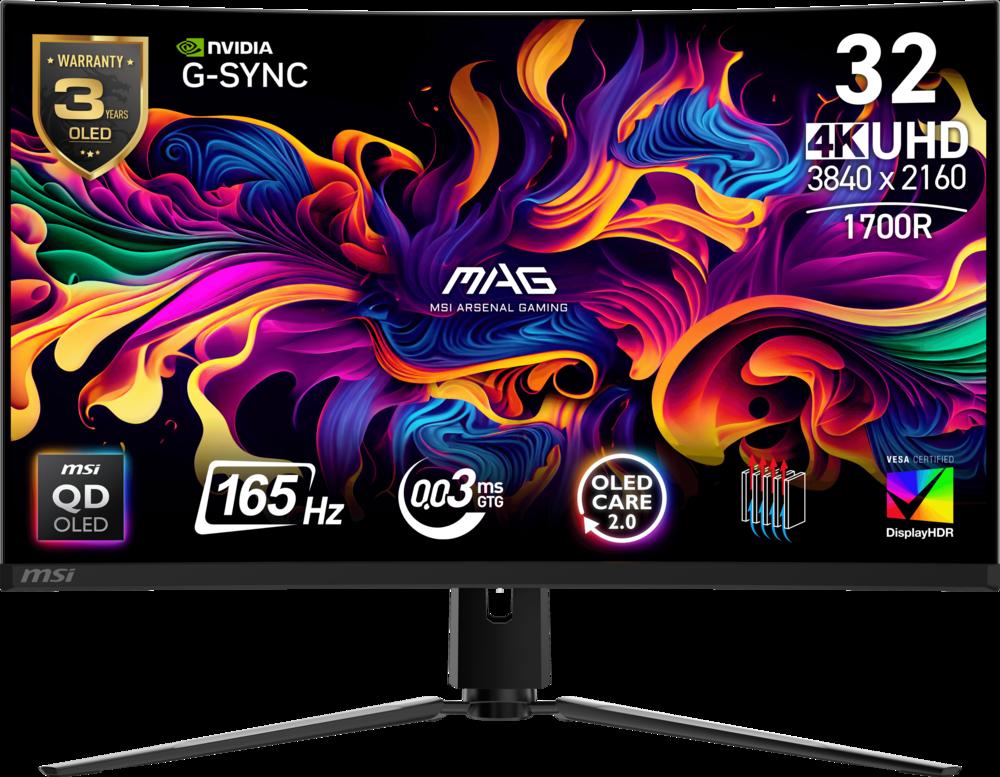
The MSI MAG 321CUP QD-OLED is a 32-inch curved 4K gaming monitor aimed squarely at enthusiasts who want the latest panel tech and silky-smooth performance. With a QD-OLED panel, 165Hz refresh rate and a blisteringly quick 0.03ms response time, it’s built to show off high-end PCs and next-gen consoles at their best.
MSI is well known in the gaming space, and this model feels very much like a flagship-tier option rather than an entry-level screen. The price reflects that – it’s a premium monitor – but you are getting true OLED image quality, 4K resolution and a thoughtful, adjustable stand.
Backed by an impressive 4.8 out of 5 rating from dozens of owners, it’s clearly gone down well with gamers, but there are still a few compromises to be aware of before you invest.
This monitor is ideal for PC gamers with a powerful rig who want the best possible image quality and responsiveness. The combination of 4K resolution, OLED contrast and a 165Hz refresh rate makes particular sense if you mainly play fast-paced titles like shooters, racers or competitive action games and have the hardware to drive high frame rates.
It also suits console gamers who want a single high-end screen for everything. The HDMI 2.1 port means it’s a strong match for current-generation consoles, letting you tap into 4K and high refresh modes where supported. The 32-inch size and 16:9 aspect ratio are familiar and versatile, so it works well for both gaming and TV or film viewing.
If you’re a creative user or work-from-home professional who games after hours, the wide colour gamut (DCI-P3, 10-bit colour and 1.07 billion colours) and deep blacks will make photos, video and general content look superb. Just be aware that the typical brightness is more tuned for a dimmer, more cinematic environment than a very bright office.
On the other hand, if you’re a casual gamer on a tight budget, this is likely overkill. A cheaper 1440p display will be easier on your wallet and your graphics card. Likewise, if you need lots of connectivity and built-in speakers for a simple one-cable setup, this more specialised, performance-first design may not be the best fit.
The QD-OLED 4K panel is the star of the show. You get inky blacks, essentially infinite contrast and rich, accurate colours thanks to the wide DCI-P3 gamut and 10-bit colour depth. Games and films look genuinely cinematic, with fine detail that really benefits from the 3840 x 2160 resolution.
For competitive play, the 165Hz refresh rate and 0.03ms response time are a huge advantage. Motion looks exceptionally clean, with minimal blur and smearing even in frantic action scenes. Adaptive-Sync support helps keep things tear-free when frame rates fluctuate.
The curved design and 32-inch size combine to create an immersive field of view without being overwhelmingly large on a standard desk. Add in height adjustment, tilt and swivel, and it’s easy to dial in a comfortable, ergonomic setup for long gaming sessions.
Practical touches like an anti-glare coating, blue light reduction, a headphone jack and a standard 100 x 100mm VESA mount make it relatively straightforward to integrate into an existing setup, whether that’s on the desk or on an arm.
A three-year manufacturer warranty on a premium OLED panel is reassuring, especially for a category where longevity and panel quality are key buying concerns.
This is a premium monitor with a price to match, so it won’t appeal if you’re looking for something more budget-friendly. You’re paying for OLED, 4K and high refresh, and that cost is noticeably higher than many conventional LCD gaming screens.
Typical brightness is listed at 250 nits, which is fine for a darker room but less ideal for very bright, sunlit spaces. If you often game in a strongly lit office or near a big window, you may need to manage glare and reflections carefully, even though the screen is anti-glare.
There’s no built-in USB hub, which feels a bit stingy at this level and means you miss out on convenient peripheral and dongle connections. Likewise, there are no integrated speakers, so you’ll need separate headphones or speakers for audio.
Connectivity is focused but limited: you get one HDMI 2.1 and one DisplayPort 1.4. That’s enough for a PC plus one console, but if you rotate between several devices, you may find yourself swapping cables more often than you’d like.
Finally, the energy rating is G and both SDR and especially HDR power consumption are on the higher side, which is worth bearing in mind if you game for long hours every day.
Day to day, the MSI MAG 321CUP QD-OLED feels like a high-end piece of kit. The 32-inch curved screen wraps slightly around your field of view, pulling you into games without feeling overbearing. The 16:9 ratio makes it simpler to use than an ultrawide, particularly for everyday productivity and streaming apps, and most games just work natively without fiddling with settings.
The stand offers height adjustment, tilt and swivel, so you can set the screen at eye level and angle it to avoid reflections. That adjustability is especially welcome given the panel’s relatively modest brightness, as positioning becomes important to get the most from the OLED’s contrast.
Anti-glare treatment and blue light reduction modes keep eye strain down during long sessions, and the wide viewing angles mean colours remain consistent even if you shift around in your chair. There are no speakers to configure, which simplifies setup if you already rely on a headset – just plug into the built-in headphone jack and you’re ready to go.
Despite the advanced panel tech, daily operation is straightforward. You have the usual power and input options, and with only a couple of ports to manage, cable clutter is relatively easy to keep under control. If you prefer a cleaner desk, the 100 x 100mm VESA mount support means you can get the stand off the surface entirely with a compatible arm or wall mount.
In raw image quality terms, this monitor is a big step up from traditional LCD gaming screens. The OLED panel delivers true blacks, which makes HDR content and dark game scenes look far more realistic. Combined with 4K resolution, fine detail such as distant foliage, character textures and UI elements appears crisp and refined.
The 165Hz refresh rate, backed up by an incredibly low 0.03ms response time, makes motion handling a major strength. Fast mouse flicks, camera pans and rapid on-screen movement are rendered with very little blur, which can genuinely help with tracking enemies and maintaining clarity in chaotic moments. Adaptive-Sync support works to eliminate tearing and stuttering when your frame rate dips below the maximum refresh.
Colour reproduction is another highlight. The panel offers a DCI-P3 colour standard with 99% coverage and 10-bit depth, able to display 1.07 billion colours. For gaming, that means vibrant yet nuanced imagery; for content creation and media, it means more accurate colour grading and smoother gradients, provided your software and hardware can take advantage.
On the ergonomics side, the curved design, 178° viewing angles and adjustable stand make it comfortable to use for extended periods. The anti-glare screen and blue light reduction help soften harsh lighting and late-night sessions, while the internal power supply keeps the back neat with fewer external bricks.
Feature-wise, it’s not overloaded with extras and that’s a conscious choice. You get a modern HDMI 2.1 port for consoles and a DisplayPort 1.4 for PC, a headphone jack, a Kensington lock slot and VESA mounting, but no USB hub or integrated speakers. It’s a performance-focused monitor rather than an all-in-one desktop hub, which will suit purists but may disappoint anyone hoping to reduce the number of separate devices on their desk.
This MSI sits firmly in the premium end of the gaming monitor market. You’re paying a noticeable premium over standard 1440p or 4K LCD panels, but you’re also getting an advanced QD-OLED panel, 165Hz refresh and ultra-fast response times – features that remain relatively rare and command higher prices.
For serious PC and console gamers who will actually push 4K at high frame rates and care deeply about contrast and colour, the investment makes sense. The image quality leap from a typical IPS or VA panel is substantial, and when you add in Adaptive-Sync support and responsive performance, it starts to justify the higher outlay.
The strong user feedback, with a 4.8/5 rating from over fifty reviews, suggests that most buyers feel they’ve received good value for the money. The three-year warranty also adds weight to the proposition, offering some peace of mind around long-term panel reliability.
If your budget is tighter, or you won’t make full use of 4K and 165Hz, there are definitely better-value options in lower resolutions or non-OLED panels. But for those seeking a showcase monitor to pair with high-end hardware, the MSI MAG 321CUP QD-OLED represents solid value within the premium tier it occupies.
The MSI MAG 321CUP QD-OLED is a superb choice if you want a 32-inch 4K monitor that can do justice to a powerful gaming PC or next-gen console. Its combination of OLED contrast, wide colour gamut, 165Hz refresh and ultra-fast response time makes games look and feel exceptional, and the curved, adjustable design is genuinely comfortable for everyday use.
It isn’t perfect: brightness is tuned more for darker rooms than sun-drenched offices, there are no speakers or USB hub, and the price will be too steep for many casual gamers. Connectivity is also fairly minimalist, which may be limiting if you juggle several devices.
If you’re a serious or aspirational enthusiast looking for a premium centrepiece for your setup, and you’re happy to supply your own audio and peripherals, this monitor is easy to recommend. For budget-conscious buyers or those who don’t need 4K OLED, a more affordable 1440p or LCD alternative will make more financial sense.
