
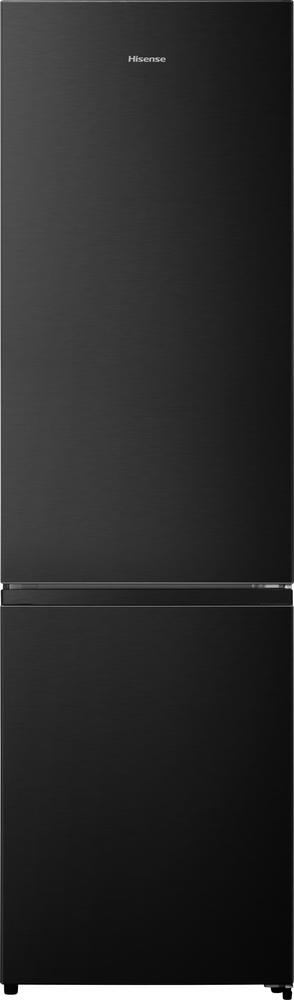
Choosing a new fridge freezer is one of those decisions that quietly affects your everyday life. Get it right and you hardly notice it doing its job; get it wrong and you are forever short of space, defrosting ice, or annoyed by the noise. Tall, frost free fridge freezers like the Hisense RB435N4WWE 200cm 60/40 No Frost Fridge Freezer in white are designed to make that part of life easier – especially if you want plenty of fresh-food room without taking over your kitchen.
Why tall 60/40 fridge freezers are so popular in UK kitchens
A 200cm-tall, 60/40 fridge freezer gives you a lot of storage in the same floor space as a smaller model. The Hisense RB435N4WWE follows this trend with a tall, slim design and a generous fridge on top, freezer below. For many households, that 60% fridge space matches how they actually eat: more fresh food and chilled drinks, less bulk-frozen shopping.
If you are wondering how it stacks up in real homes, the RB435N4WWE has earned an impressive rating of 4.9 out of 5 from around 900 customer reviews, which suggests it is doing the basics very well. You can dig into what owners really think in our in-depth hands-on piece – simply read our full review of the Hisense RB435N4WWE 200cm 60/40 No Frost Fridge Freezer for detailed insights.
Working out if a 200cm fridge freezer will fit your space
Before falling for any tall fridge freezer, measure your kitchen carefully. A 200cm appliance like the RB435N4WWE is taller than many older models, so you will want to check:
- Ceiling height – allow a little space above so heat can escape.
- Width and depth – including skirting boards and any pipes behind.
- Door swing – make sure the door can open fully without hitting walls or cabinets.
- Access route – will it get through your front door, hallway and any tight corners?
If your kitchen simply cannot handle 200cm, a slightly shorter model may be smarter. The Hisense RB390N4ACE 186cm 60/40 No Frost Fridge Freezer offers a very similar 60/40 layout and stainless-steel look, just scaled down to about 186cm high, which can be a better match for older properties with wall units set lower.
Understanding 60/40, 50/50 and 70/30 fridge freezer splits
The split between fridge and freezer space is one of the biggest decisions you will make. The Hisense RB435N4WWE offers a 60/40 layout, which gives priority to the fridge compartment. That is ideal if most of your weekly shop is fresh – fruit, veg, meats, dairy and lunch bits.
But there are other layouts worth considering:
- 60/40 split – like the RB435N4WWE and RB390N4ACE; a great all-rounder for most families where the fridge is opened constantly and the freezer is used for essentials and some batch cooking.
- 50/50 split – more balanced for people who freeze a lot. The Hisense RB327N4WCE 182cm 50/50 No Frost Fridge Freezer is a good example, giving equal attention to fridge and freezer space in a slightly shorter body.
- 70/30 split – maximises fridge space, making sense if you eat mainly fresh food and use the freezer only for ice cream, frozen veg and a few standbys. The integrated Hisense RIB312F4AWE 177cm 70/30 Integrated Frost Free Fridge Freezer follows this pattern for built-in kitchens.
Think about your current appliance: which part is always packed, and which is half empty? That is usually the best guide to which split will suit you next time.
No Frost explained: why the RB435N4WWE is low-maintenance
The Hisense RB435N4WWE is a No Frost fridge freezer, which means it circulates air in the freezer so ice does not build up on the walls and drawers. This avoids the usual chore of defrosting, where you empty the freezer, mop up water and wait for everything to refreeze. For busy households, that alone can be a dealmaker.
No Frost technology also tends to keep the temperature more even. That helps food stay in better condition and makes it easier to see and access everything without ice clumps in the way. Most of the alternative models mentioned here – the RB435N4BCE, RB390N4ACE and RB327N4WCE – are also frost free, so you have a range of low-maintenance options whether you go for stainless steel, white, 60/40 or 50/50.
Finishes and style: white vs stainless steel, freestanding vs integrated
One of the big aesthetic choices is the finish. The RB435N4WWE comes in white, which works well in traditional kitchens, rental properties and bright, minimal spaces. White tends to show fewer fingerprints than darker metallics and often blends easier with existing appliances.
If you love a contemporary look, the Hisense RB435N4BCE 200cm 60/40 No Frost Fridge Freezer is essentially the stainless-steel cousin of the RB435N4WWE. It shares the same tall, roomy concept but in a brushed, steel-style finish that suits modern and industrial-style kitchens.
For sleek, built-in kitchens where you want the appliance to disappear behind cabinet doors, the Hisense RIB312F4AWE integrated fridge freezer is worth a look. Being integrated, it uses a sliding door fixing kit and does not show its exterior, instead matching your existing cupboard doors. You lose a little height compared with a 200cm freestanding model, but gain a more seamless finish.
Energy rating and running costs: what an E rating means in practice
The RB435N4WWE and its close relatives carry an E energy rating under the current EU/UK labelling system. This can sound low if you are used to the old labels, but remember the scale was reset a few years ago. Many modern, efficient appliances that once wore A+ or A++ now sit at C, D or E on the stricter, modern scale.
When comparing, the key is to look at the annual kWh usage and balance that against size and features. A tall, 200cm appliance inevitably uses more energy than a tiny under-counter fridge, but it may still be efficient for its capacity. The advantage of a well-designed No Frost model is that it maintains performance over time, rather than getting less efficient as ice builds up. If you want to see how this plays out in real-world bills and noise levels, our detailed RB435N4WWE review looks at day-to-day running in more depth.
Practical storage: making the most of a tall 60/40 fridge freezer
A 200cm fridge freezer gives you a lot of usable volume, but layout matters just as much as litres. While the exact shelf and drawer configuration will vary slightly, tall 60/40 models like the RB435N4WWE usually offer several adjustable glass shelves, door balconies for bottles and jars, and one or two crisper drawers for fruit and veg.
To get the best from that space:
- Use the doors for items that are less temperature sensitive (sauces, drinks, condiments).
- Keep raw meat on a dedicated shelf or in a box to stop drips and cross-contamination.
- Reserve a shelf for leftovers and lunchboxes so they do not disappear to the back.
- In the freezer, label and date items so you rotate older food to the front.
If you find yourself constantly struggling for freezer room, a 50/50 model like the RB327N4WCE, or an extra small chest freezer in a garage or utility, may be a better fit than sticking rigidly with 60/40.
Noise, placement and everyday comfort
Modern fridge freezers are far quieter than older models, but you will still hear a gentle hum and occasional gurgle as the compressor and fans do their work. With tall freestanding models such as the RB435N4WWE, the key to keeping noise unobtrusive is good placement and installation.
Make sure it stands level on all four feet so vibrations do not transfer into cabinets or floors. Leave the recommended ventilation space around the back and sides. Avoid placing it right next to your main seating area in an open-plan room if you are particularly sensitive to noise. If you are moving from an old, frost-filled unit, you may be pleasantly surprised at how restrained a modern frost free model is in day-to-day use.
Freestanding vs integrated: which makes sense for you?
The RB435N4WWE is a freestanding fridge freezer, which brings a few practical advantages. It is normally quicker and cheaper to install, offers slightly more internal space for its footprint than an integrated equivalent, and is easier to move or replace if you change your kitchen layout.
Integrated options, like the RIB312F4AWE, are more about design than extra functionality. They are great if you are planning a full kitchen refurbishment and want all your appliances hidden. If you are simply upgrading an old white fridge freezer, a tall freestanding model in white or stainless makes more sense, with far less disruption.
Comparing close alternatives to the Hisense RB435N4WWE
If you are attracted to the overall idea of a tall, frost free fridge freezer but are not sure which exact model to go for, it helps to look at close relatives and see how they differ.
- Hisense RB435N4BCE – same 200cm height and 60/40 layout as the RB435N4WWE, but in stainless steel rather than white. Ideal if you prefer a modern metallic finish. You can see how it compares in everyday use by checking our RB435N4BCE review.
- Hisense RB390N4ACE – a slightly shorter 186cm 60/40 model in stainless steel, good if you are tight on height but still want frost free convenience. Take a look at our RB390N4ACE review for more detail.
- Hisense RIB312F4AWE – a 177cm integrated 70/30 appliance that hides behind your cabinet doors. A strong choice if you are redoing your kitchen and care most about seamless design; our RIB312F4AWE review walks through the built-in side of things.
- Hisense RB327N4WCE – 182cm tall with a 50/50 split, giving more freezer space in a similar overall footprint. If you batch cook, store a lot of frozen food or do big monthly shops, our RB327N4WCE review is worth a read.
All of these sit in a similar price band and share frost free technology and solid user ratings. The real decision comes down to height, split (60/40 vs 50/50 vs 70/30), finish (white vs stainless) and whether you want freestanding or integrated.
Installation, delivery and first-use tips
Once you have chosen your new fridge freezer, a bit of planning makes installation smoother. Measure doorways and staircases carefully if you live in a flat or older property with tight corners. Clear a space around where the appliance will stand so you are not rearranging furniture while the delivery crew waits.
After it has been delivered and unboxed, most manufacturers recommend leaving a fridge freezer to stand upright for a few hours before switching on, especially if it has been laid on its side in transit. Once powered up, let it reach temperature before loading it to the brim; start with a smaller amount of food and add more over the first day. This helps the compressor settle and ensures everything reaches a safe, stable temperature.
Keeping your new fridge freezer in good condition
Modern frost free models are low-maintenance, but a little care goes a long way. Wipe the door seals now and then to keep them clean and flexible, as dirt can weaken the seal and waste energy. Avoid overloading door shelves with very heavy bottles, which can strain the hinges over time.
It is also worth checking the temperature occasionally with a simple fridge thermometer, especially if you change how the fridge is packed. If your kitchen gets particularly hot in summer, try to keep the appliance out of direct sunlight and away from ovens or radiators. These small habits will help tall models like the RB435N4WWE run efficiently for many years.
Bringing it all together
Tall, frost free fridge freezers like the Hisense RB435N4WWE are popular for good reason: they pack a lot of usable space into a slim footprint, cut out defrosting and are flexible enough for most households. Whether you go for the white RB435N4WWE, its stainless-steel twin RB435N4BCE, a shorter RB390N4ACE, the integrated RIB312F4AWE or a 50/50 RB327N4WCE, the key is to match height, split and style to how you actually live.
If you are leaning towards the RB435N4WWE but want to be absolutely sure, take a few minutes to read our full hands-on review of the Hisense RB435N4WWE. Pair that with the comparison reviews linked above, and you will be in a strong position to choose a fridge freezer that quietly does its job for years to come.