
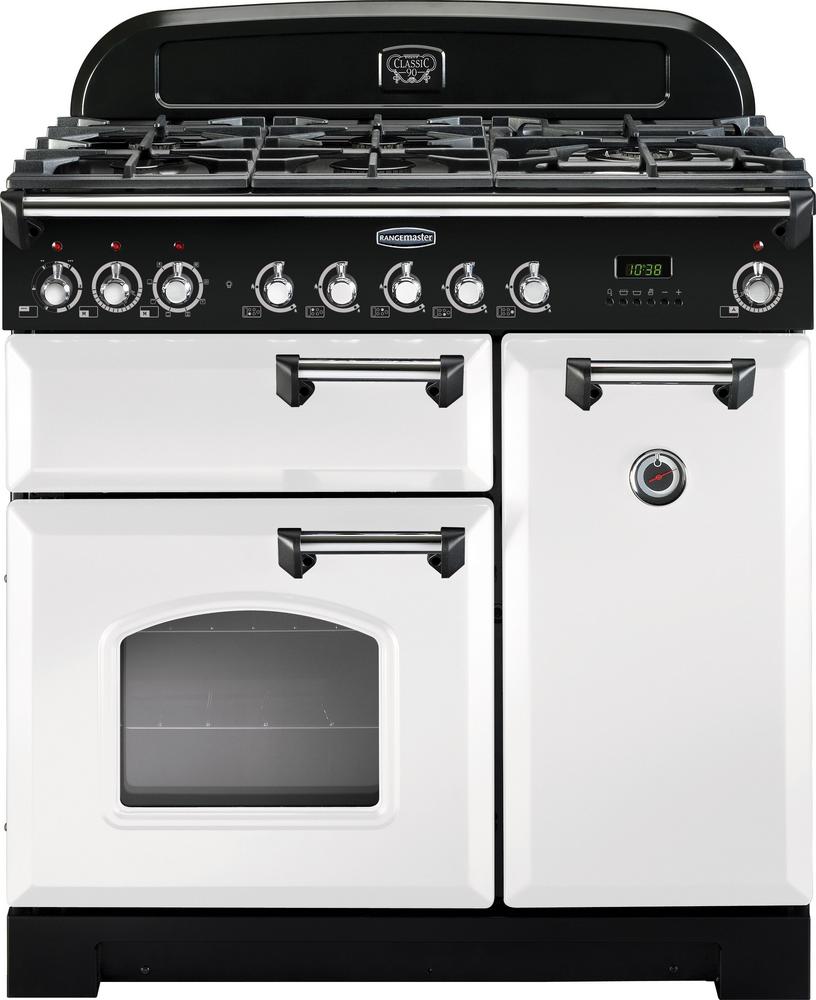
If you love to cook, bake and entertain, a freestanding range can turn your kitchen into a genuine home hub. The Rangemaster Classic CLA110ECBL/C 110cm wide Electric Range Cooker with Ceramic Hob – Black / Chrome is a traditional-looking, fully electric range that aims to deliver that country-kitchen character with the practicality of a modern ceramic hob and twin ovens. In this guide we’ll walk through what living with a big 110cm electric range is really like, how the Classic CLA110ECBL/C fits into that picture, and which alternatives might suit you better.
Why choose a 110cm electric range with ceramic hob?
A 110cm range cooker is a sizeable commitment, both in terms of space and budget. In return, you get a very different cooking experience from a standard 60cm cooker.
With a model like the Rangemaster Classic CLA110ECBL/C, the headline benefits are:
- Generous oven capacity – ideal for family meals, batch cooking and entertaining.
- Multiple cavities – typically separate ovens plus a grill, so you can cook at different temperatures at once.
- Electric ovens – generally excellent for even heat and reliable baking results.
- Ceramic hob – smooth, easy to wipe clean, and gives a sleek finish even on a classic-style cooker.
If you’re weighing up whether this is the right type of appliance, it’s worth thinking less about individual specs and more about how you cook week to week. Our in-depth look at the Rangemaster Classic CLA110ECBL/C goes into the day-to-day experience in more detail, but the key is matching the layout and feel to your habits.
Getting to know the Rangemaster Classic CLA110ECBL/C
The Classic CLA110ECBL/C is very much about combining heritage styling with modern electric performance. You get the familiar Rangemaster look – bevelled doors, arched glass windows and traditional control knobs – finished in black with chrome trims, so it works just as well in a smart contemporary kitchen as in a traditional scheme.
As an all-electric range with a ceramic hob, it’s designed for households that prefer the simplicity of electric over gas. There’s no open flame on the hob, just clearly marked radiant zones beneath a smooth glass surface. Ovens and grill are electric too, which suits keen bakers who want reliable, even temperatures.
With a 110cm width you can expect a multi-cavity layout that lets you roast, bake, grill and keep food warm all at the same time. Owners who really stretch their cooker over Christmas or for big Sunday lunches will appreciate that flexibility. If you’d like to see how that layout translates into real-world cooking, you can read our full review of the Rangemaster Classic CLA110ECBL/C for hands-on impressions.
Size, space and installation: what you need to check
Before falling for any 110cm range, make sure the practicalities work out.
Measuring your kitchen
A 110cm wide appliance needs more than just a 110cm gap. You should plan for:
- A little clearance on each side, as recommended by the installer or manufacturer.
- Comfortable space in front for you to bend, lift heavy dishes and open doors fully.
- Safe distances from any combustible surfaces above and around the cooker.
Think about how the doors open too. If your kitchen is galley-style, oven doors swinging out into a narrow walkway can become an everyday annoyance.
Getting it into the room
A full-size range is heavy and bulky. Measure doorways, tight corridors and corners to be sure it can physically reach its final position. Delivery teams are well used to awkward British hallways, but it’s still wise to check in advance.
Electrical requirements
As a powerful electric range, the Rangemaster Classic CLA110ECBL/C will typically require a dedicated high-amp supply rather than a standard plug socket. If you’re upgrading from a smaller cooker, have an electrician confirm whether your existing wiring is suitable. It’s also a good opportunity to decide where you want the cooker switch and, if needed, to tidy up any older wiring in that part of the kitchen.
Ceramic hob vs gas and induction: which suits you?
The Classic CLA110ECBL/C uses a ceramic hob, which sits in the middle ground between traditional gas and modern induction.
Living with a ceramic hob
Ceramic hobs are popular because they’re:
- Easy to clean – a flat glass surface with no pan supports or burners to dismantle.
- Visually tidy – when off, the hob almost disappears, especially on a dark worktop.
- Simple to understand – clear zone markings and familiar rotary controls on a Rangemaster style cooker.
The trade-off is that heat-up and cool-down times are slower than gas or induction. If you’re used to instant changes in flame size, you’ll need to adjust by nudging temperatures earlier and using the residual heat intelligently.
When dual fuel might make more sense
If you love the classic styling of the Rangemaster Classic family but prefer gas hobs, you might be better off with a dual fuel sibling. The Rangemaster Classic Deluxe CDL90DFFOG/C 90cm Dual Fuel Range Cooker offers that combination: gas burners on top, electric ovens below, plus a slightly narrower 90cm width that can be easier to slot into modest kitchens.
Stepping away from the Classic styling, the Rangemaster Professional Deluxe PDL90DFFWH/C 90cm Dual Fuel Range Cooker is worth a look if you want a more contemporary professional aesthetic with the responsiveness of gas burners.
Classic styling vs modern design: matching your kitchen
Beyond fuel type, one of the biggest decisions is aesthetic. The CLA110ECBL/C is proudly traditional, but Rangemaster’s line-up offers different looks built on similar core functionality.
Traditional charm: Classic and Classic Deluxe
The Classic series, including the CLA110ECBL/C, majors on bevelled doors, porthole windows and timeless range cooker detailing. If you’re planning shaker-style cabinetry, rustic touches or a country-inspired space, this sits perfectly.
If you like the traditional feel but want something a little more embellished and luxurious, the Rangemaster Classic Deluxe CDL90ECWH/B Electric Range Cooker with Ceramic Hob brings extra colour options and refined trims. It’s 90cm wide rather than 110cm, making it a strong option if you’re short on space but still want that statement presence.
Modern professional look: Professional Plus
If you prefer straighter lines and a more contemporary finish, the Rangemaster Professional Plus PROP110ECCR/C 110cm Electric Range Cooker with Ceramic Hob delivers similar all-electric, ceramic-hob practicality in a sleeker package. In cream with chrome, it bridges the gap between modern and traditional nicely, especially in a lighter, more neutral kitchen design.
The key point is to choose a cooker that feels at home in your space. You’ll be living with it for years, so picking the right look matters just as much as tweaking technical features.
90cm vs 110cm: which width works better?
All the alternatives mentioned here are 90cm or 110cm wide ranges. Deciding between them comes down to a mix of kitchen size, cooking style and budget.
Reasons to opt for 110cm width
Going for a 110cm model like the Classic CLA110ECBL/C or Professional Plus PROP110ECCR/C makes sense if you:
- Regularly cook for large groups or extended family.
- Love hosting big Sunday roasts or Christmas dinners with lots of side dishes.
- Do a lot of batch cooking and want to run multiple dishes at once.
- Have a larger kitchen where a 60cm cooker would look lost under a long run of worktop.
Reasons to choose 90cm instead
A 90cm range such as the Classic Deluxe CDL90ECWH/B or Professional Deluxe PDL90DFFWH/C can be a smarter fit if:
- Your kitchen is compact or has awkward corners.
- You mostly cook for one to four people but still like the flexibility of two ovens.
- You want a high-end range experience without dedicating quite as much space and budget.
In many British homes, 90cm strikes the ideal balance: a noticeable upgrade from a standard cooker, yet easier to accommodate than a full 110cm statement piece.
Day-to-day cooking on a large electric range
Once installed, the difference between a range like the CLA110ECBL/C and a standard cooker is most obvious in the rhythm of your cooking week.
Using multiple cavities intelligently
One of the biggest advantages is being able to dedicate each cavity to a different task. For example, you might:
- Use one oven for roasting meat or veg.
- Keep another oven at a lower temperature for warming plates or gently reheating.
- Run the grill independently for crisping toppings or finishing dishes.
With a bit of planning, you can move food between cavities as it progresses, rather than trying to juggle everything in a single oven at different shelf levels.
Batch cooking and baking
If you like to stock the freezer with home-cooked meals, a large electric range comes into its own. You can load trays of vegetables, bake multiple loaves or cakes, and cook future dinners alongside tonight’s meal. Electric ovens usually excel at holding steady temperatures, which is reassuring if you’re tackling bakes that rely on precise heat.
Cleaning and care: keeping your range looking good
A big, glossy range can dominate the eye-line in a kitchen, so it pays to keep it looking sharp.
Looking after the ceramic hob
For the ceramic top on the CLA110ECBL/C and similar electric models:
- Wipe up spills as soon as the surface is cool enough to touch safely.
- Avoid dragging heavy pans across the glass to reduce the chance of scratches.
- Use a cleaner designed for ceramic hobs and a soft cloth or non-scratch pad.
- For stuck-on food, use a dedicated hob scraper at a shallow angle, following the instructions carefully.
Oven and door maintenance
For the ovens, a little routine cleaning goes a long way:
- Wipe out spills after use rather than letting them bake on repeatedly.
- Soak shelves and trays in warm soapy water to cut through grease.
- Use oven cleaners that are compatible with your particular enamel finish.
- Clean door glass regularly so you can see what’s going on inside without constantly opening the doors.
Well-maintained seals and hinges also help the ovens hold their heat effectively, which is another reason not to neglect basic cleaning.
Energy use and getting good value from a large range
A common concern with any big cooker is energy consumption. It’s true that a multi-cavity 110cm range has more potential capacity to heat, but you’re in control of how you use it.
Making your electric range more efficient
Whichever model you end up with, a few simple habits can help:
- Preheat thoughtfully – don’t turn on every cavity “just in case”; use only what you need.
- Batch cook – fill trays and racks to make the most of each oven cycle.
- Resist opening doors too often – each peek lets out heat and lengthens cooking time.
- Match pans to hob zones – using a small pan on a large zone wastes energy.
Electric ovens are generally good at holding heat once up to temperature. If you’re smart with cavity use and timing, a large range doesn’t have to be extravagant to run.
How the main alternatives stack up
To summarise where the key alternatives sit alongside the Rangemaster Classic CLA110ECBL/C:
- Rangemaster Classic Deluxe CDL90ECWH/B – 90cm wide, electric with ceramic hob, similar traditional styling but in white with brass detailing. Ideal if you like the Classic look but want something slightly smaller and a touch more ornate; see our full Classic Deluxe CDL90ECWH/B review for more.
- Rangemaster Professional Deluxe PDL90DFFWH/C – 90cm, dual fuel with gas hob and electric ovens, in a clean white finish. This model suits cooks who prefer gas on the hob and a more minimalist, professional aesthetic; there’s plenty more detail in our Professional Deluxe PDL90DFFWH/C review.
- Rangemaster Professional Plus PROP110ECCR/C – 110cm, fully electric with ceramic hob, in cream with chrome trim. It’s a direct size rival to the CLA110ECBL/C but with a more contemporary design language; you can explore it further in our Professional Plus PROP110ECCR/C review.
- Rangemaster Classic Deluxe CDL90DFFOG/C – 90cm, dual fuel in olive green with chrome. This is a strong option if you want the Classic look, a stylish colour statement and the feel of gas burners; for deeper insights, see our Classic Deluxe CDL90DFFOG/C review.
Together, these create a useful shortlist around the Classic CLA110ECBL/C if you’re still deciding between fuels, widths and styles.
Choosing the right range for your home
Ultimately, there’s no single “best” range cooker – it’s about the right mix of size, fuel, layout and look for your kitchen and your cooking. A 110cm electric range with ceramic hob like the Rangemaster Classic CLA110ECBL/C makes a lot of sense if you want generous capacity, prefer low-maintenance electric over gas, and love the idea of a traditional centrepiece in black and chrome.
If you’re drawn more to gas on the hob, a slightly narrower 90cm footprint, or a sleeker professional style, the alternatives above are all strong candidates to consider. The next step is to dig into how each model behaves in real use, so you can be confident you’re choosing the right partner for your cooking style.
For that, take a closer look at our hands-on insights and owner-focused notes in the dedicated product pages – starting with our full review of the Rangemaster Classic CLA110ECBL/C 110cm Electric Range Cooker with Ceramic Hob – and you’ll be well on your way to picking a range that will serve you brilliantly for years.