
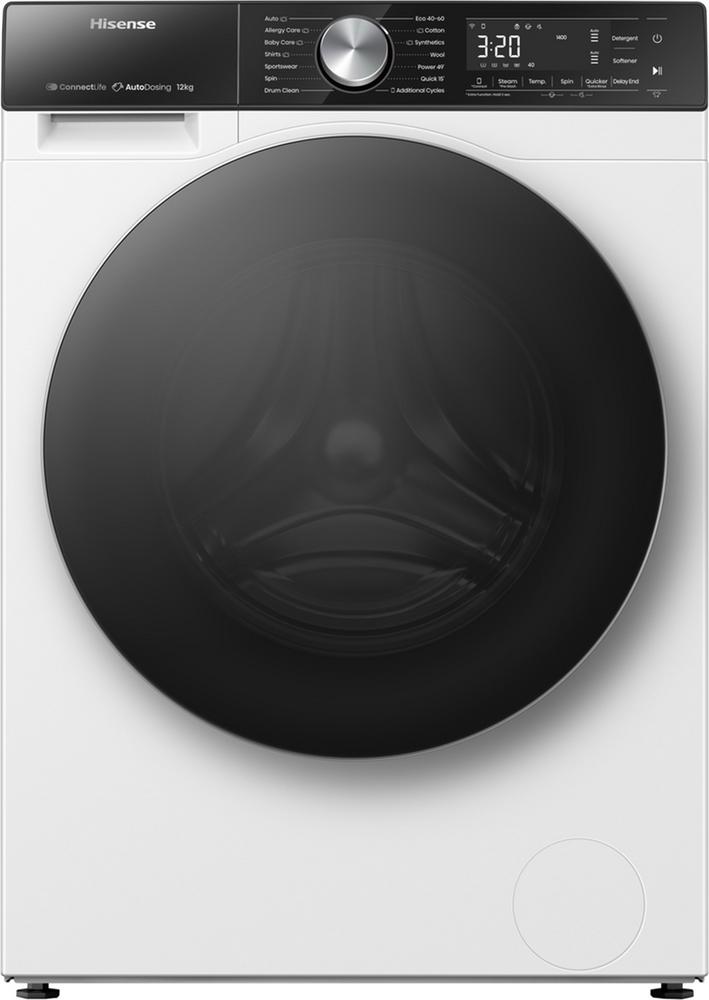
Choosing a new washing machine can feel overwhelming, especially when you’re trying to balance drum size, energy use, noise levels and clever smart features. The Hisense 5S Series WF5S1045BW 10.5kg WiFi Connected Washing Machine with 1400 rpm is a great example of a modern large-capacity model that’s been designed around busy UK households.
In this guide, we’ll look at how a 10.5kg smart washer like the WF5S1045BW fits into everyday family life, how it compares to similar options, and what to think about before you buy. If you’d like to dive into detailed specs and hands-on impressions, you can always read our full review of the Hisense 5S Series WF5S1045BW alongside this buying advice.
Why capacity matters more than you think
Drum size is one of the first things to nail down. The Hisense WF5S1045BW offers a generous 10.5kg capacity, which immediately marks it out as a strong choice for families, shared homes or anyone who regularly tackles bedding and towels.
In real life, a bigger drum means fewer loads and more flexibility. You can wash:
- Large bedding sets and duvets more comfortably
- Heavy towel loads without cramming the drum
- School uniforms and sports kits in fewer cycles
If your household is smaller but you like to wash bulkier items, a large drum can still be useful. Just be honest about your habits: if you mostly run small loads, a slightly smaller machine could be more efficient day to day.
Comparing capacities: 10.5kg vs 12kg and 8–9kg
Within the same brand, there are some interesting alternatives that show how capacity choices affect your kitchen or utility layout.
Stepping up to 12kg: ideal for big families
If you regularly face piles of laundry, two very similar models are worth a look: the Hisense 3S Series WF3S1243BT3 12kg WiFi Connected Washing Machine and the Hisense 3S Series WF3S1243BW3 12kg WiFi Connected Washing Machine. Both offer a step up in drum size compared with the 10.5kg WF5S1045BW.
A 12kg drum is handy if you:
- Have a large family or busy shared house
- Wash bulky items like thick duvets, throws and curtains
- Prefer to do fewer, larger wash days rather than smaller frequent loads
For many households, the 10.5kg sweet spot of the WF5S1045BW will be more than enough. But if you’re forever squeezing in one last towel, a 12kg machine might be worth the extra space and investment.
When an integrated 8kg machine makes sense
If you’re designing a sleek, built-in kitchen, capacity may be slightly less important than a seamless look. That’s where models like the Hisense 3 Series WF3M841BWI Integrated 8kg Washing Machine come in. The 8kg drum is smaller than the WF5S1045BW’s 10.5kg, but it hides neatly behind a cupboard door.
An integrated model is ideal if you:
- Have a smaller household or flat
- Value a clutter-free kitchen appearance
- Don’t regularly wash very bulky loads
If you’re torn between a slick look and maximum capacity, consider where the machine will sit. A freestanding 10.5kg washer in a utility room can be more practical than a smaller integrated unit squeezed into a main kitchen.
Kitchen-fit 9kg: a neat middle ground
For those who want a large drum but need something that lines up nicely with standard kitchen cabinets, a model like the Hisense 5i KitchenFit Series WF5I9043BTFS 9kg WiFi Connected Washing Machine can be a clever compromise. Its 9kg capacity is slightly smaller than the WF5S1045BW, but still generous for most families.
It’s a good example of how you can trade a little capacity for a flush, fitted look and potentially easier installation into tight spaces. If your kitchen layout is awkward or you want everything to line up perfectly, this 9kg KitchenFit style is well worth considering.
Understanding spin speed and fabric care
The Hisense WF5S1045BW offers a 1400 rpm maximum spin speed, which has become something of a standard for modern washing machines. It’s fast enough to remove plenty of water, cutting down on tumble dryer time or air-drying hours, but still balanced enough for everyday fabrics.
What really matters is that you can tailor the spin speed to your load. For example:
- Use higher spins for towels, jeans and heavy cottons
- Drop the speed for delicates and woollens to reduce stretching
- Balance the drum well to avoid excessive vibration and noise
When comparing to 12kg or 8–9kg alternatives, many offer similar 1400 rpm figures. Don’t just look at the number: think about the range of programmes, how easy it is to change spin speed, and whether there are dedicated cycles for delicate fabrics, sportswear or allergy care.
Smart features: how useful is WiFi on a washing machine?
WiFi connectivity is one of the standout modern features on the Hisense WF5S1045BW, and it’s shared by several of the alternative models mentioned. It’s easy to dismiss this as a gimmick, but used properly it can make laundry more flexible.
Typical benefits of a connected washer include:
- Starting or pausing a wash from your phone
- Scheduling cycles to finish when you get home
- Receiving notifications when a cycle ends
- Sometimes accessing extra programmes or care tips via the app
For shift workers, busy families or anyone who leaves the house early and returns late, being able to line up the wash so clothes aren’t left sitting wet in the drum is genuinely helpful. If you don’t think you’ll ever use these tools, you might prioritise capacity, noise and energy rating over WiFi.
If you’d like to understand exactly how the connectivity works in everyday use, it’s worth taking a look at how it behaves in practice in our hands-on coverage. You can read the in-depth review of the WF5S1045BW here for more on the smart features and app experience.
Energy efficiency and running costs
The Hisense WF5S1045BW carries a modern A energy rating, which is impressive for a large 10.5kg drum. As energy labels have become stricter in recent years, an A rating is a solid sign that the machine has been designed with efficient motors and carefully tuned programmes.
However, the rating is only part of the story. To get the best from any washing machine:
- Use eco cycles for everyday mixed loads
- Wash at 30°C or 40°C unless you really need hotter water
- Aim for full, balanced loads to avoid wasted energy
- Keep filters and seals clean so the washer doesn’t have to work as hard
When comparing the 10.5kg WF5S1045BW with 12kg or 9kg alternatives, look beyond the letter grade where possible to estimated annual consumption. Remember that doing fewer, larger loads in a well-sized machine can actually use less energy than running a smaller drum constantly at full stretch.
Noise and where to place your washing machine
Noise levels matter more than you might think, particularly in open-plan homes or flats where the washer sits near living space. Large machines like the WF5S1045BW are often designed with damping and modern brushless motors to keep sound down, even at higher spin speeds.
To minimise disturbance:
- Install the machine on a solid, level floor to reduce vibration
- Use the correct transit bolt removal and feet adjustment at installation
- Choose lower spin speeds for late-night washes
- Consider location – a utility room or garage will always be quieter than a kitchen-diner
If your washer must live in the main kitchen and you’re sensitive to noise, it’s worth considering an integrated model such as the WF3M841BWI, as the cabinet door can help muffle sound a little. However, you’ll be trading away some capacity compared with a 10.5kg or 12kg machine.
Programmes and real-world convenience
Modern washing machines are packed with programmes, and the Hisense WF5S1045BW is no exception. While exact cycle lists vary, you can expect options suited to cottons, synthetics, mixed loads, wool, delicates, quick washes and often dedicated sportswear or hygiene-focused settings.
When you’re comparing models, focus on:
- A reliable mixed or daily cycle for most of your washing
- Fast cycles for lightly soiled items in a hurry
- Easy-to-use controls and clear labelling
- Temperature and spin adjustment on key programmes
WiFi-enabled machines often let you tweak or monitor these programmes from your phone, but the on-machine controls should still be intuitive. If you often wash at night on cheaper tariffs, look for a delay-start or end-time function that works neatly with your routine.
Care, maintenance and keeping your washer fresh
Whichever model you opt for, basic care will keep it running efficiently and smelling fresh. Large-capacity machines like the WF5S1045BW are often used heavily, so a little routine maintenance goes a long way.
Simple habits include:
- Running a hot maintenance wash once a month, ideally with a machine cleaner
- Wiping the door seal after use and checking for trapped items
- Leaving the door and detergent drawer ajar to help the drum dry
- Cleaning the filter and drawer every few months
Some smart models will nudge you with maintenance reminders via the app, which is handy if you’re prone to forgetting. Keeping on top of this will also help maintain energy efficiency and reduce the risk of unpleasant odours.
Which Hisense washing machine style is right for you?
To pull everything together, it’s worth thinking about how the different models mentioned in this guide align with typical UK households.
- Hisense 5S Series WF5S1045BW 10.5kg WiFi Connected Washing Machine – a strong all-rounder for families who want a big drum, smart features and an A energy rating in a freestanding machine.
- WF3S1243BT3 12kg WiFi Connected Washing Machine / WF3S1243BW3 12kg WiFi Connected Washing Machine – ideal for larger households or anyone prioritising maximum drum size and fewer laundry days.
- WF3M841BWI Integrated 8kg Washing Machine – suits smaller homes and design-led kitchens where a built-in, hidden look is more important than huge capacity.
- WF5I9043BTFS 9kg KitchenFit WiFi Connected Washing Machine – a good compromise between a generous drum and a neat, cabinet-friendly footprint.
All of these sit broadly in the same price area, so your decision is more about capacity, style (freestanding vs integrated), and how much you value WiFi and kitchen-fit design.
Final thoughts
The Hisense 5S Series WF5S1045BW 10.5kg WiFi Connected Washing Machine hits a sweet spot for many UK families: a big enough drum for serious laundry loads, a strong modern energy rating and smart features that add genuine convenience. If you’re planning to upgrade your washer, it’s well worth considering alongside 12kg, 9kg and integrated alternatives to see which layout and capacity best suit your home.
Before you decide, take a few minutes to think about where the machine will live, how much you really wash each week and whether you’ll use the connected features on offer. Then, for a closer look at how this particular model performs in everyday use, head over to our full hands-on review of the Hisense 5S Series WF5S1045BW, and explore the linked alternatives if you feel another size or style might be a better fit.