
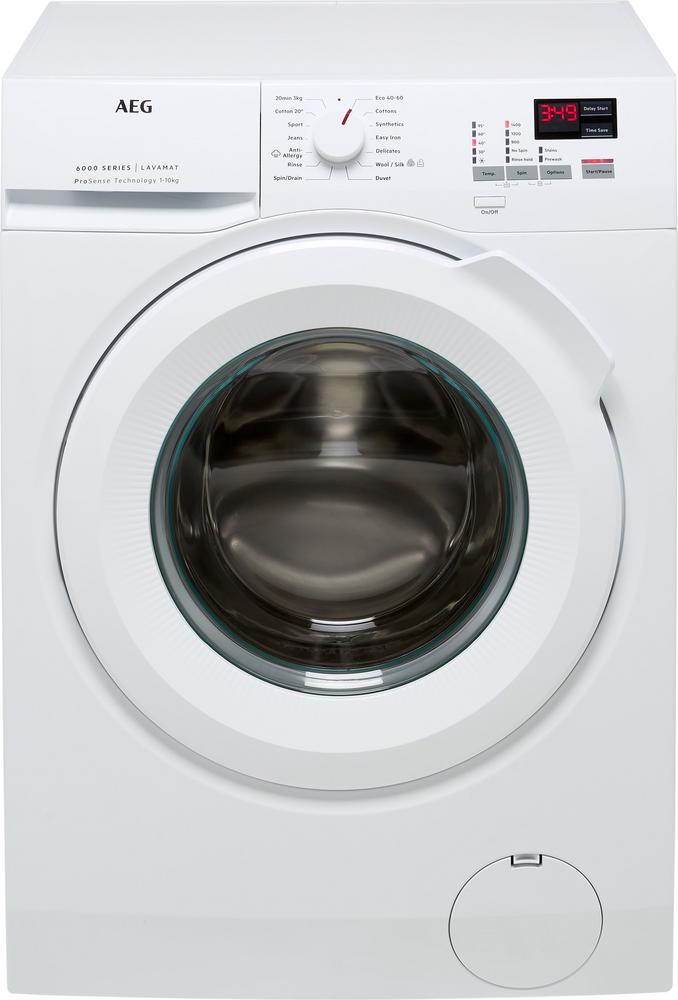
Choosing a new integrated washing machine can be surprisingly tricky. You want it to disappear neatly behind a cupboard door, handle busy family laundry, and keep bills under control – all without being an eyesore or a headache to use. The AEG 6000 AutoSense LFX6G8434BI Integrated 8kg Washing Machine with 1400 rpm is a strong example of what a modern built-in washer can offer, and it’s a useful benchmark when you’re comparing options.
This guide walks through the key things to consider when buying an integrated washing machine, using the AEG 6000 AutoSense LFX6G8434BI as a reference point and highlighting a few closely related models from the same brand. If you want every last detail, you can also read our full review of the AEG 6000 AutoSense LFX6G8434BI here.
Why integrated washing machines are so popular in UK kitchens
Open-plan living and compact new-build homes mean more of us are tucking appliances into our kitchens rather than a separate utility room. An integrated washing machine sits behind a cabinet door, so it blends in with the rest of your units. That makes it ideal if you want a calm, uncluttered look – particularly if your living and cooking space are in the same room.
Models like the AEG 6000 AutoSense LFX6G8434BI are designed with this in mind. They prioritise quiet running, solid build quality and efficient performance, so you can run a cycle without feeling like the machine is taking over the room. It’s also worth noting that integrated appliances are typically standardised in size, which helps when you’re replacing an older machine.
Getting the drum size right: is 8kg the sweet spot?
Drum size is one of the most important decisions you’ll make. The AEG 6000 AutoSense LFX6G8434BI comes with an 8kg capacity, which is a very popular size for UK households. It can comfortably handle the weekly laundry for a couple or small family, while still being efficient for half loads when you need them.
If you’re unsure, think about your typical wash day:
- Singles or couples who mostly wash clothes and a few towels will usually be fine with 7–8kg.
- Small families often find 8kg a good balance of capacity and running costs.
- Larger households or those washing sports kits and bedding constantly may prefer a 9–10kg machine.
If you like the idea of the AEG 6000 series but don’t quite need an 8kg drum, the AEG 6000 AutoSense LFX6G7434BI Integrated 7kg Washing Machine offers very similar styling and features with a slightly smaller capacity. On the other hand, if you have the space for a freestanding model and want to go bigger, the AEG ProSense Technology LFR61144B 10kg Washing Machine is worth a look.
Understanding AutoSense and smart load detection
The headline feature on the AEG 6000 AutoSense LFX6G8434BI is its AutoSense technology. In practical terms, this means the machine automatically adjusts the cycle duration and water use to match the weight of your laundry. You don’t have to obsess about always filling the drum to get decent efficiency; the machine does the thinking for you.
This has a few benefits:
- Lower energy and water use when you’re washing smaller loads.
- Gentler care for fabrics because the wash time isn’t longer than necessary.
- Less noise and wear on the machine itself over time.
If you tend to wash whenever the basket looks full rather than weighing loads or carefully planning cycles, features like AutoSense and ProSense become genuinely useful. They’re not just marketing terms; they help the machine adapt to real-life, slightly chaotic laundry habits.
For comparison, if you’re shopping outside the integrated category, the AEG LFR94846WS 8kg Washing Machine is a freestanding model with modern efficiency and care features, and it’s rated A for energy, so it’s ideal if maximum efficiency is top of your list.
Spin speeds: 1400 rpm vs 1600 rpm
The AEG 6000 AutoSense LFX6G8434BI offers a maximum spin speed of 1400 rpm. For most households this is more than enough to get laundry reasonably dry before it goes on the line or into a tumble dryer. Higher spin speeds wring out more moisture, but they can also increase creasing and noise.
If you regularly wash heavier items like towels and want them to come out as dry as possible, consider a model with a higher spin speed. The AEG ProSteam Technology LF7C8636BI Integrated 8kg Washing Machine ups the maximum spin to 1600 rpm, which helps cut down tumble drying time. It’s a good alternative if you’re happy with an integrated 8kg machine but want a little extra performance and some added fabric-care features.
Energy ratings and running costs
The AEG 6000 AutoSense LFX6G8434BI carries a B energy rating under the modern A–G scale. It’s important to remember that these labels were tightened a few years ago, so what’s now rated B might previously have been labelled A+++ on the old system. In other words, a B rating is still efficient compared to an older washer that’s been in your kitchen for a decade or more.
If you’re keen to future-proof against rising energy prices, it may be worth comparing this with the A-rated AEG washing machines in the current line-up. The freestanding AEG LFR94846WS 8kg and the larger AEG LFR61144B 10kg are both A-rated, which can nibble away at your annual running costs if you run the machine several times a week.
Whatever model you choose, you can keep bills down by:
- Washing at 30°C for everyday loads.
- Using eco cycles whenever you’re not in a rush.
- Running full or sensibly sized loads instead of frequent tiny washes.
- Cleaning the filter and detergent drawer regularly so programmes run efficiently.
Integrated vs freestanding: which layout suits you?
The AEG 6000 AutoSense LFX6G8434BI is an integrated model, so it’s intended to be built under a worktop with a door fixed to the front. This gives you a very tidy look in the kitchen and can help reduce the perceived noise, as the cabinet and door act as a partial sound barrier.
However, freestanding machines – like the A-rated AEG alternatives mentioned earlier – have their own advantages:
- Easier swapping and upgrading because they’re not tied into the kitchen units.
- Often slightly bigger drums in the same footprint, as they don’t need to accommodate the cabinet door.
- More visible controls, which some people simply prefer.
If you’re having a new kitchen fitted and want everything to match seamlessly, integrated is the obvious choice. If your machine lives in a utility room or you value flexibility above looks, a freestanding A-rated model like the AEG LFR94846WS may make more sense.
Fabric care: looking beyond basic cotton cycles
Modern washing machines do far more than just a standard cotton wash. The AEG 6000 AutoSense LFX6G8434BI sits in a range that focuses on looking after fabrics as well as getting them clean. That often translates to special programmes for wool, delicates, mixed loads, and sometimes outdoor gear or sportswear.
If you regularly wash office shirts, school uniforms or delicate fabrics, it’s worth paying attention to these specialised cycles. The AEG ProSteam Technology LF7C8636BI is designed with extra care features, including steam functions that can help reduce creasing and refresh lightly worn clothes. That can be a real time-saver if ironing is your least favourite chore.
Noise levels and open-plan living
Most of us don’t want the soundtrack of our evenings to be a spin cycle at full throttle. Integrated machines, by their nature, are a good starting point for quieter living because the cabinet helps contain some of the sound. In general, 1400 rpm models like the AEG 6000 AutoSense LFX6G8434BI tend to hit a sensible balance between effective spin and manageable noise.
You can reduce noise even further by:
- Ensuring the machine is properly levelled during installation.
- Avoiding single heavy items (like one big bathmat) that can cause imbalance.
- Using lower spin speeds in the evening if your space is very echoey.
- Running high-speed spins when you’re out or during the day.
Maintenance tips to keep your new washer running smoothly
Whichever model you choose, a little light maintenance will keep your washing machine fresh and reliable. The good news is that it only takes a few minutes each month.
Key jobs to stay on top of include:
- Running a drum clean cycle or a hot empty wash with a cleaning product to stop odours building up.
- Wiping the door seal to remove lint, pet hair and trapped detergent.
- Cleaning the detergent drawer so powders and liquids don’t clog the system.
- Checking the filter for coins, hair clips and fluff that can affect draining.
Integrated models like the AEG 6000 AutoSense LFX6G8434BI usually have the filter and pump access at the front behind a small flap in the plinth area. Make sure your kitchen fitter leaves this accessible – it will save a lot of frustration later.
Comparing similar AEG washing machines
It’s often easier to decide when you compare close alternatives side by side. Here’s how the AEG 6000 AutoSense LFX6G8434BI fits in alongside a few other popular models from the same brand:
- AEG 6000 AutoSense LFX6G8434BI Integrated 8kg, 1400 rpm, B rated – A strong all-rounder for integrated kitchens, with automatic load sensing and a family-friendly 8kg capacity. Ideal if you value a neat finish and balanced performance. You can read our in-depth review of the AEG 6000 AutoSense LFX6G8434BI here for a closer look at features and programmes.
- AEG 6000 AutoSense LFX6G7434BI Integrated 7kg, 1400 rpm, B rated – Slightly smaller drum but very similar concept. Good if you’re short on space or don’t need the extra kilo of capacity.
- AEG ProSteam Technology LF7C8636BI Integrated 8kg, 1600 rpm, B rated – Stays integrated but adds higher spin speeds and steam-based fabric care. Great if you want to cut down on tumble drying and ironing.
- AEG LFR94846WS 8kg, 1400 rpm, A rated – A freestanding 8kg option with an A energy rating. Suits those who prefer a visible machine and maximum efficiency over a hidden built-in look.
- AEG ProSense Technology LFR61144B 10kg, 1400 rpm, A rated – Freestanding with a big 10kg drum for large, busy households. A good match if you’re constantly washing bedding, towels and uniforms.
By lining up features like drum size, spin speed and energy rating, you can quickly see which model best fits your home and habits.
Key questions to ask before you buy
Before you click “add to basket”, it’s worth running through a few quick checks so your new washing machine works with your kitchen layout and lifestyle:
- Will it fit? Check height, width and depth carefully, and confirm you’ll still be able to open the door fully in your current layout.
- Is the capacity right? Try to picture a full load – do you typically wash that much at once, or would you be better off with 7kg or stepping up to 9–10kg?
- How often do you use a tumble dryer? If a dryer is doing most of the drying, 1400 rpm is usually enough. If you air-dry indoors, a 1600 rpm alternative could be helpful.
- What’s your budget for running costs? An A-rated freestanding machine could save a bit over time, but a B-rated integrated model that fits your space perfectly might be the more practical overall choice.
Bringing it all together
An integrated washing machine like the AEG 6000 AutoSense LFX6G8434BI makes a lot of sense for modern UK homes: it hides away neatly, offers a generous 8kg drum and uses smart load sensing to keep everyday running costs under control. It’s also part of a wider range, so you can easily step up to a steam-equipped model, a larger freestanding drum, or an even more efficient A-rated machine if your priorities lean that way.
If you’re weighing up which direction to go, it’s well worth reading our full review of the AEG 6000 AutoSense LFX6G8434BI alongside the detailed write-ups of the other models linked above. With the right information, you can choose a washer that fits your kitchen, your laundry habits and your energy bills for many years to come.