
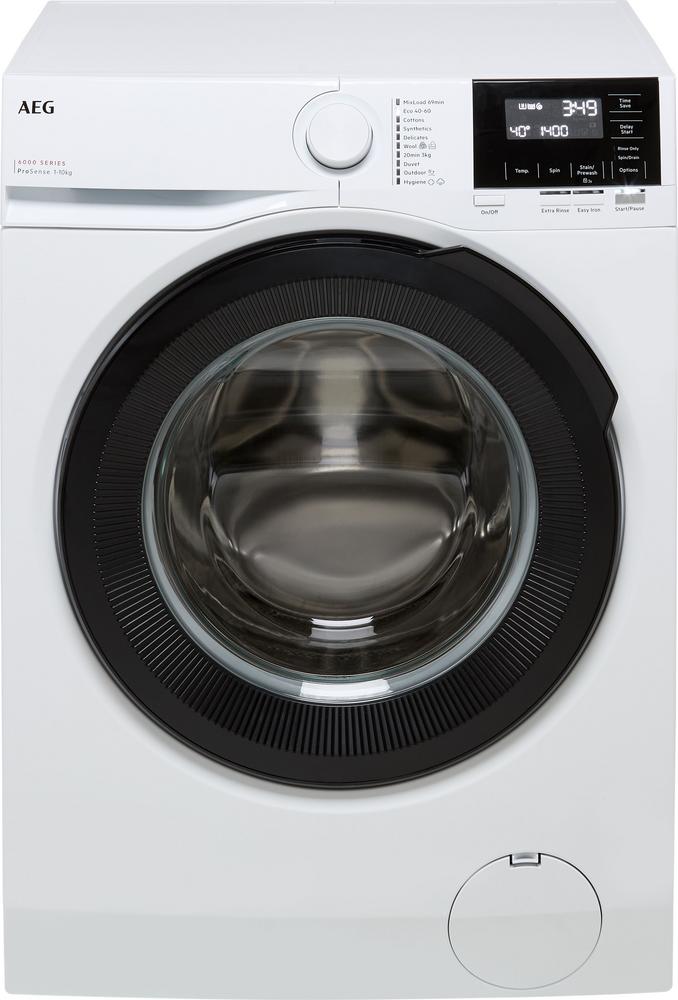
Choosing a new washing machine is one of those jobs that always feels more complicated than it should. Capacity, spin speed, energy label, endless programmes – it is a lot to weigh up, especially if you are upgrading to a bigger drum. To make things easier, this guide uses the AEG ProSense® Technology L6FBK141B 10kg 1400 rpm washing machine as a real-world example of what to look for in a modern family appliance, and how it compares with a few closely related alternatives.
Why consider a 10kg washing machine in the first place?
The first decision to make is drum size. A 10kg machine like the AEG ProSense® Technology L6FBK141B is aimed squarely at busy homes that generate a lot of laundry: think larger families, shared houses, or anyone with sports kits, pets or lots of bulky bedding.
Moving up to 10kg brings some clear benefits:
- Fewer loads per week: More space in the drum means you can combine what used to be two loads into one, saving time and hassle.
- Better for big items: Duvets, mattress protectors and thick winter throws are far less of a squeeze.
- More flexibility: You can run mixed loads more confidently, instead of constantly separating towels, school uniforms and sportswear.
If you are wondering how that compares to slightly smaller drums, a 9kg model such as the AEG ProSense® Technology LFR61944AD gives you much of the same flexibility but with a slightly more compact feel. You can see how that stacks up by taking a look at our in-depth guide to the AEG ProSense LFR61944AD.
Understanding ProSense and similar load-sensing features
One of the key things that sets the AEG ProSense® Technology L6FBK141B apart is right there in its name: ProSense. While every brand calls it something slightly different, the idea is simple – the machine weighs what is in the drum and adjusts the cycle to match.
In practice, that means:
- Automatic time adjustment: Smaller loads should not take as long as a heaving, full drum. Load-sensing keeps everyday washes more realistic.
- Smarter water use: The machine only draws the amount of water it needs for what is inside.
- Reduced energy waste: Less heating, shorter spins and fewer rinses where appropriate.
This kind of technology makes a 10kg machine more viable even if you do not always fill the drum to the brim. It also brings the energy label into sharper focus. The L6FBK141B is A-rated, so it sits right at the efficient end of the scale for this type of appliance, helping to offset the larger capacity.
If you like the idea of automated adjustments but do not necessarily need the full 10kg, the AEG ProSense LFR61944AD 9kg model is worth a closer look, offering similar technology in a slightly smaller package.
Spin speed explained: is 1400 rpm enough?
Spin speed is another headline figure you will see on every washing machine spec sheet. The AEG ProSense® Technology L6FBK141B offers a maximum of 1400 rpm, which is very typical for mid to upper-range family machines.
The higher the speed, the more water is extracted at the end of the cycle. That matters if you line-dry indoors or use a tumble dryer, where wetter clothes mean more drying time and higher energy use. In everyday family life, 1400 rpm is a comfortable sweet spot:
- Quick enough to leave cottons and towels noticeably drier.
- Gentle enough that most everyday fabrics are not stressed too much by the spin.
- Widely supported across different programmes, so you are not limited to one setting.
Some premium machines offer even faster spins, but for most homes, 1400 rpm combined with a good energy rating is a practical and efficient standard.
Energy ratings and running costs: what an A rating really means
With electricity prices where they are, the energy label is not something to skim over. The AEG ProSense® Technology L6FBK141B holds an A rating under the current scheme, which is reassuring for a 10kg model. That rating is measured on standardised test cycles, but there are a few real-world implications:
- Lower cost per kilo of laundry: Because the machine is designed to use energy carefully across a full load, the cost per item washed is often lower than older, less efficient models.
- Eco programmes matter: The best ratings are normally achieved on eco cycles, so it is worth building those into your weekly routine.
- Load sensor synergy: Features like ProSense help keep energy use aligned with what you actually put in the drum.
If you like the idea of very efficient washing but do not always need such a large drum, similar A-rated models with 8kg capacity, like the AEG ProSteam® Technology LFR71844B, can strike a balance between eco-consciousness and space. You can explore its fabric-care focus in our full write-up of the ProSteam LFR71844B.
Freestanding vs integrated: which style suits your home?
The AEG ProSense® Technology L6FBK141B is a freestanding model in classic white, designed to slide under a counter or sit in a utility room. For most UK homes, freestanding is the default: it is easier to install, easier to swap out and gives you more flexibility on size.
However, if you are planning a sleek new kitchen or want your appliance hidden behind a cupboard door, an integrated washing machine might be a better fit. That is where alternatives like the AEG 6000 AutoSense LFX6G8434BI and the AEG 6000 AutoSense LFX6G7434BI come in.
The AEG AutoSense LFX6G8434BI offers an 8kg drum with a 1400 rpm spin, designed specifically to sit behind a kitchen door. If you like the idea of integrated but do smaller loads, the AEG AutoSense LFX6G7434BI 7kg model is a tidier option that still benefits from automated load sensing.
Integrated machines are typically B-rated rather than A-rated under the latest energy labels, reflecting the design compromises needed to fit them into cabinetry. If you are torn between freestanding efficiency and a seamless kitchen, that is a trade-off to be aware of.
Fabric care and steam: when is it worth paying extra?
The AEG ProSense® Technology L6FBK141B focuses on efficient washing and intelligent load management rather than extra fabric-care bells and whistles. For many households, that is more than enough, especially if you mainly wash everyday cottons, towels and bedding.
If you are keen on reducing ironing or looking after more delicate fabrics, it is worth considering a machine that adds steam into the mix. The AEG ProSteam® Technology LFR71844B, for example, combines an 8kg drum with 1400 rpm and steam-based fabric care.
Steam functions are particularly useful if you:
- Regularly wash shirts and blouses for work and want fewer creases.
- Like to freshen up lightly worn clothes without a full wash.
- Want to be as gentle as possible on fabrics to keep them looking newer for longer.
You can see how that approach differs from a more straightforward washer by reading our detailed ProSteam LFR71844B review and comparing it with the features outlined in our full review of the AEG ProSense L6FBK141B.
Living with a 10kg washing machine: practical tips
Once you have chosen a large-capacity model, getting the best out of it day to day is mostly about loading, programme choice and basic care. Here are a few practical pointers for life with a 10kg drum.
Loading the drum correctly
It is tempting to cram in as much as you can, but overloading is one of the quickest ways to get disappointing results. Instead:
- Loosely place clothes in the drum, rather than packing them down.
- Aim to leave a hand’s width of space at the top once everything is inside.
- Mix larger and smaller items so they can tumble properly.
Under-loading can be just as inefficient, even with ProSense-style technology helping in the background. If you only have a few items, consider using a shorter or rapid cycle instead of a full cottons wash.
Choosing the right programmes
Modern machines like the L6FBK141B come with a wide range of programmes, but you will likely rely on a handful most of the time. A practical approach is to:
- Use a main cottons or mixed load programme at 30–40°C for everyday washing.
- Save higher temperatures for bedding, towels and items that need a more hygienic clean.
- Reserve rapid cycles for lightly soiled clothes when speed matters.
Once you are familiar with the basics, it is worth experimenting with eco and time-saving options to find a balance that works for your routine.
Noise, vibration and installation
Larger drums can make noise and vibration more noticeable if the machine is not installed correctly. To keep things smooth and quiet:
- Make sure the transport bolts are removed during installation.
- Check the machine is level using the adjustable feet.
- Keep heavier cycles (like towels) for daytime if your laundry area is close to bedrooms.
Freestanding machines like the ProSense L6FBK141B usually have a little more room to dissipate vibration than tightly boxed-in integrated models, another small practical point worth bearing in mind.
Keeping your washing machine in good condition
Whichever model you choose, a little regular maintenance will keep it running efficiently and help protect that all-important energy rating.
Monthly maintenance wash
Run a hot empty cycle about once a month with a dedicated cleaner or a cup of soda crystals. This helps dissolve detergent residue, clears out bacteria and keeps the drum fresh. It is particularly important if you mostly wash at 30°C, which does not always break down build-up on its own.
Looking after seals, drawer and filter
The door seal, detergent drawer and drain filter are simple to maintain and make a big difference to smells and performance:
- Wipe the rubber door seal after washes and check for small items stuck in the folds.
- Rinse the detergent drawer regularly to prevent mould and blockages.
- Clean the filter when recommended in the manual, especially if you have pets or wash items that shed fluff.
These tasks only take a few minutes but help keep any machine – from a 7kg integrated to a 10kg freestanding model – running smoothly.
Choosing between the key AEG options
If you have narrowed your search down to this family of AEG machines, here is a quick way to think about them:
- Need maximum space and efficiency? The AEG ProSense® Technology L6FBK141B 10kg A-rated washer offers one of the roomiest drums, ideal for big households and heavy laundry routines. For a deeper dive into its day-to-day performance, you can read our full review of the AEG ProSense L6FBK141B.
- Want similar tech but a touch smaller? The AEG ProSense LFR61944AD 9kg gives you the same 1400 rpm and A-rated efficiency in a slightly more compact capacity.
- Planning a built-in kitchen? Consider the integrated AEG 6000 AutoSense LFX6G8434BI 8kg or AEG 6000 AutoSense LFX6G7434BI 7kg models, which hide neatly behind a cupboard door.
- Care about steam and fabric care? The AEG ProSteam LFR71844B 8kg introduces steam-based functions to help reduce creasing and gently refresh clothes.
All of these machines sit around 1400 rpm and focus on sensible, real-world performance. The choice comes down to how much capacity you genuinely need, whether you value integrated styling over freestanding flexibility, and how important those extra fabric-care features are to you.
Final thoughts
Picking a new washing machine is really about matching the appliance to your lifestyle. If you are constantly juggling big piles of laundry, a 10kg, A-rated freestanding model like the AEG ProSense® Technology L6FBK141B can make a noticeable difference to how often you wash and how much it costs to run.
From there, it is a question of fine-tuning: drum size, integrated or freestanding design, and whether steam or other special features matter for the way you do laundry. Use the examples here as a benchmark, and if you would like a closer look at real-world performance, programmes and user feedback, you can explore our detailed review of the AEG ProSense L6FBK141B and the linked alternatives to find the best fit for your home.