
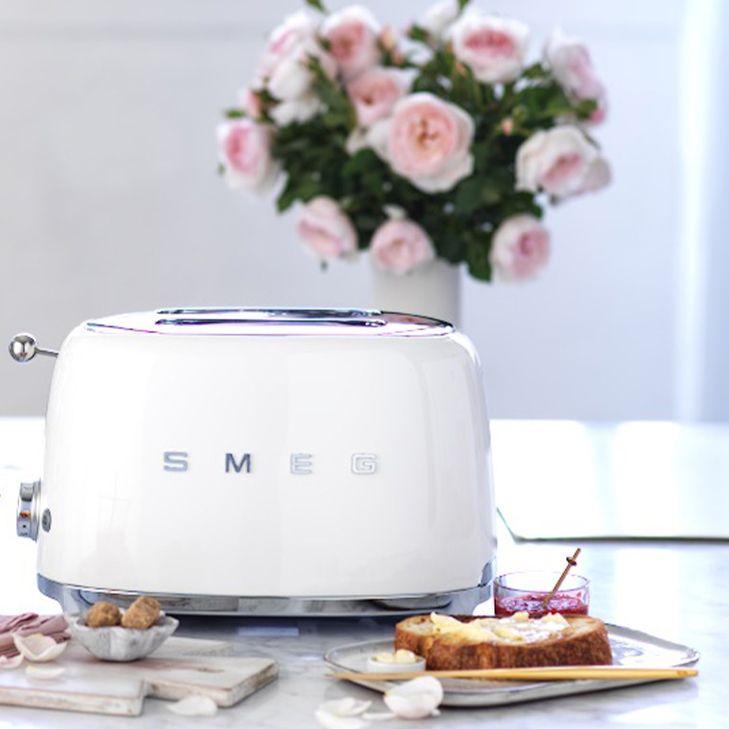
If you love the idea of turning breakfast into a little moment of joy, a stylish toaster can make more difference to your kitchen than you’d expect. The Smeg 50’s Retro TSF01GRUK 2 Slice Toaster in grey takes that idea seriously, pairing classic 1950s styling with the sort of everyday practicality you actually need on a busy weekday morning. In this guide, we’ll walk through what to consider before buying a premium retro toaster like this, how to choose the right colour for your kitchen, and some simple tips for getting the best out of it day after day.
Why the Smeg 50s Retro toaster has become a kitchen icon
Retro-style appliances have been around for years, but the 50s-style toaster has become something of a design icon. It’s compact, curved and immediately recognisable, often acting as the focal point on the worktop rather than something you hide away.
The TSF01GRUK grey model takes that look and softens it with a neutral finish that tends to work with almost any cabinet colour or worktop. If you’re weighing it up, you might find it helpful to read our full review of the Smeg 50’s Retro TSF01GRUK 2 Slice Toaster, where we focus more on hands-on performance and user feedback.
Here, we’re going to zoom out: is a premium 2-slice toaster like this actually a good idea for your home, and how do the alternative colours compare if you’re building a coordinated set?
Understanding what you’re paying for with a premium toaster
At first glance, it’s tempting to ask why you’d spend significantly more on a toaster that, on paper, still only browns two slices of bread. The reality is that the extra cost is spread across several areas:
- Design and finish: a curved, metal-bodied shell with a smooth paint finish or chrome, plus matching controls.
- Heft and feel: a more substantial weight that helps it feel planted on the worktop, with a satisfying lever action.
- Brand cohesion: the option to match your toaster to a kettle or other appliances in exactly the same shade.
- Perceived longevity: premium appliances are usually bought with the expectation that they’ll stay in service for years, not just a couple of seasons.
Of course, you should still expect it to brown bread evenly and be straightforward to use. That is where day-to-day features, rather than styling, matter most.
Key everyday features to look for in a 2-slice toaster
Even among premium retro-style toasters, the basics are non-negotiable. When you’re comparing options, keep an eye out for:
- Browning control: a clearly marked dial, so you can quickly learn the setting that suits your bread.
- Consistent results: being able to toast two slices to the same shade in one go, without trial and error.
- Reheat and defrost: ideal if you use frozen bread or get distracted mid-breakfast.
- Crumb tray: an easily removable tray makes cleaning quicker and keeps burning smells at bay.
- Lift mechanism: handy if you toast smaller slices or crumpets and don’t want to fish them out with utensils.
The grey TSF01GRUK sits firmly in this camp: it’s not a complex gadget, and that simplicity is part of the appeal. It’s designed to live on the counter, be used instinctively, and look good while doing it. If you want the technical deep dive, you can always check our in-depth TSF01GRUK review for more detail on controls and performance.
Choosing the right colour: grey vs pastel vs bold
Once you’ve decided that a retro-style toaster suits your home, the biggest decision tends to be the colour. The same core 2-slice design comes in several shades, which is where the alternatives are useful.
Grey: a safe, versatile choice
The TSF01GRUK in grey is a natural fit if you want something that looks premium without shouting about itself. It tends to work well with white, black, wood-effect and stone worktops, and it’s forgiving if you change your kitchen colour scheme later. Grey also hides minor fingerprints better than very dark colours, but will still show up crumbs and splashes, so a quick wipe-down now and then is worthwhile.
Pastel green: soft colour for lighter kitchens
If you like the retro look but want a bit more personality, the Smeg 50’s Retro TSF01PGUK 2 Slice Toaster in pastel green is a gentle way to introduce colour. The soft green tone works beautifully with white or light-grey cupboards and can make a small kitchen feel brighter without being overwhelming. It’s also a popular choice if you’re aiming for a more traditional or cottage-style aesthetic.
Pink: a statement piece on the worktop
For something more playful, the Smeg 50’s Retro TSF01PKUK 2 Slice Toaster in pink turns the toaster into a genuine statement piece. It’s ideal for bolder kitchens, open-plan spaces where you want a pop of colour, or simply anyone who feels breakfast should be fun. Bear in mind that bold colours draw the eye, so you may want to coordinate your kettle or other small appliances to keep the look deliberate rather than random.
Red: classic diner-style retro
If you picture a vintage American diner, you probably see chrome and red. The Smeg 50’s Retro TSF01RDUK 2 Slice Toaster in red leans into that look, working nicely with stainless steel appliances and darker worktops. It can also be a clever way to add warmth to a very monochrome kitchen, where everything else is white, black or grey.
Chrome: the most reflective finish
At the premium end of the aesthetic scale sits the Smeg 50’s Retro TSF01SSUK 2 Slice Toaster in chrome. This finish can look stunning under good lighting and alongside stainless steel ovens, hobs and extractors. The trade-off is that fingerprints and smudges will show more easily, so you’ll want to keep a soft cloth handy if you like it looking pristine.
Matching your toaster to the rest of your kitchen
Colour is only part of the story. It’s worth thinking about how your toaster will sit visually with the rest of your space:
- Cabinet colour: pastels and grey tend to work well with white and light neutrals, while red and chrome can complement darker or high-contrast schemes.
- Worktop material: glossy worktops can exaggerate reflections from chrome, whereas matt surfaces soften the effect.
- Other appliances: if you have a matching kettle in mind, it often makes sense to stick with the same brand and colour family for a cohesive look.
Because all of these 2-slice models share the same overall shape and layout, you’re really free to pick based on what pleases your eye every morning. The grey TSF01GRUK is often chosen as the “safe” choice that still feels special, while the coloured versions are about expressing personality.
Practical tips for using a premium toaster every day
Once it’s on your worktop, the way you use your toaster has more impact on your breakfasts than the styling. A few practical habits go a long way:
- Bench-mark your settings: use a standard sliced loaf to find your perfect browning level, then remember the dial position. You can adjust up or down slightly for thicker breads.
- Use defrost for frozen slices: the dedicated function is there to help, so frozen bread can toast through without burning the outside.
- Don’t overload the slots: if an artisan loaf doesn’t fit comfortably, cut it to size rather than forcing it in. This protects both the bread and the mechanism.
- Give it breathing room: leave a little space around the toaster so heat can escape freely and you’re not warming up nearby cables or items.
Because the TSF01 series is built to feel solid, the controls should be pleasant to use, but treating them gently will still help prolong the life of the mechanism.
Keeping your retro toaster clean and looking new
One of the biggest reasons to invest in a designer toaster is that you’ll be looking at it every day. A little regular care will keep it looking the part.
Cleaning the exterior
For painted or coloured finishes like the grey TSF01GRUK, pastel green, pink or red, stick to a soft damp cloth with a touch of mild washing-up liquid if needed, then dry immediately. Avoid abrasive pads or aggressive cleaners, as they can dull the shine over time. Chrome models deserve extra care: use a gentle glass or stainless-steel cloth to avoid streaks, and buff lightly for a mirror finish.
Dealing with crumbs
The crumb tray is there to make your life easier, but only if you use it. Make a habit of emptying it every few days if you toast regularly, and more often if you spot burnt smells. Shake out loose crumbs over the bin and give the tray a quick wash and dry when needed. This reduces smoke, helps the toaster heat more evenly and can even help protect the internal elements over the long term.
Keeping the slots clear
Resist the urge to poke around inside with metal knives or forks; it’s unsafe and can damage the heating elements. If crumbs build up, wait until the toaster is completely cool, unplug it, then gently tap it over the sink or bin and use a soft pastry brush if you need to loosen anything stubborn. Simple steps like this help a premium toaster feel new for longer.
Is a 2-slice toaster enough for your household?
The TSF01 range is firmly in the 2-slice camp, which suits many homes but not all. It’s a good idea to think about how you actually eat breakfast:
- Single or couple households: a 2-slice model usually keeps up fine, especially if breakfast times are slightly staggered.
- Families with older children: you might find that four slices at once would be more efficient, particularly on school mornings.
- Occasional entertaining: for the odd weekend brunch, doing two rounds of toasting is usually no problem.
If you value style and don’t mind doing a second batch now and then, a 2-slice retro toaster strikes a good balance between worktop space and capacity. If speed and volume are your priority, consider whether a larger-capacity model from the same brand might suit you better in the long run.
Getting the most from different breads and bakes
The type of bread you use can make as much difference as the toaster itself. A few tweaks help you get ideal results whatever you’re toasting:
- Standard sliced loaves: these are what most toasters are tuned for, so you’ll usually find an even, predictable result at a mid-range setting.
- Thick-cut or sourdough: go slightly lower on the dial and give it a touch more time if needed rather than risking a burnt crust.
- Crumpets and teacakes: these often benefit from a bit more heat to crisp the surface; use the lift function to check progress without cancelling the cycle.
- Bagels: if you’re toasting bagels that are thicker on one side, consider lowering the setting and finishing with a brief reheat if needed.
Because retro toasters like the TSF01 series are consistent once you’ve learnt their sweet spots, you’ll quickly get into a rhythm that works for your favourite breakfast items.
How to decide between grey, pastel, bold and chrome
If you’re torn between the TSF01GRUK and the other colour variants, it may help to think in terms of personality and practicality:
- Grey: discreet, modern and versatile; ideal if you change decor often or prefer a calmer look.
- Pastel green: soft, charming and bright; great for light, airy spaces and more traditional or country-style kitchens.
- Pink: playful and distinctive; suits bolder interiors or anyone wanting the toaster to be a talking point.
- Red: warm and classic; evokes diner-style retro and pairs well with stainless-steel appliances.
- Chrome: sleek and reflective; perfect if you love a high-end, metallic finish and don’t mind a bit of extra polishing.
Functionally, these models are closely matched, so it makes sense to choose the one you’ll enjoy looking at every day. You can always dive into each specific colour’s strengths and nuances in our individual write-ups, such as the dedicated reviews of the pastel green TSF01PGUK, pink TSF01PKUK, red TSF01RDUK and chrome TSF01SSUK.
Final thoughts: making a confident choice
A toaster might seem like a small decision, but when it lives on your worktop and gets used daily, it’s worth choosing one you’ll genuinely enjoy owning. The Smeg 50’s Retro TSF01GRUK 2 Slice Toaster in grey offers a blend of timeless styling and straightforward functionality, while the alternative colours let you dial the personality up or down to suit your kitchen.
If you’d like more help deciding whether this particular model is right for you, including how it performs in real homes, you can read our full hands-on review of the TSF01GRUK grey toaster here. Whichever version you choose, a little care and attention will help your new toaster stay looking and working beautifully for years of breakfasts to come.