
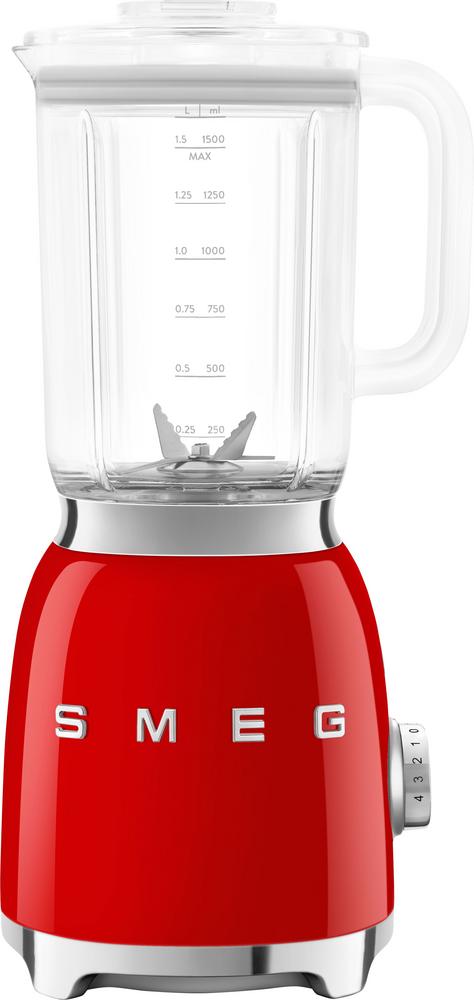
Few small appliances transform everyday cooking quite like a good blender. Whether you’re whizzing up morning smoothies, velvety soups or indulgent milkshakes, the right model quickly becomes a permanent fixture on your worktop. If you’re drawn to stylish design as much as performance, the Smeg 50’s Retro BLF03BLUK Blender in black is likely on your shortlist. This guide will help you understand what this kind of blender is best at, how it fits into a modern UK kitchen, and how it compares with its colourful siblings.
Why the Smeg 50’s Retro BLF03BLUK appeals to style-conscious kitchens
The Smeg 50’s Retro BLF03BLUK stands out because it’s designed to be seen, not hidden away in a cupboard. The black finish, classic curves and chrome accents give it that iconic mid-century look, but underneath the styling you still get a practical, everyday blender.
Owners often choose this model because they want something that looks coordinated with other 50s-style appliances, yet is robust enough for regular use. If you want to dig into performance, build quality and real-world testing, you can read our full review of the Smeg 50’s Retro BLF03BLUK Blender, but here we’ll focus on how to decide if this type of blender is right for your home and routine.
Understanding what a countertop blender does best
Countertop blenders like the BLF03BLUK are built for larger batches and smoother blends than you’d usually manage with a stick blender. They excel at:
- Smoothies and protein shakes
- Puréed soups and sauces
- Milkshakes and frappé-style drinks
- Crushing ice and frozen fruit (on suitable settings)
- Blending batters and simple mixtures
If your main goal is silky smoothies, prepped in a couple of minutes before the school run or commute, a blender of this size is ideal. For occasional dips or quick single-serve shakes, a compact personal blender might be enough, but a full-size jug gives you more flexibility and better results with tougher ingredients.
How the BLF03BLUK fits into everyday UK kitchen life
Beyond power and blades, it’s the day-to-day experience that tells you whether a blender will suit you. The Smeg 50’s Retro BLF03BLUK is designed with those realities in mind – from space on the worktop to cleaning up after dinner.
Footprint and worktop space
Most UK kitchens don’t have endless worktop space, so a blender that looks good enough to stay out has an advantage. The BLF03BLUK is deliberately eye-catching, and its upright, jug-on-base layout is fairly compact. When thinking about where it will live, check:
- Height under wall units with the jug and lid in place
- Enough clearance to lift the jug off comfortably
- A nearby socket so the cable doesn’t trail over the hob
If you’d rather brighten the space, the same design comes in different colours, such as the Smeg 50’s Retro BLF03PBUK Blender in Pastel Blue, or the soft Pastel Green BLF03PGUK version, both of which share the same overall footprint.
Jug capacity and batch sizes
The jug on this type of blender is designed to handle multiple servings at once. That’s useful if you’re:
- Making breakfast smoothies for two or more people
- Batch-cooking soups to freeze
- Mixing cocktails or mocktails when entertaining
People in smaller households sometimes assume a larger jug will be wasted, but it can be handy even for one or two, letting you blend once and keep extra portions in the fridge. If you want more detail on what you can realistically fit in the jug and how the blender copes at different fill levels, it’s worth taking a look at our hands-on findings in the dedicated BLF03BLUK review.
Choosing your colour: black vs pastel and white
Once you’ve decided that a retro-style blender of this size and type suits you, the next question is often which colour to go for. Smeg’s 50s Retro line-up is known for its palette, and the BLF03 family includes several options that are otherwise very closely matched.
BLF03BLUK Black: bold and versatile
The black BLF03BLUK is the obvious choice if you have darker worktops, anthracite appliances or a more minimal, monochrome scheme. It tends to disappear more subtly against dark tiles or splashbacks while still having that curved retro shape. Black is also forgiving when it comes to minor marks or splashes from colourful ingredients.
BLF03PBUK Pastel Blue: soft and playful
If you prefer something lighter and more playful, the Smeg 50’s Retro BLF03PBUK Blender in Pastel Blue is worth considering. The blue finish gives a softer, more vintage feel that works well with white units or open shelving. It can be a focal point in a neutral kitchen, or part of a coordinated line-up if you already have other pastel appliances.
BLF03PGUK Pastel Green: subtle colour accent
The Smeg 50’s Retro BLF03PGUK Blender in Pastel Green offers a slightly earthier, softer tone that pairs nicely with wood worktops or more natural palettes. It adds colour without being overly bright, so it suits modern and traditional kitchens alike. If you like the idea of a coloured blender but don’t want it to dominate the room, the green can be a nice middle ground.
BLF03PKUK Pink: statement piece
For those who want a genuine statement piece, the Smeg 50’s Retro BLF03PKUK Blender in Pink leans fully into the 50s diner aesthetic. The colour makes it a talking point, and it works brilliantly in fun, eclectic or more maximalist spaces. Because the design is the same as the black model, you’re choosing purely on personal taste and how much of a pop of colour you’d like on the worktop.
BLF03WHUK White: bright and clean
If you like the idea of something timeless and easy to coordinate, the Smeg 50’s Retro BLF03WHUK Blender in White is another alternative. White works particularly well in lighter kitchens where you want appliances to blend in rather than stand out. It can also make a small space feel less crowded compared with darker colours.
Key features to look for in a retro-style blender
Colour aside, you should always focus on the practical features that affect how you’ll use the blender day to day. When comparing models like the BLF03 range, pay attention to:
- Preset programmes: Settings for smoothies, ice crush or soups take the guesswork out of timing and speed.
- Variable speed and pulse: Helpful when you want more control over texture, from chunky salsas to ultra-smooth purées.
- Jug material: A solid jug that feels sturdy in the hand makes a difference when pouring hot soups or thick blends.
- Lid design: A tight-fitting lid with a removable cap makes it easier to add ingredients safely mid-blend.
- Base stability: A weighty base and non-slip feet reduce vibration and help keep noise levels more manageable.
These points tend to matter more in daily use than obscure technical figures. If you’re torn between different models, think about what you blend most often and which settings will genuinely save you time.
Getting the best from your Smeg 50s Retro blender
Once you’ve settled on a model, there are a few simple habits that help you get smoother blends, quicker results and a longer lifespan from your blender.
Layer ingredients for smoother blends
How you load the jug affects how well the blades can grab and move ingredients around. A good general rule is:
- Liquids at the bottom
- Soft ingredients (like yoghurt or bananas) next
- Harder fruit and veg above that
- Ice and frozen items on top
This layering encourages a vortex that drags everything down towards the blades, reducing the need to stop and stir. It also puts less strain on the motor, especially when dealing with ice or frozen fruit.
Use the right programme for the job
If your blender has dedicated programmes, it’s worth using them rather than always relying on manual speeds. Smoothie presets usually ramp up and down automatically to break up chunks and then smooth everything out. Ice-crush programmes often use short pulse bursts, which are kinder to the blades and motor than running full power continuously.
For hot soups, blend in batches if necessary and allow ingredients to cool slightly if your model isn’t designed for blending piping hot mixtures. Never exceed the maximum fill line, as hot liquids expand and create steam.
Cleaning and care to keep it looking new
One of the big benefits of blenders like the BLF03 range is that they’re easy to keep clean if you do it immediately after use. Try this routine:
- Rinse the jug straight away to remove any thick residue.
- Half-fill it with warm water and a drop of washing-up liquid.
- Secure the lid and blend on a low setting for 20–30 seconds.
- Rinse thoroughly and dry before reassembling.
Wipe the motor base with a soft damp cloth and avoid soaking or splashing the controls. Keeping acids, oils and colourful foods off the exterior for long periods will help preserve the finish, particularly on lighter colours like pastel blue, pastel green, pink and white.
Is a premium retro blender good value for money?
Retro-style blenders typically sit at the more premium end of the market compared with basic plastic models. The BLF03 family reflects that: part of what you’re paying for is the distinctive design and coordinated look with other appliances. However, many people find that investing in something they enjoy using and seeing on the worktop encourages them to cook from scratch more often.
If you make daily smoothies, frequent soups and regular sauces, a well-built blender can easily earn its keep over the years. If you only blend once or twice a month, you might be better served by a simpler, cheaper jug blender and spending more elsewhere in the kitchen. Our in-depth reviews, such as the one covering the Smeg 50’s Retro BLF03BLUK, are useful if you want to see how often the settings and features are likely to be used in practice.
Matching your blender to your cooking style
Before you click “add to basket”, take a moment to match what each blender offers to how you actually cook and eat.
- Daily smoothie drinkers: Prioritise reliability, quick-clean features and a jug that’s easy to handle when you’re half asleep in the morning.
- Soup and batch-cooking fans: Look for a comfortable jug handle, stable base and controls that are easy to adjust with slightly messy hands.
- Entertainers and cocktail lovers: An ice-friendly design and attractive finish, like the BLF03BLUK or its pastel and white siblings, mean you’ll be happy to use it in front of guests.
- Occasional users: Still value good build, but think realistically about how many programmes you’ll use in day-to-day life.
Because the black, pastel blue, pastel green, pink and white BLF03 models are so closely related, you can focus on how they’ll look and feel in your kitchen rather than worrying about major performance differences between them.
Alternatives within the same family
If you like the idea of a 50s-style blender but aren’t set on black, the alternatives mentioned here are all worth a closer look. The Pastel Blue BLF03PBUK, Pastel Green BLF03PGUK, Pink BLF03PKUK and White BLF03WHUK versions all bring the same retro design language in different tones.
Exploring the individual reviews for these models will give you a better feel for the colours in real kitchens, as well as how they cope with everything from morning smoothies to weekend cocktails. That can be particularly useful if you’re trying to match existing appliances or deciding between two favourite shades.
Bringing it all together
Choosing a blender is as much about how it fits into your life as it is about technical details. A model like the Smeg 50’s Retro BLF03BLUK in black offers a blend of style, practical jug capacity and everyday usability that suits a wide range of homes. Its pastel and white siblings offer the same core experience in different looks, so you can pick the one that best matches your kitchen and personality.
If you’re leaning towards one of these blenders and want to check the finer points before you commit, take a few minutes to read our full review of the Smeg 50’s Retro BLF03BLUK Blender and the linked alternatives. With a clear picture of what you’ll use it for and how it will look on your worktop, you’ll be well placed to choose a blender that you’ll enjoy using for years to come.