
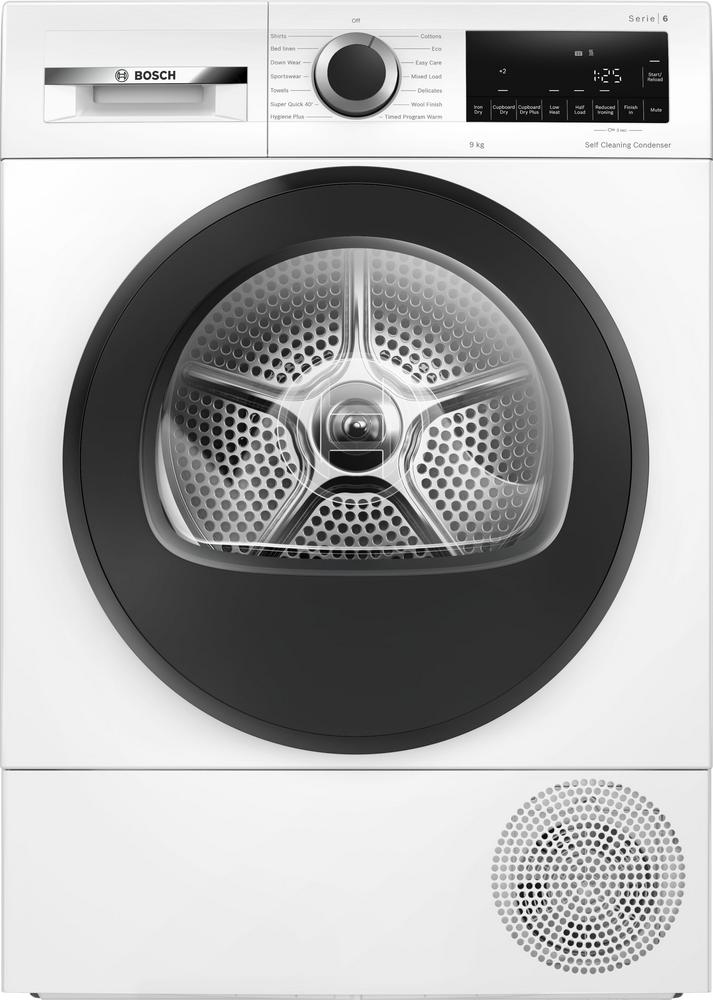
If you’re tired of clothes taking days to dry on airers, a modern heat pump tumble dryer can be a game-changer for your home. The Bosch Series 4 WTH85226GB 8Kg Heat Pump Tumble Dryer is a popular A++ option that promises lower running costs and gentler drying, but it’s far from the only choice. In this guide, we’ll use it as a reference point to explain what to look for in a heat pump dryer, how 8kg and 9kg models compare, and when it’s worth stepping up to more premium alternatives from Samsung and AEG.
Understanding Heat Pump Tumble Dryers
Before getting into specific models, it helps to understand what sets heat pump tumble dryers apart. Instead of simply heating air and venting it out, they reuse warm air in a closed loop. This means less wasted energy and lower running costs, especially if you use your dryer several times a week.
The Bosch Series 4 WTH85226GB is an A++ rated heat pump dryer, so it’s designed with efficiency in mind. If you want to see how that translates into day-to-day use, you can read our full review of the Bosch Series 4 WTH85226GB 8Kg Heat Pump Tumble Dryer for in-depth performance impressions.
Heat pump models generally:
- Use lower temperatures, which are kinder to fabrics
- Have longer cycle times than traditional dryers
- Cost more upfront but less to run over the years
- Are usually condenser-style, so they don’t need an external vent
Is an 8kg Drum Right for You?
The Bosch Series 4 WTH85226GB comes with an 8kg capacity, which is a sweet spot for many UK households. It’s big enough for everyday family loads and most bedding, without taking up extra floor space unnecessarily.
An 8kg drum is typically well suited to:
- Couples who do several washes a week
- Small families who want space for school uniforms, sports kits and towels
- Homes with limited kitchen or utility room space
If you regularly wash bulky items or have a larger family, a 9kg drum can give you more flexibility. For example, the Samsung Series 6 DV90T6240LB/S1 9Kg Heat Pump Tumble Dryer and the AEG TR959M6BC 9Kg Heat Pump Tumble Dryer both offer that extra kilo of space, which can make a real difference for big family loads.
Energy Ratings: A++ vs A+++ in Real Life
Energy labels can feel a bit abstract, so it helps to view them in context. The Bosch Series 4 WTH85226GB is A++ rated, marking it as a highly efficient option compared with older or basic dryers.
Some alternatives, however, go a step further with an A+++ rating, including:
- Samsung Series 6 DV90T6240LB/S1 9Kg Heat Pump Tumble Dryer (Black, A+++ rated)
- Samsung Series 6 DV90T6240LE/S1 9Kg Heat Pump Tumble Dryer (White, A+++ rated)
- Samsung Series 8 AI Energy OptimalDry DV90BB9445GB 9Kg Heat Pump Tumble Dryer (Black, A+++ rated)
- AEG TR959M6BC 9Kg Heat Pump Tumble Dryer (White, A+++ rated)
In practical terms, moving from A++ to A+++ can shave more off your annual electricity use, especially if you dry several loads a week. Over the expected life of the appliance, this difference can easily add up, which is why some people choose to spend more on an A+++ model if their budget allows.
Noise, Space and Everyday Practicalities
It’s easy to focus on flashy features and forget how your tumble dryer will feel to live with day in, day out. The Bosch Series 4 range is generally known for being well-built and relatively quiet, which makes it a good option if your dryer is near living spaces or open-plan areas.
When comparing models, think about:
- Location: In a kitchen, noise and vibration matter more; in a garage, you may be less sensitive.
- Dimensions: Always double-check height, width and depth, especially for fitted kitchens and narrow doors or hallways.
- Door opening: Consider which way the door opens and how that works with your washing machine and room layout.
- Water tank access: If the tank is in the top corner, it’s easier to empty than one low down, particularly in tight spaces.
For more detail on installation and day-to-day practicality, you can read our full review of the Bosch Series 4 WTH85226GB heat pump tumble dryer and see how it behaves in a real-world setting.
Connectivity and Smart Features: Nice-to-Have or Essential?
The Bosch Series 4 WTH85226GB focuses on core drying performance and efficiency rather than packing in every imaginable smart feature. For many households, that’s absolutely fine: you choose a programme, press start, and the machine quietly gets on with the job.
If you are interested in Wi-Fi connectivity and app control, there are alternatives that lean heavily into smart functionality. The following models, for example, are Wi-Fi connected heat pump dryers:
- Samsung Series 6 DV90T6240LB/S1
- Samsung Series 6 DV90T6240LE/S1
- Samsung Series 8 AI Energy OptimalDry DV90BB9445GB
- AEG TR959M6BC
Smart features can allow you to:
- Check how long is left on a cycle from your phone
- Receive alerts when it’s time to empty the water tank or clean filters
- Download additional programmes or tweak settings more precisely
- Integrate with wider smart-home routines in some ecosystems
Whether this is worth paying for depends on how you use your dryer. If you often start loads at off-peak times or while you’re out, app control can be genuinely useful. If you just press start and forget about it, a simpler model like the Bosch may be all you need.
Fabric Care and Drying Performance
One of the biggest advantages of heat pump technology is how gentle it can be on clothes. Lower temperatures reduce the risk of shrinking and help colours stay brighter for longer. The Bosch Series 4 WTH85226GB, with its 8kg drum, is designed to look after everyday fabrics without blasting them with excessive heat.
When comparing dryers, it’s worth thinking about:
- Sensor drying: Most modern heat pump models use sensors to stop when clothes are dry, which prevents over-drying and saves energy.
- Special programmes: Look for cycles tailored to bedding, shirts, wool, and mixed loads if you wash a lot of those items.
- Drum design: A well-shaped drum with careful paddles helps clothes tumble evenly, reducing creases and improving drying efficiency.
Premium 9kg models like the Samsung Series 8 AI Energy OptimalDry DV90BB9445GB and AEG TR959M6BC often add more sophisticated moisture and temperature monitoring, along with dedicated care programmes for more delicate garments. If you have a wardrobe full of technical sportswear, woollens or other tricky fabrics, those extra cycles may be a real benefit.
Design, Colour and Matching Your Kitchen
While performance should come first, the look of your dryer can matter, especially in an open-plan kitchen. The Bosch Series 4 WTH85226GB comes in a classic white finish that blends easily with most washing machines and other appliances.
If you prefer a more dramatic look or have a darker kitchen scheme, you might be drawn to black models like the Samsung Series 6 DV90T6240LB/S1 or the Samsung Series 8 DV90BB9445GB. On the other hand, if you like everything bright and clean-looking, white A+++ models such as the Samsung Series 6 DV90T6240LE/S1 and AEG TR959M6BC will feel more traditional.
Matching the look of your dryer to your washing machine is purely aesthetic, but it does make the space feel more considered and cohesive. If both appliances are due for replacement, it can be worth choosing them at the same time.
Price, Value and When to Spend More
The Bosch Series 4 WTH85226GB is typically positioned as a solid mid-range heat pump dryer: not the cheapest on the market, but also not at the ultra-premium end. Its 8kg capacity and A++ efficiency make it a sensible long-term choice for many households who want to cut running costs without paying top-tier prices.
Spending more tends to get you:
- A+++ energy efficiency (as seen on the Samsung and AEG alternatives listed above)
- Larger 9kg drums for bigger families or bulky items
- Wi-Fi connectivity and advanced smart features
- More specialised fabric care programmes and sometimes quieter operation
If you’re deciding whether to stretch your budget, think about how often you’ll use the dryer and how long you plan to keep it. For heavy users, an A+++ 9kg model like the Samsung Series 6 DV90T6240LB/S1, Samsung Series 6 DV90T6240LE/S1, Samsung Series 8 DV90BB9445GB or AEG TR959M6BC may pay you back over time in energy savings and convenience.
Care, Maintenance and Getting the Best from Your Dryer
Whichever model you choose, a little regular care will keep it running efficiently and help avoid niggling issues. The Bosch Series 4 WTH85226GB is no exception: a well-maintained heat pump dryer will dry better, use less energy and last longer.
Build a simple routine:
- After every cycle: Clean the lint filter to maintain good airflow.
- Weekly (or as needed): Empty the water tank if your model doesn’t drain automatically.
- Monthly: Check and clean any additional filters as recommended in the manual, and wipe around the door seal.
- Occasionally: Pull the machine out slightly and vacuum around it to prevent dust build-up restricting ventilation.
Also, try to avoid overloading the drum and always choose a programme that matches the fabric type. Doing so will help your dryer deliver consistent results, whether it’s an 8kg A++ model like the Bosch or a larger, more advanced 9kg machine from Samsung or AEG.
Which Heat Pump Tumble Dryer Should You Choose?
If you want an efficient, no-nonsense dryer that’s easy to live with, the Bosch Series 4 WTH85226GB A++ 8Kg Heat Pump Tumble Dryer is a strong starting point. It offers a good balance of capacity, efficiency and everyday usability for typical UK households. For a deeper dive into its features, noise levels and real-world drying times, you can read our full review of the Bosch Series 4 WTH85226GB.
If, however, you know you’ll benefit from a larger drum, Wi-Fi control or top-tier A+++ efficiency, it’s worth exploring 9kg alternatives like the Samsung Series 6 range, the premium Samsung Series 8 AI Energy OptimalDry DV90BB9445GB, or the AEG TR959M6BC. Each brings its own mix of design, smart features and energy savings.
Whichever way you lean, you’re choosing a type of dryer that’s kinder to both your clothes and your energy bills. Take a little time to compare capacities, features and energy ratings, then follow the links to the in-depth reviews to make a confident, long-lasting choice for your home.