
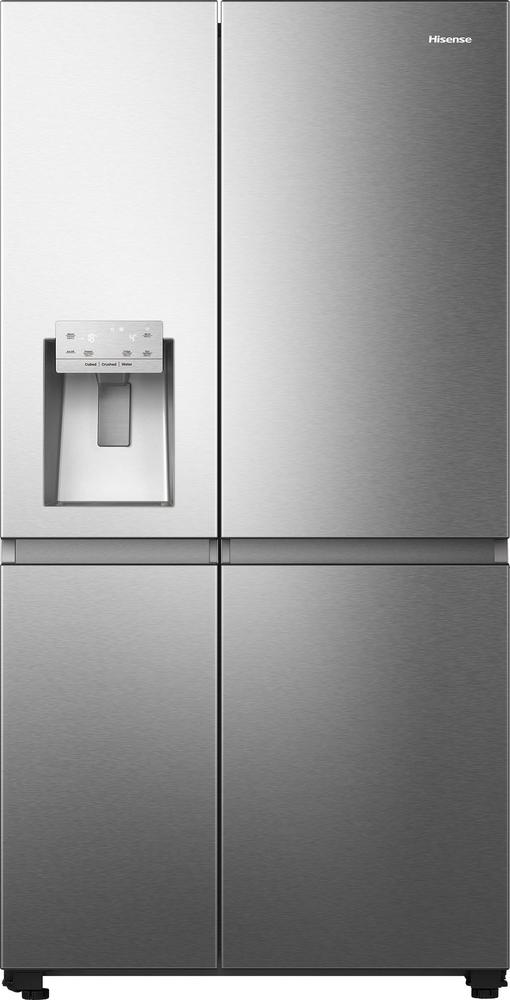
If you’ve ever tried to squeeze a week’s worth of food shopping into an overstuffed fridge, you’ll understand the appeal of a full‑size American fridge freezer. The Hisense PureFlat RF749N4SWSE is a good example of what modern, non‑plumbed American models now offer: huge storage, sleek styling and low‑maintenance cooling. In this guide, we’ll walk through what to look for if you’re considering a similar appliance, using the RF749N4SWSE and a few closely related Hisense models as real‑world examples.
Why consider a large American fridge freezer?
American‑style fridge freezers are all about capacity and convenience. They’re designed for busy households that cook often, entertain regularly or simply want everything visible and well organised. With wide shelving, generous drawers and clever freezing layouts, they can completely change how you shop and store food.
The Hisense PureFlat RF749N4SWSE adds to that appeal with its modern stainless steel finish and non‑plumbed design. If you like the look of an American fridge freezer but don’t want the hassle of running a water line, that kind of setup can be a smart compromise.
If you’d like a detailed look at layout, performance and everyday usability, you can read our full review of the Hisense PureFlat RF749N4SWSE once you’ve got the basics clear.
Checking space and layout before you buy
Before you fall for a glossy product photo, you need to know if an American fridge freezer will actually fit your home. The RF749N4SWSE is a substantial piece of kit, and its close relatives like the Hisense PureFlat Slim RQ5P470SYFD and Hisense RF815N4SESE follow the same big‑capacity approach.
When measuring up, think about more than just the final position:
- Doorways and hallways: Compare the width of your doors and tight corners to the appliance width. Don’t forget skirting boards and radiators that eat into space.
- Door swing: Check how wide the fridge and freezer doors open and whether they’ll hit walls, counters or an island.
- Ventilation clearance: Most large models need some space at the sides, rear and top for air to circulate properly.
- Height under cabinets: If you have low wall units, double‑check that there’s enough clearance with a bit of breathing space.
If you’re tight on width, a slightly slimmer cabinet like the PureFlat Slim RQ5P470SYFD can be worth a look, as it aims to keep that American feel while shaving off a little bulk.
Non‑plumbed convenience vs plumbed‑in systems
One of the main decisions with American fridge freezers is whether you want a plumbed‑in water and ice dispenser or a non‑plumbed setup. The Hisense PureFlat RF749N4SWSE is non‑plumbed, which means any water dispenser or chilled water tank is filled manually rather than being connected to your mains water supply.
The benefits of going non‑plumbed include:
- Flexible positioning: You’re not tied to a wall with a cold‑water feed.
- Cheaper installation: No need for a plumber or new pipework.
- Simpler moving: If you remodel or move house, the appliance can come with you easily.
On the flip side, plumbed‑in designs give you virtually endless chilled water and ice without refilling tanks. If that’s a must‑have, it’s worth comparing models carefully and making sure you’re happy with the extra installation work.
What Total No Frost means in day‑to‑day use
Most modern American fridge freezers at this level, including the RF749N4SWSE and its stablemates like the Hisense PureFlat RQ758N4SAFE, come with some form of Total No Frost technology. In practical terms, this means cold air is circulated around the cabinet to stop moisture settling and turning into frost.
That has a few real‑world advantages:
- You don’t need to defrost the freezer section by hand.
- Drawers stay easy to slide in and out instead of freezing shut.
- Food packaging doesn’t get stuck together under a layer of ice.
- Temperatures tend to be more stable across shelves.
If you’ve ever chipped away at ice with a wooden spoon while your frozen peas weld themselves to the drawer, Total No Frost is one of those features you quickly learn to appreciate.
Understanding energy ratings and running costs
Large American fridge freezers are always going to use more power than a compact under‑counter model, simply because they’re cooling a much bigger volume. That makes the energy rating worth paying attention to, especially if the appliance will be on show in an open‑plan living space.
The RF749N4SWSE sits in the newer energy labelling system at an E rating, which is common for big‑capacity models right now. Alternatives such as the Hisense PureFlat Infinite RQ758N4SASE and the PureFlat RQ758N4SAFE are also positioned with efficiency in mind while prioritising usable space.
To keep running costs sensible:
- Leave a gap around the appliance so it can release heat properly.
- Avoid placing it right next to ovens or radiators.
- Keep door openings short and close them firmly each time.
- Defrost‑free designs already help, as they don’t struggle with ice build‑up.
Choosing the right door configuration
Door layout has a bigger impact on day‑to‑day convenience than many people expect. The RF749N4SWSE follows the modern multi‑door American style, giving you wide access to chilled space and neatly arranged freezer compartments.
When comparing layouts, think about:
- Eye‑level storage: Do you prefer fresh food like salad and dairy at eye level, or are you happy with a taller freezer column?
- Wide shelves: If you store platters and large pizza boxes, wide shelves can be a game‑changer.
- Freezer access: Drawer‑style freezers, like on the RQ758N4SAFE and RQ758N4SASE, make it easier to see what you have at a glance.
If you batch cook, meal prep or freeze portions of food, the multi‑drawer freezers on models such as the PureFlat RQ758N4SAFE can be particularly helpful, separating meats, veg and ready meals into clear zones.
Capacity and organisation: thinking beyond litres
Manufacturers talk a lot about capacity in litres, but it’s how that space is arranged that matters most. While the exact figures vary across the Hisense PureFlat range, they’re all designed to give you generous room in both fridge and freezer sections.
Consider these practical points:
- Adjustable shelves: Can you easily re‑position shelves to fit tall bottles, cakes or leftover containers?
- Door balconies: Deep balconies are ideal for milk, juice and condiments, but make sure they don’t clash when both doors are packed.
- Fresh‑food drawers: Look for roomy fruit and veg drawers and, ideally, a separate meat or deli compartment.
- Freezer dividers: Compartments or baskets help stop everything piling up in one icy heap.
The RF749N4SWSE and models like the PureFlat Infinite RQ758N4SASE are designed for households that want their weekly shop visible and neatly organised. If you tend to lose items at the back of a small freezer until they’re past their best, stepping up to an American layout can be surprisingly waste‑reducing.
Styling and finish: making a statement in your kitchen
Large American fridge freezers are as much a visual feature as they are a practical one. The RF749N4SWSE uses a stainless steel PureFlat design, which suits modern, handle‑light kitchens particularly well. It’s a look shared by the Infinite RQ758N4SASE, while the PureFlat RQ758N4SAFE and PureFlat Slim RQ5P470SYFD bring in black and mixed finishes for a bolder contrast.
When choosing a finish, think about:
- Fingerprints and smudges: Brushed or matte finishes usually hide marks better than mirror‑polished surfaces.
- Existing appliances: Matching or deliberately contrasting with your oven and dishwasher can create a cohesive look.
- Lighting: Dark finishes look fantastic in bright kitchens but may feel heavy in very small or low‑lit rooms.
Comparing Hisense PureFlat alternatives
If you like the idea of the RF749N4SWSE but want to see how it sits alongside other similar models, there are a few close alternatives worth exploring within the same family.
Hisense PureFlat Slim RQ5P470SYFD
The Hisense PureFlat Slim RQ5P470SYFD keeps the PureFlat styling and non‑plumbed, Total No Frost approach but in a slimmer, black and stainless design. It’s a sensible choice if you’re working with a narrower gap between cabinets or simply prefer the slightly more compact stance without losing the American‑style feeling.
Hisense RF815N4SESE
The Hisense RF815N4SESE offers a classic stainless steel American fridge freezer format with Total No Frost technology. It’s well suited to households that prioritise a clean, professional look and generous chilled space, and it’s a solid comparison point if you’re unsure whether to go for the PureFlat aesthetic or something more traditional.
Hisense PureFlat RQ758N4SAFE and PureFlat Infinite RQ758N4SASE
The Hisense PureFlat RQ758N4SAFE in black and stainless, and the Hisense PureFlat Infinite RQ758N4SASE in stainless steel, sit in a similar Total No Frost, multi‑door category. They’re designed for households that want premium styling, large capacity and flexible storage zones, often with refinements in internal layout and finish.
If you’re weighing up which of these large models best fits your lifestyle, it can help to compare how you actually shop: do you buy more fresh or frozen food, how often you entertain, and whether you need specific features like non‑plumbed water on tap. It’s worth taking a few minutes to read our in‑depth review of the Hisense PureFlat RF749N4SWSE alongside the other model reviews to see how those details play out.
Everyday tips for getting the most from a big American fridge freezer
Once you’ve chosen your model, a few simple habits can help it run better and feel more organised day to day:
- Zone your shelves: Keep similar items together – dairy on one shelf, cooked meats on another, condiments in the doors – so you don’t stand with the doors open hunting for things.
- Label freezer drawers: A simple label or divider turns a large freezer compartment into an easy‑to‑read filing system for food.
- Use clear containers: Transparent boxes for leftovers and smaller items stop them getting lost at the back.
- Rotate food: When you do a big shop, bring older items to the front and put new ones behind to minimise waste.
- Wipe seals regularly: Clean door seals help maintain a good airtight closure, which is vital for efficiency.
Cleaning and maintenance: keeping it fresh and efficient
Even with Total No Frost systems, large fridge freezers benefit from regular light cleaning rather than occasional big overhauls. Try to build these habits into your routine:
- Weekly check: Quickly remove out‑of‑date items and wipe any spills to prevent odours.
- Monthly clean: Wipe down shelves and drawers with a mild, food‑safe cleaner.
- Water dispenser care: If your model has a non‑plumbed water tank, empty and rinse it frequently and don’t leave water standing for long periods.
- External finish: Use a soft cloth and appropriate cleaner for stainless steel or black finishes to keep the PureFlat look streak‑free.
These small tasks not only keep things smelling fresh but also help your appliance run at its best for longer.
Bringing it all together
Choosing a large American fridge freezer is a big decision, both in terms of cost and how much of your kitchen it will occupy. Models like the Hisense PureFlat RF749N4SWSE show how far this category has come, combining non‑plumbed convenience, Total No Frost technology and smart storage in a sleek stainless steel shell. By measuring carefully, thinking about how you shop and comparing layouts with alternatives such as the RQ5P470SYFD, RF815N4SESE, RQ758N4SAFE and RQ758N4SASE, you can find a design that genuinely fits your home and habits.
Once you’ve narrowed your shortlist, it’s well worth diving into hands‑on impressions and user feedback. You can start by reading our full review of the Hisense PureFlat RF749N4SWSE and then exploring the linked reviews of its closest alternatives to decide which one deserves pride of place in your kitchen.