
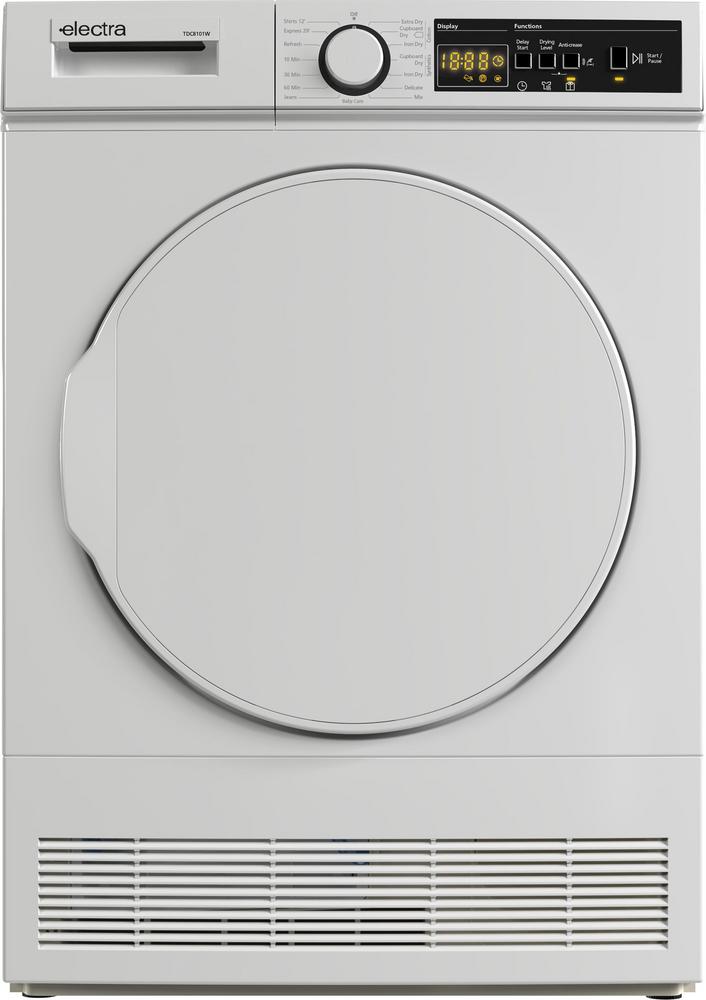
If you’re tired of draping clothes over radiators or chasing sunny days to dry school uniforms, a condenser tumble dryer can be a genuine game-changer. The Electra TDC8101S 8Kg Condenser Tumble Dryer in silver is a popular, budget-friendly option with a generous drum and a smart, modern finish that suits most kitchens or utility rooms. In this guide we’ll look at how an 8kg condenser dryer like the Electra fits into everyday family life, what to think about before you buy, and a few alternative models worth considering if you’re still undecided.
Why consider the Electra TDC8101S 8kg condenser tumble dryer?
The Electra TDC8101S is an 8kg condenser tumble dryer in a silver finish with a solid user rating (4.9 out of 5 from hundreds of reviews at the time of writing). That tells you straight away that it’s hitting the mark for a lot of households looking for a no-fuss dryer that simply gets the job done.
As a condenser model, it doesn’t need venting through an external wall, which makes it far easier to position in a flat, rental property or any home where adding a vent is awkward. If you want all the detail on programmes, controls and day-to-day experience, you can read our full review of the Electra TDC8101S 8Kg Condenser Tumble Dryer once you’ve finished this guide.
Is 8kg the right drum size for your home?
Capacity is one of the biggest decisions when choosing a tumble dryer. Get it wrong and you either waste energy on half loads or find yourself running multiple cycles a day.
What 8kg actually means in real life
An 8kg drum like the one on the Electra TDC8101S is well suited to:
- Small to medium families (roughly 3–4 people)
- Couples who wash larger items like bedding and towels regularly
- Those matching it with a 7–9kg washing machine
In practical terms, you can usually fit a full mixed load of clothes, or a set of double bedding with pillowcases, without cramming the drum. You still need to leave some space for hot air to circulate properly, which helps reduce creasing and speeds up drying.
When to size up or down
If your household is larger, or you wash super-king bedding and thick winter duvets at home, a 9kg model such as the Candy Smart CSEC9DF 9Kg Condenser Tumble Dryer may be worth a look. On the other hand, if space is tight or you’re a single user who washes little and often, a 7kg condenser like the Beko DTLCE70051B 7Kg Condenser Tumble Dryer or the silver-finished Beko DTLCE70051S 7Kg Condenser Tumble Dryer could be more than enough.
Condenser vs vented: why flexibility wins
The Electra TDC8101S is a condenser tumble dryer, which immediately makes it more flexible than a vented equivalent. Instead of blowing moist air outside, it collects water in an internal tank or, on many models, drains it away via a small hose if you choose to connect one.
Installation advantages
Because you don’t need to run a permanent hose through a wall or out of a window, you can often place a condenser dryer:
- In a kitchen beneath the worktop
- In a separate utility or laundry room
- In a garage or outbuilding (as long as it’s not too cold or damp)
- In a hallway cupboard or similar space with some ventilation
This makes models like the Electra very appealing in rented properties or older homes where knocking new holes in brickwork isn’t realistic.
What you need to do differently
With a condenser dryer you’ll need to:
- Empty the water tank when it’s full (usually after every couple of loads, depending on usage)
- Keep an eye on filter cleaning to maintain airflow
- Allow some room around the appliance so heat can escape
These are all quick jobs, but they make a noticeable difference to drying times and running costs over the long term.
Energy rating and running costs: what does ‘B rated’ really mean?
Like many affordable condenser dryers, the Electra TDC8101S carries a B energy rating. You might see that and wonder if it’s going to cost a fortune to run, especially with rising electricity prices.
Balancing purchase price with energy use
While A-rated or heat-pump dryers are more efficient, they also tend to be significantly more expensive up front. A B-rated condenser model often hits a sweet spot for households that:
- Dry a few loads a week, rather than several loads every day
- Want a lower initial spend
- Don’t have the space or budget for a premium heat pump dryer
To see exactly how the Electra stacks up on energy use, controls and real-world performance, you can read our detailed Electra TDC8101S tumble dryer review, which dives deeper into the practicalities.
Simple ways to keep costs down
Whatever dryer you pick, these habits can help reduce bills:
- Use a high spin speed in your washing machine to remove more water first
- Dry full, but not overpacked, loads so air can circulate properly
- Choose timed or sensor programmes suited to the fabric type
- Clean the lint filter after every cycle and the condenser unit regularly
Programmes and ease of use: choosing a “no-nonsense” dryer
One of the attractions of the Electra TDC8101S is that it’s a straightforward, family-friendly machine rather than a complicated, premium gadget. Many people simply want clear controls, sensible programmes and predictable drying times.
What to look for in everyday programmes
When browsing this type of dryer, think about your laundry routine and prioritise features such as:
- Dedicated cottons and synthetics cycles
- A setting for mixed loads to avoid sorting everything
- Options for delicate fabrics and woollens (if you dry them)
- Quick or “refresh” programmes for lightly worn clothes
It’s also worth checking for “anti-crease” or reverse tumble features if you hate ironing, as these can help reduce set-in creases when you can’t empty the dryer straight away.
Controls and displays
Control layout matters more than you might think, especially for anyone with limited eyesight or dexterity. Look for:
- A clear programme dial with legible labels
- Simple buttons for start, pause and options like low heat
- An indicator or display that shows remaining time
Models like the Indesit C YD C82 BBGL UK 8Kg Condenser Tumble Dryer aim for that same easy, intuitive approach, so they’re worth adding to your shortlist if usability is top of your list.
Noise, placement and everyday practicality
If your tumble dryer is going in an open-plan kitchen or near living spaces, noise level is a real consideration. While exact decibel ratings vary from model to model, standard condenser dryers are generally quieter than an old vented machine blasting air outside, but louder than most washing machines on a gentle spin.
Tips for quieter drying
To keep disruption to a minimum:
- Place the dryer on a solid, level floor to reduce vibration
- Avoid overloading the drum, which can make it bump and thump
- Use delay-start features to run noisy cycles when they’re least disruptive
If you’re positioning the Electra TDC8101S or any similar dryer in a cupboard or corner, leave enough space at the sides and back for airflow. This helps both noise and efficiency.
Cleaning and maintenance: keeping your condenser dryer at its best
Condenser dryers are fairly low-maintenance, but a few small jobs make a big difference to their performance and lifespan.
After every cycle
- Empty the lint filter: A clogged filter restricts airflow, slows drying and increases energy use. It only takes a few seconds to clear.
- Check the water tank: Many models, including the Electra, will warn you when the tank is full, but making it a habit avoids interruptions mid-cycle.
Every few weeks
- Clean the condenser unit: Some are removable; you can rinse them gently under a tap. Others need brushing or vacuuming to remove lint.
- Wipe the door seal and drum: A quick wipe keeps fluff and detergent residues at bay and reduces odours.
Staying on top of these simple tasks helps maintain drying performance and prevents the machine from running hotter than it needs to.
Style and finish: why silver is so popular
The Electra TDC8101S stands out thanks to its silver finish, which can look a little smarter than plain white in modern kitchens or utilities. It also tends to hide the odd scuff or fingerprint better than darker colours.
If you’re building a coordinated look, pairing the silver Electra dryer with other silver or stainless appliances is an easy win. On the other hand, if you prefer a darker aesthetic, you might lean towards a black condenser dryer like the Indesit C YD C82 BBGL UK 8Kg or Beko DTLCE70051B 7Kg, which blend neatly with dark cabinets and worktops.
Comparing the Electra TDC8101S with similar condenser dryers
It’s always worth comparing a few models before you decide. Here’s how the Electra TDC8101S sits alongside some popular alternatives.
Electra TDC8101S vs Candy Smart CSEC9DF
The Candy Smart CSEC9DF 9Kg Condenser Tumble Dryer offers a larger 9kg drum, which is helpful if you’ve got a big family or frequently wash bulky loads. It’s also part of a connected range, appealing if you like the idea of extra smart features and app-style controls. If you don’t actually need the extra capacity or tech, the 8kg Electra may feel more straightforward and better value.
Electra TDC8101S vs Indesit C YD C82 BBGL UK
The Indesit C YD C82 BBGL UK 8Kg Condenser Tumble Dryer matches the Electra on capacity but comes in a bold black finish and has attracted a very high number of user reviews. If you’re comforted by buying into a well-established brand with a long track record, the Indesit is worth shortlisting. If you simply want a good-value 8kg condenser in silver, the Electra will likely be more your style.
Electra TDC8101S vs Beko 7kg condenser dryers
Beko’s 7kg models, the DTLCE70051B and DTLCE70051S, are slightly smaller in capacity but very popular for compact spaces and smaller homes. They’re often chosen by couples, single users, or anyone squeezing a dryer into a tighter gap. If you’re balancing drum size with footprint, it’s worth comparing measurements and seeing whether 7kg or 8kg fits your space and lifestyle better.
Key questions to ask before you buy
To narrow down your choice, it helps to answer a few quick questions:
- How many people are in your household? This guides whether 7kg, 8kg or 9kg is the best fit.
- Where will the dryer live? Measure the space carefully, thinking about door swing and ventilation.
- How often will you use it? Heavy users may benefit from higher efficiency or extra features.
- Do you want smart features? If you won’t use them, focus on solid basics instead.
- Does the finish matter? Silver, white and black options help you match your kitchen or utility.
If the answers point towards a mid-sized, no-nonsense condenser dryer in a modern silver finish, the Electra TDC8101S is likely to be in the running.
Final thoughts
Choosing a tumble dryer isn’t just about picking the first model in your price range. Capacity, energy use, installation flexibility and ease of use all play a part in how happy you’ll be living with it over the next few years.
The Electra TDC8101S 8Kg Condenser Tumble Dryer offers a strong combination of family-friendly capacity, flexible condenser design and a modern silver look, backed by very positive user feedback. If you want to dig deeper into its real-world performance before committing, head over to our in-depth Electra TDC8101S review. And if you decide it’s not quite right, the Candy, Indesit and Beko alternatives linked throughout this guide give you plenty of solid options to compare.