
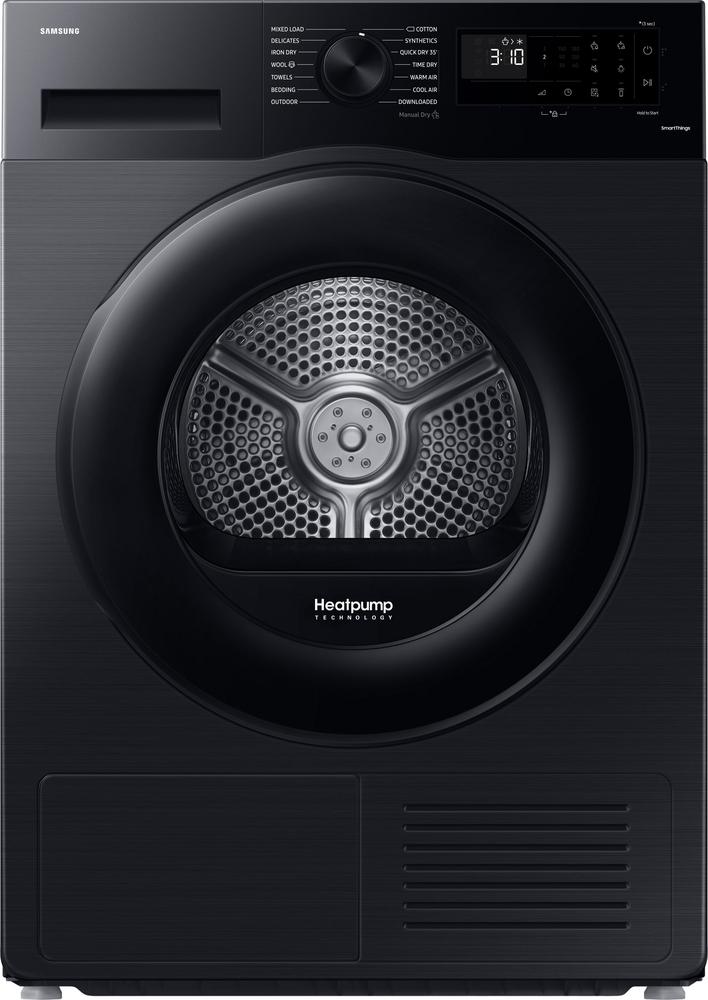
Heat pump tumble dryers have quickly become the go-to option for anyone who wants warm, fluffy laundry without dreading the electricity bill. Among them, Samsung’s connected models stand out for their clever AI features and efficient performance, with the Samsung Series 5 AI Energy OptimalDry™ DV80CGC0B0AE 8kg Heat Pump Tumble Dryer sitting in a sweet spot for many UK homes.
This guide walks through what to look for in a modern heat pump dryer, how Samsung’s 8–9kg AI models compare, and when you might want to stretch the budget or size. If you want a deep dive into performance, programmes and real-world impressions, you can always read our full review of the Samsung Series 5 AI Energy OptimalDry DV80CGC0B0AE as well.
Why choose a heat pump tumble dryer in the first place?
Traditional vented and condenser dryers blast clothes with high heat and dump the warm air straight out. Heat pump models work more like a fridge in reverse, reusing warm air to dry your clothes. That means:
- Lower running costs compared with older vented or condenser dryers
- Gentler drying temperatures, which is kinder to fabrics
- No need for an external vent, so they’re easier to position
If you dry several loads a week, the energy savings can quickly chip away at the higher purchase price. That’s why models like the Samsung Series 5 AI Energy OptimalDry DV80CGC0B0AE, with its A++ efficiency rating, are so appealing for busy homes trying to keep bills in check.
Getting the capacity right: 8kg vs 9kg drums
One of the first decisions you’ll face is drum size. The DV80CGC0B0AE has an 8kg capacity, which is a versatile choice for many UK households. It will comfortably handle a standard family wash, including towels and everyday clothes, without needing multiple drying cycles.
However, if you have a larger family, bulky duvets, or you simply prefer to wash everything in big batches, it’s worth looking at 9kg options. The Samsung Series 6 AI Energy OptimalDry DV90T6240LH 9kg is an obvious step up in size, while keeping a similar design and feature set. Its larger drum can mean fewer loads overall and a bit more breathing space for bedding.
For those who like the idea of a 9kg Samsung but fancy a slightly different spec or finish, the Samsung Series 6 DV90T6240LE/S1 9kg and the black-finished Samsung Series 6 DV90T6240LB/S1 9kg are worth adding to your shortlist.
Understanding the Samsung “Series” and energy ratings
Samsung’s dryer range is split into Series levels, broadly reflecting how advanced the features and efficiency are. The Samsung Series 5 AI Energy OptimalDry DV80CGC0B0AE is positioned as a very capable mid-to-upper range option, with AI and Wi‑Fi features, plus an A++ efficiency rating.
Step up to models like the Series 6 DV90T6240LH, DV90T6240LE/S1 or DV90T6240LB/S1 and you’ll see an A+++ rating. In practice, that means they squeeze a bit more drying performance from every unit of electricity used. If your dryer will be on most days of the week, that extra notch in efficiency can be worthwhile over several years.
If your usage is more occasional, or you’re balancing a tight budget, the A++ rating on the DV80CGC0B0AE is still very frugal compared with older technologies. For detailed discussion of running costs and user experience, you can read our full review of the Samsung Series 5 AI Energy OptimalDry DV80CGC0B0AE here.
What does “AI Energy” and “OptimalDry” actually do?
Many modern dryers are crammed with jargon, but a couple of Samsung’s technologies are genuinely useful once you understand them.
Sensor drying that thinks for you
“OptimalDry” refers to a system of sensors that monitor moisture and temperature inside the drum. Instead of running for a fixed time regardless of what’s happening to your clothes, the machine can automatically shorten or extend the cycle to hit the right dryness level.
For you, that means fewer half-damp loads that need an extra blast, and less over-drying that can leave fabric feeling crisp or shrunken. It’s particularly handy in a family home where loads can vary wildly from school uniforms to bath towels.
AI Energy and connected smarts
AI features are generally about learning your habits and optimising cycles over time, often via a linked app. With a connected dryer, you can typically:
- Start or pause cycles from your phone
- Get alerts when the load is finished
- See estimated energy use for different programmes
- Let the machine suggest suitable cycles for what you’ve put in
If you’re trying to run more of your laundry during off-peak tariff hours, or simply want to avoid forgotten, creased loads sitting in the drum, that kind of information can be surprisingly helpful.
Freestanding vs integrated: where the Hoover H-DRY 300 fits in
Most people considering the Samsung Series 5 DV80CGC0B0AE or its Series 6 siblings are looking at freestanding models. These are easier to position in a utility room, garage or spare corner of the kitchen. But if you want a completely seamless look in a fitted kitchen, integrated dryers are another option.
The Hoover H-DRY 300 BATD H7A1TCER-80 7kg integrated heat pump tumble dryer is a good example of this style. It tucks neatly behind a cupboard door, offering a 7kg drum that’s well suited to smaller households. You do sacrifice some capacity compared with an 8–9kg freestanding Samsung, and installation is more involved, but the end result can look very tidy.
If you’re renovating a kitchen and want everything hidden away, an integrated heat pump dryer is worth a look. If flexibility and drum size are bigger priorities, a freestanding 8–9kg machine will give you more room to manoeuvre – literally and figuratively.
Noise, location and everyday practicality
Noise levels are a real consideration if your dryer lives in an open-plan kitchen or near living spaces. Heat pump models tend to hum rather than roar, but the sound of the compressor and drum is still noticeable. When choosing a model, think about:
- Location: Will the door have room to open fully? Is there space at the back and sides for airflow?
- Flooring: Solid floors usually transmit less vibration than suspended wooden ones.
- Daily routine: Do you mainly dry at night, or while you’re working from home in the next room?
Wi‑Fi connected machines have a practical edge here: you can schedule cycles for times when noise is less intrusive, and get a ping when the load is done, so it’s not churning away longer than it needs to.
Running costs: making sense of A++, A+++ and real bills
Energy labels are helpful, but what you care about is what appears on your bill. While we won’t quote specific figures here, you can think about it like this:
- A modern heat pump dryer should be significantly cheaper to run than an older vented or condenser machine.
- Within heat pump models, A+++ is more efficient than A++, which matters more the more you use the machine.
- Larger drums (like 9kg) can dry more in one go, which sometimes offsets slightly higher per-cycle usage.
If you’re currently using a much older dryer, switching to something like the A++ rated DV80CGC0B0AE or one of Samsung’s A+++ 9kg Series 6 models can be a sensible long-term decision. The more loads you put through each week, the stronger the case becomes.
Programmes and fabric care: matching cycles to your wardrobe
Modern dryers offer a bewildering list of programmes, but you’ll probably rely on the same handful most of the time: cottons, synthetics, mixed loads and a quick refresh. When comparing models, consider:
- Mixed-load programmes: Handy if you rarely separate fabrics fully.
- Sportswear or outdoor cycles: Useful for technical fabrics and water-repellent gear.
- Delicate and wool options: Worth having if your wardrobe includes knits and softer items.
- Iron dry vs cupboard dry settings: Helpful if you like some moisture left in shirts for easier ironing.
The Samsung AI and OptimalDry setup helps here by monitoring moisture, which can reduce the guesswork. You can usually choose your preferred dryness level and let the sensors take care of the rest.
Installation, ventilation and positioning tips
Even though heat pump dryers don’t need external venting, they’re not entirely plug-and-forget when it comes to location.
- Allow space around the machine: Heat pump systems need decent airflow to stay efficient and avoid overheating.
- Think about the water tank: If you’re not plumbing the dryer in to drain automatically, make sure the tank is easy to reach and empty.
- Avoid very cold spaces if possible: Garages and outbuildings can work, but extreme cold may extend drying times.
- Check door swing: Think about how the dryer door and any cupboard doors or doors to the room interact.
If you’re eyeing an integrated model like the Hoover H-DRY 300 BATD H7A1TCER-80, bear in mind that you’ll need the right kitchen cabinet, plus enough ventilation around it, which is often handled by the kitchen fitter or installer.
Simple maintenance to keep your dryer efficient
Whichever heat pump dryer you choose, a few simple habits will keep it running efficiently and help avoid annoying error codes or long cycles:
- Clean the lint filter often: Ideally after every cycle, or at least every couple of uses.
- Keep any secondary filters clear: Follow the manual for cleaning any additional filters or grilles around the heat exchanger.
- Empty the water tank regularly: If not connected to a drain, empty before it gets full to prevent interruptions.
- Don’t overload the drum: Clothes need space to tumble and for warm air to circulate.
Heat pump systems are more complex than old-fashioned dryers, but they reward a little care with lower running costs and steadier performance.
Choosing between Samsung’s 8kg and 9kg options
If you’ve narrowed things down to Samsung heat pump models, the next step is to match the specific machine to your household.
When the 8kg Samsung Series 5 DV80CGC0B0AE makes sense
The DV80CGC0B0AE is ideal if you:
- Have a couple or small-to-medium family
- Want a balance of efficiency, drum size and price
- Like the idea of AI and Wi‑Fi features but don’t need the very top-tier spec
It’s a very capable all-rounder and a strong upgrade from an older vented or condenser machine. For performance details and user impressions, don’t forget you can dive into our in-depth Samsung Series 5 DV80CGC0B0AE review.
When to move up to a 9kg Series 6 model
Consider a 9kg Series 6 option such as the DV90T6240LH, DV90T6240LE/S1 or DV90T6240LB/S1 if you:
- Have a larger family or lots of bulky laundry
- Want the very best efficiency rating for high weekly usage
- Prefer the specific styling or colour of a Series 6 model
The three 9kg models share a similar core proposition but differ in finish and slight spec tweaks. The DV90T6240LB/S1, for instance, stands out with its black styling, which might match darker kitchen or utility designs better than classic white.
Is an integrated dryer right for you?
Finally, think about whether you really need a freestanding dryer, or whether an integrated model like the Hoover H-DRY 300 BATD H7A1TCER-80 would suit your home better. Integrated dryers:
- Give a sleek, handle-free look in modern kitchens
- Hide controls and drums out of sight
- Are great where space is planned very precisely
On the other hand, they tend to have smaller drums and are trickier to swap out in future. If you’re the type who likes the option to move or upgrade appliances without disturbing cabinetry, a freestanding Samsung heat pump dryer is likely the more flexible choice.
Bringing it all together
Choosing a heat pump tumble dryer is about more than just picking the shiniest model. Capacity, energy rating, installation type and smart features all play a role in how well the machine will fit your home and routine.
The Samsung Series 5 AI Energy OptimalDry DV80CGC0B0AE hits a sweet spot for many households, combining an 8kg drum, A++ efficiency and connected smarts without jumping into the very top price brackets. If you need a bit more room or crave the A+++ label, the 9kg Samsung Series 6 options are natural upgrades, while integrated models such as the Hoover H-DRY 300 BATD H7A1TCER-80 cater to those prioritising a built-in look.
Whichever way you’re leaning, taking the time to understand how these features affect daily use and running costs will help you make a confident choice that lasts for years. And when you’re ready for nitty-gritty details, real-world drying times and owner feedback, the individual product reviews linked throughout this guide will fill in the gaps.