
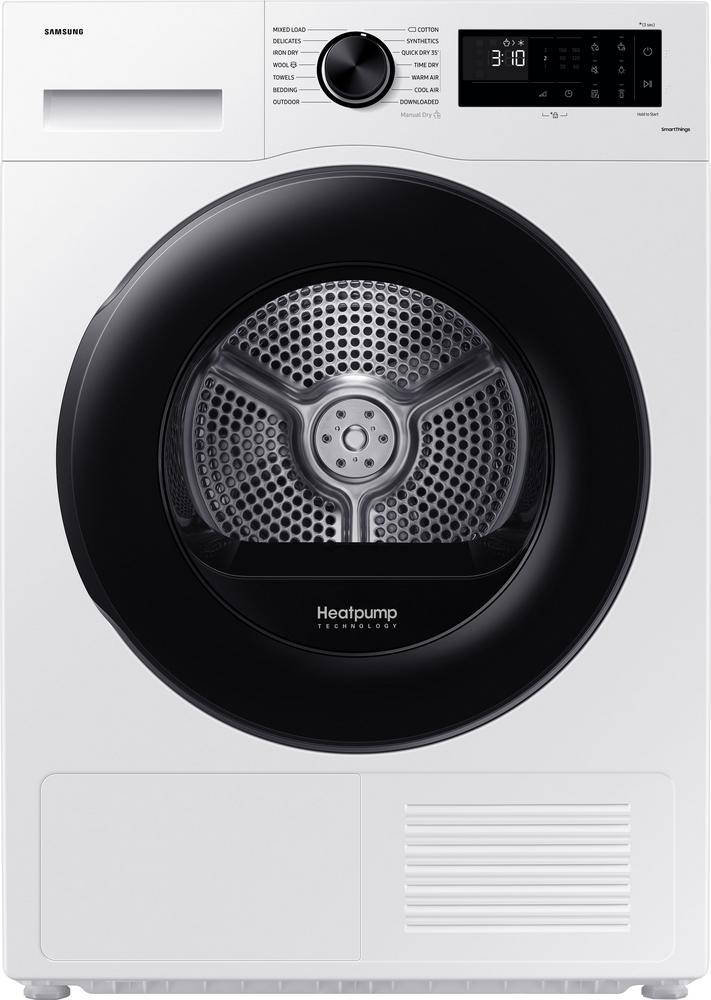
If you are upgrading from an older vented or condenser dryer, heat pump tumble dryers can feel like a big step up in both price and technology. The Samsung Series 5 AI Energy OptimalDry™ DV80CGC0B0AB 8kg heat pump tumble dryer is a great example of what the new generation offers: smart drying, low running costs and a sleek black finish that looks at home in a modern kitchen or utility room.
This guide walks through what to expect from a modern heat pump dryer, using the Samsung Series 5 DV80CGC0B0AB as a real-world example, and compares it with a handful of strong alternatives if you need a bigger drum, a different brand, or a different price point. For in-depth testing notes, programmes and performance details, you can always read our full review of the Samsung Series 5 AI Energy OptimalDry DV80CGC0B0AB.
What makes heat pump tumble dryers different?
Heat pump tumble dryers work differently from older vented or condenser models. Instead of blasting hot air through your clothes and throwing that heat away, they recycle it. A heat pump system gently warms air, passes it through the drum to absorb moisture, then condenses that moisture out and reuses the warm air.
The end result is:
- Lower running costs compared with traditional dryers
- Lower drying temperatures that are kinder to fabrics
- No need for external venting through a wall
The Samsung Series 5 DV80CGC0B0AB is rated A++ for energy efficiency, so it is squarely in the low-running-cost camp. Over a few years of regular use, that can make a noticeable dent in your electricity bills compared with an older C or B-rated dryer.
Understanding capacity: is 8kg enough?
Drum capacity is one of the first decisions to make. The DV80CGC0B0AB has an 8kg capacity, which tends to suit small to medium households well. It is big enough for everyday jeans-and-jumpers loads, towels, and most bedding, without the appliance taking up much more space than a standard dryer.
If your household is larger, or you regularly wash king-size bedding, you might appreciate a bit more space in the drum. In that case, it is worth looking at 9kg and 10kg heat pump dryers that still keep energy use low.
Two alternatives worth considering are:
- Samsung Series 6 AI Energy OptimalDry DV90T6240LH 9kg – a 9kg heat pump dryer with an even higher A+++ energy rating and very strong customer feedback.
- Hisense 5S Series DH5S102BB 10kg – a roomy 10kg option that is ideal if you are constantly washing for a bigger household.
For most people, though, 8kg strikes a good balance between space, price and running costs, and the Samsung Series 5 DV80CGC0B0AB has enough capacity to handle typical family laundry without feeling cramped.
Energy ratings and what they mean in real life
Energy labels can look like a jumble of letters until you relate them to day-to-day use. The DV80CGC0B0AB carries an A++ rating, which places it well above older vented or condenser models. This means it uses noticeably less electricity per cycle, especially on cottons and mixed loads.
If you want the very top efficiency figures, a couple of alternatives jump out:
- Samsung Series 6 DV90T6240LH with a 9kg drum and A+++ rating.
- LG X10 Series Direct Drive RHX1009NWK, also A+++ and 9kg, with a focus on smooth, efficient drum motion.
However, it is important not to obsess over one rating band. In practice, the difference between A++ and A+++ over the course of a year may be smaller than the difference between how often you use eco programmes, how full the drum is, and whether you let sensors stop the cycle once clothes are dry. Used sensibly, the Samsung Series 5 DV80CGC0B0AB is already very efficient.
Smart drying: Wi‑Fi and AI features explained
Many newer dryers, including the Samsung Series 5 DV80CGC0B0AB, come with Wi‑Fi connectivity and clever drying sensors. These are not just gimmicks; they can actually make ownership easier if you use them.
On the Samsung, features branded as “AI” and “OptimalDry” work together to monitor moisture and temperature in the drum and adjust the cycle length on the fly. The aim is to avoid overdrying your clothes, which wastes energy and can cause shrinking or stiffness. Wi‑Fi connectivity allows you to monitor progress from your phone and get a nudge when the cycle finishes, which is handy if your utility room is on another floor.
If you like the sound of smart features and are happy in the Samsung ecosystem, you might also compare it with the step-up Samsung Series 6 DV90T6240LH, which builds on similar ideas with a larger drum and top-tier efficiency. On the other hand, if you want smart control but prefer a different brand, the 9kg LG X10 Series RHX1009NWK is worth a look for its Direct Drive motor and connected features.
Design, usability and everyday living
Day-to-day usability is just as important as a long spec sheet. With the Samsung Series 5 DV80CGC0B0AB, you are looking at a modern, mostly black design that suits darker kitchens, contemporary utility rooms or open-plan spaces where you want appliances to blend in. The control panel focuses on clear programme labels, with options for different fabric types, mixed loads and time-saving cycles.
A few everyday-friendly touches you can reasonably expect from a machine of this type include:
- A reversible door on many models, helping you fit the dryer into awkward spaces.
- Interior drum lighting on some variants, making it easier to spot stray socks or smaller items.
- Clear filter and tank access so you can keep on top of maintenance without tools.
Customer scores for the DV80CGC0B0AB are reassuringly high, with a 4.9 average rating from 469+ reviews at the time of writing. That suggests owners find it straightforward to live with and reliable in day-to-day use. If you would like a deeper dive into controls, layout, noise and real-world performance, you can read the full hands-on Samsung Series 5 DV80CGC0B0AB review here.
Comparing strong alternatives
Even if the Samsung Series 5 DV80CGC0B0AB looks close to ideal, it is worth checking a few other models to make sure you are choosing the best match for your home, budget and habits.
Staying in the Samsung family: more capacity and efficiency
If you like the Samsung look and feel but want a bit more capacity and the very best energy rating, the Samsung Series 6 AI Energy OptimalDry DV90T6240LH is the natural step up.
Key reasons to consider it include:
- 9kg capacity, ideal for families with bigger weekly wash loads.
- A+++ rating, shaving a bit more off running costs compared with A++ over time.
- Very strong owner feedback, with hundreds of positive reviews.
It usually costs more than the Series 5 8kg model, so it suits those willing to pay a premium for the bigger drum and slightly lower energy use.
Value-focused heat pump drying from Hotpoint
If you are mainly looking to keep the upfront price in check while still getting the benefits of heat pump technology, the Hotpoint NTM1081WKUK 8kg heat pump dryer is a solid alternative.
It offers an 8kg drum like the Samsung Series 5, but with an A+ energy rating rather than A++. That means it is still considerably more efficient than older condenser or vented machines, but a step behind the most frugal models. In exchange, it often comes in at a more accessible price, and Hotpoint’s straightforward controls can appeal if you prefer a simpler, less tech-heavy approach.
Premium 9kg options from LG
Those who like the idea of a quiet, refined-feeling machine might be drawn to the LG X10 Series Direct Drive RHX1009NWK. Its 9kg capacity gives you more room than the Samsung Series 5, and the A+++ rating keeps running costs low.
The Direct Drive motor design places the drum directly on the motor shaft, which tends to reduce vibration and noise while improving long-term durability. It is a compelling choice if your dryer sits close to living spaces or if build quality is a top priority.
Big families: go large with Hisense
For busy households constantly running the washing machine, a 10kg drum can make a big difference. The Hisense 5S Series DH5S102BB offers that extra capacity while still achieving an A+++ energy rating.
Like the Samsung DV80CGC0B0AB, it is finished in black, so it can create a sleek matching look if you already have darker appliances. Owners rate it highly, and the larger drum makes it easier to dry bulkier items like duvets and thick towels in one go, rather than splitting them across multiple cycles.
Installation and space: what to check before you buy
Before committing to any tumble dryer, make sure it will physically fit and work in your chosen space. Heat pump models like the Samsung Series 5 DV80CGC0B0AB do not need an external vent, which gives more flexibility, but there are still a few checks to make:
- Measure the available width, depth and height, including door swing and space to pull the dryer out for cleaning.
- If stacking on a washing machine, confirm compatibility and buy a proper stacking kit.
- Ensure you have a suitable power socket and that the room is not too cold or damp, as this can affect heat pump efficiency.
- Think about noise: if the dryer is near bedrooms or living areas, quieter models may be worth the extra money.
Taking a few minutes to plan the space can save you the hassle of returns or awkward rearrangements later.
Getting the best performance from a heat pump dryer
Whichever model you choose, there are a few simple habits that help keep drying effective and bills low.
- Spin clothes well first – A high spin speed on your washing machine removes more water, meaning the dryer has less work to do.
- Do not overload the drum – Leave enough space for clothes to tumble freely so warm air can circulate properly.
- Use the right programme – Cotton, synthetics, mixed load and delicate cycles are tailored to different fabrics; using them correctly improves results.
- Trust the sensors – Auto-dry settings and moisture sensors on machines like the DV80CGC0B0AB are designed to stop when clothes are dry, avoiding wasted energy.
- Clean filters regularly – Lint build-up restricts airflow and forces the dryer to run longer for the same result.
Modern machines are clever, but they still rely on good basic habits to deliver their best.
Care, maintenance and longevity
Looking after a heat pump tumble dryer is mostly about regular cleaning. On a model such as the Samsung Series 5 DV80CGC0B0AB, this typically involves:
- Cleaning the lint filter after every load or two.
- Emptying the water tank when prompted, unless you are using a drain hose.
- Occasionally cleaning any accessible heat exchanger filters following the manual.
These small jobs help the machine run more efficiently and reduce wear on internal parts. If you are curious how this translates into real-world reliability, owner experiences and long-term impressions are covered in detail in our dedicated Samsung Series 5 DV80CGC0B0AB review.
Which heat pump tumble dryer is right for you?
The Samsung Series 5 AI Energy OptimalDry DV80CGC0B0AB sits in a sweet spot for many UK homes: 8kg capacity, A++ efficiency, Wi‑Fi control and excellent owner ratings, all wrapped in a stylish black finish. It suits small to medium households who want to cut running costs without going to the very top of the price ladder.
If you need more space, the 9kg Samsung Series 6 DV90T6240LH, 9kg LG X10 Series RHX1009NWK or 10kg Hisense 5S Series DH5S102BB offer more generous drums, while the Hotpoint NTM1081WKUK keeps things simple and budget-conscious.
Whatever you choose, moving to a heat pump tumble dryer is one of the easiest ways to cut the cost and environmental impact of drying your clothes. Take a little time to match capacity, features and layout to your home, then use the links in this guide to explore detailed hands-on reviews before you decide.