
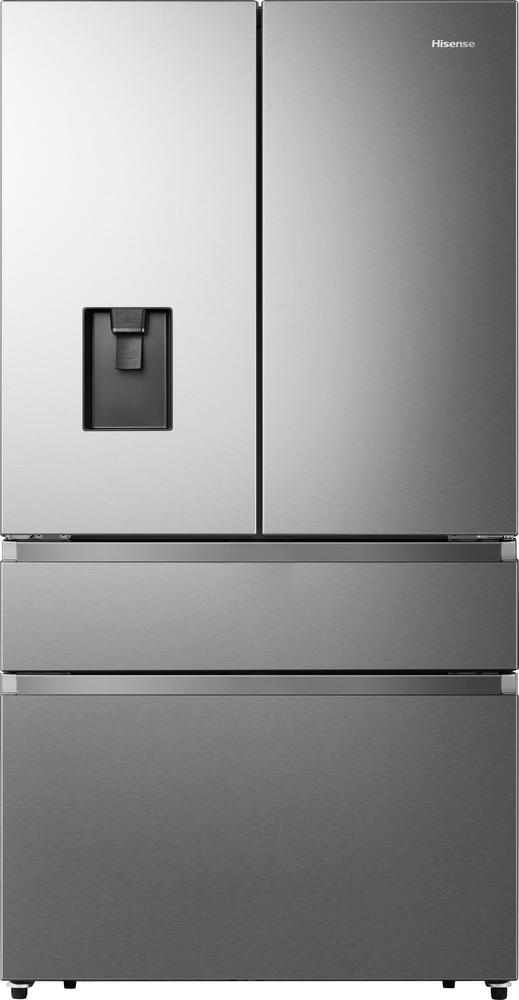
If your family fridge is bursting at the seams, an American-style fridge freezer can feel like a genuine upgrade in day-to-day life. The Hisense RS694N4ICE Plumbed Total No Frost American Fridge Freezer in stainless steel is a popular choice in the UK, especially for households that want chilled water on tap and masses of frozen storage. In this guide, we’ll look at what to consider before you buy, using the RS694N4ICE as a real-world example, and compare it with a few closely matched Hisense alternatives to help you find the right fit for your kitchen.
What makes the Hisense RS694N4ICE stand out?
The Hisense RS694N4ICE is a plumbed, side-by-side American fridge freezer with a modern stainless steel finish and Total No Frost cooling. That means it’s designed to give you generous fridge and freezer space, chilled water and ice from the door, and no more laborious defrosting sessions.
Owners clearly seem happy with it, with a high average rating and hundreds of customer reviews. If you’d like to dive into the nitty-gritty of performance, noise levels and storage layout, you can read our full review of the Hisense RS694N4ICE Plumbed Total No Frost American Fridge Freezer for detailed hands-on impressions.
For this article, we’ll focus on how a model like this fits into everyday life, what to think about before installing a plumbed American fridge freezer, and whether one of the closely related Hisense alternatives might suit you even better.
Plumbed vs non-plumbed: which water dispenser suits you?
One of the biggest decisions with an American-style fridge freezer is whether you want a plumbed water and ice dispenser or a non-plumbed version with a refillable tank.
The Hisense RS694N4ICE is a plumbed model, so it connects directly to your mains water supply. Once installed, you get:
- Constant chilled water without refilling a tank
- On-demand ice for drinks and entertaining
- A cleaner look with no need to remove and wash an internal reservoir
The trade-off is installation. You need a suitable water connection nearby and, in many cases, it’s worth paying a professional to run the pipework and fit any necessary valves or filters. This is easiest if your kitchen is being refurbished or if the fridge will sit near an existing sink feed.
If you like the idea of an American fridge freezer but don’t want the faff of plumbing, a non-plumbed model is more forgiving. Hisense’s own PureFlat Slim RQ5P470SYFD Non-Plumbed Total No Frost American Fridge Freezer offers a similar big-capacity experience, with a water dispenser fed by a refillable internal tank. You still get chilled water on tap, but you’re free to position the appliance almost anywhere with a plug socket.
Understanding Total No Frost and why it matters
Many modern American fridge freezers, including the Hisense RS694N4ICE, feature Total No Frost technology. Instead of letting moist air condense and freeze on the walls, they use clever airflow and evaporators to keep ice build-up to an absolute minimum.
This makes a big difference in everyday use:
- No manual defrosting – you don’t have to empty the freezer, chip away at ice or mop up water
- More consistent temperatures – better for food safety and shelf life
- Stable storage space – drawers keep sliding smoothly and don’t get jammed by ice
If you’re considering alternatives, all of the comparable Hisense models here also offer Total No Frost. The Hisense RF815N4SESE Total No Frost American Fridge Freezer is a good example; it’s a premium-feel stainless-steel model focused on even cooling and ample capacity without the hassle of frost build-up.
Side-by-side vs multi-door: getting the right layout
The RS694N4ICE follows the classic side-by-side layout: a tall fridge on one side and a tall freezer on the other, each with full-height shelves and door racks. This is ideal if you like everything at eye level and want easy access to both sections without bending.
However, Hisense also offers four-door and multi-door designs, which are worth a closer look if you want more flexible storage. Both the Hisense PureFlat Infinite RQ758N4SASE Total No Frost American Fridge Freezer and the black-accented Hisense PureFlat RQ758N4SAFE Total No Frost American Fridge Freezer use a multi-door format.
With these, you typically get:
- Two upper doors for the main fridge compartment
- Two lower doors for freezer or convertible zones
- Wide, open shelves ideal for trays, large pizzas and party platters
Multi-door models can feel more like a pantry, with shallower, wider shelves that make it easy to see everything at a glance. Side-by-side designs, like the RS694N4ICE, tend to have more door storage for bottles and jars and can slot neatly into narrower spaces.
Measuring up: will an American fridge freezer actually fit?
Before you fall in love with any specific model, check the practicalities. American fridge freezers are notably larger than standard 60 cm-wide fridge freezers, and they often need more breathing space for ventilation.
Work through these steps:
- Measure your available width: include a gap on either side (often a couple of centimetres) so the doors can open properly and air can circulate.
- Check depth carefully: account for handles and the fact that many models sit proud of your worktops. Make sure they won’t jut too far into a walkway.
- Confirm the height: consider wall units, low beams or decorative coving.
- Walk the delivery route: measure any tight corridors, doorways or turns between your front door and the kitchen.
If you have a slightly tighter kitchen but still want a statement appliance, a slimmer model such as the Hisense PureFlat Slim RQ5P470SYFD may make the installation process less stressful.
Energy ratings and running costs for big fridge freezers
Many large American-style fridge freezers, including the Hisense RS694N4ICE and its stainless-steel cousins like the Hisense RF815N4SESE, carry an E rating on the current energy label. Under the revised A–G system, this is fairly typical for large-capacity, feature-heavy models with ice and water dispensers.
To keep your running costs sensible:
- Set the fridge compartment to around 4°C and the freezer to about -18°C
- Allow plenty of space around the back and sides so warm air can escape
- Keep door openings short and avoid propping doors open while you cook
- Let cooked food cool before placing it inside
Models with Total No Frost tend to maintain steadier temperatures, which can help food last longer and reduce waste. If you want to compare energy performance and features more closely between models, our in-depth write-ups are a good resource – for example, you can check the full Hisense RS694N4ICE review here and then browse to the alternatives.
How much fridge and freezer space do you really need?
One of the biggest advantages of an American fridge freezer is sheer volume. Families often find that a standard-sized appliance just doesn’t cut it once you’re shopping weekly, batch cooking or freezing leftovers.
To decide on capacity, think about:
- Household size: a couple might be comfortable with a slimmer American model, while a family of five or more will appreciate the largest capacity possible.
- Shopping habits: if you do a big weekly shop, you’ll want more fridge space, wide shelves and a good number of drawers.
- Freezer usage: keen bulk buyers, gardeners and batch cooks will benefit from generous, well-organised freezer drawers.
All of the Hisense appliances discussed here offer ample room, but layouts differ. The RS694N4ICE’s side-by-side split makes it easier to stock a lot of frozen food without baskets piled too high. Multi-door models such as the RQ758N4SASE and RQ758N4SAFE lean into flexible compartments, ideal if you frequently switch between fresh and frozen storage.
Design and finish: blending your fridge freezer into your kitchen
With an appliance as large as an American fridge freezer, looks matter. The Hisense RS694N4ICE comes in stainless steel, which works well with both modern and more traditional kitchen styles, and tends to hide minor marks better than gloss white.
If you prefer a sleeker, built-in look, Hisense’s PureFlat range is worth considering. The Hisense PureFlat Infinite RQ758N4SASE offers a flat-fronted stainless finish designed to sit neatly alongside contemporary cabinetry. For a bolder contrast, the Hisense PureFlat RQ758N4SAFE pairs black with stainless accents, creating more of a design statement.
Also consider fingerprint visibility, handle style and where any displays or controls sit on the door. If you have young children, a finish that’s forgiving of smudges and a child-lockable control panel can be useful day to day.
Living with a big American fridge freezer day to day
Beyond capacity and looks, it’s the little everyday details that define how happy you’ll be with a new appliance. With a model like the RS694N4ICE, think about:
- Shelf adjustability – can you easily reconfigure shelves to fit tall bottles or multi-tier cakes?
- Door storage – are there secure racks for large milk bottles and juice cartons?
- Freezer organisation – drawers and clear fronts make it easier to avoid forgotten food.
- Noise – large frost-free models will hum and occasionally ramp up when the compressor runs; kitchen-diner layouts may benefit from quieter models.
Most modern Hisense American fridge freezers are designed with family use in mind, but details vary between ranges. Taking a few minutes to browse interior photos and read user feedback in our reviews – for example on the Hisense RF815N4SESE review page – can highlight whether a particular layout suits your cooking style.
Comparing the Hisense RS694N4ICE to key alternatives
If you’re leaning towards the RS694N4ICE but aren’t quite sure, it’s helpful to see where it sits alongside similar Hisense models:
- Hisense RS694N4ICE – plumbed side-by-side, stainless steel, Total No Frost. Ideal if you specifically want a classic American layout with integrated water and ice and are happy to arrange plumbing.
- Hisense PureFlat Slim RQ5P470SYFD – non-plumbed, slimmer footprint, stylish PureFlat design. Good for smaller kitchens or renters who can’t easily add a water line.
- Hisense RF815N4SESE – stainless steel, Total No Frost, a strong all-rounder with a focus on capacity and practicality, well suited to busy family homes.
- Hisense PureFlat Infinite RQ758N4SASE – premium-feel PureFlat styling, stainless finish, Total No Frost, multi-door layout. Great if you want a centrepiece appliance for a modern kitchen.
- Hisense PureFlat RQ758N4SAFE – similar to the RQ758N4SASE but with a striking black and stainless combination, perfect for darker, contemporary schemes.
Your choice will likely come down to three main things: whether you can (or want to) plumb a water line, how much space you have to play with, and which layout best matches your cooking and shopping habits.
Installation and setup tips for a smooth delivery day
Once you’ve picked your model, a bit of planning can make delivery and installation far less stressful. With a plumbed appliance like the RS694N4ICE, this is doubly important.
- Confirm the water connection: arrange any plumbing work in advance so there’s a properly positioned, accessible feed with an isolation valve.
- Protect floors and walls: large appliances are heavy and can scuff paintwork; clear a path and lay protective coverings where needed.
- Allow time for settling: once in place, most fridge freezers should stand unplugged for a few hours if they’ve been transported on their side, then left to cool down to temperature before loading food.
- Level the appliance: adjust the feet so the doors close smoothly and seals sit evenly all the way round.
After that, you can enjoy the fun part: moving in your food, organising your shelves and making the most of all that fresh and frozen space.
Caring for your American fridge freezer
Even with modern features such as Total No Frost, a little basic care goes a long way:
- Wipe up spills quickly to avoid lingering smells and staining
- Clean door seals occasionally with warm soapy water and dry them thoroughly
- Vacuum or dust the rear grille carefully once or twice a year so heat can escape
- If you have a water and ice dispenser, replace any filters according to the manufacturer’s guidance
These small jobs can help keep your appliance running efficiently and reduce the risk of problems later on.
Final thoughts
An American-style fridge freezer is a big purchase, but it can make everyday life easier, especially for larger households or keen cooks. The Hisense RS694N4ICE suits those who want a classic side-by-side design, stainless steel styling and the convenience of plumbed-in chilled water and ice, while Hisense’s PureFlat and multi-door alternatives offer different takes on capacity, layout and installation flexibility.
Take your time to weigh up plumbing, space, layout and design, then explore our model-specific write-ups – starting with the full Hisense RS694N4ICE review – to decide which appliance will earn its place at the heart of your kitchen for years to come.