
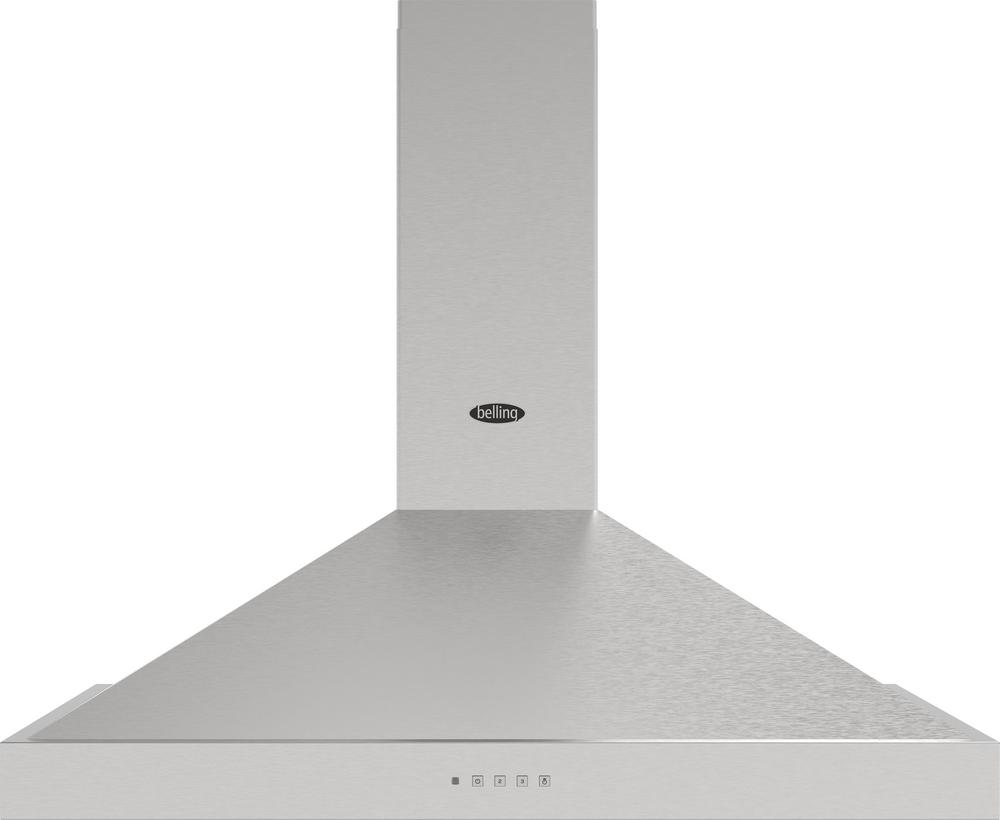
If you’ve invested in a wide range cooker or simply love having plenty of room on the hob, a matching chimney cooker hood is essential. It keeps steam, smoke and cooking smells under control, protects your kitchen from lingering grease and can even become a real focal point above your cooker. In this guide we’ll use the Belling BEL Farmhouse Chim 110PYR 110cm Chimney Cooker Hood in black as a reference point, and look at what to think about before you buy, how to size a hood correctly, and which alternatives are worth a look if you’re shopping around.
Why a 110cm Chimney Cooker Hood Suits Bigger Hobs
A 110 cm chimney cooker hood is designed with range cookers and extra-wide hobs in mind. When you have multiple pans on the go, a single small hood struggles to catch steam and smoke from the edges. A full-width hood like the Belling BEL Farmhouse Chim 110PYR offers much better coverage for the whole cooking surface, especially when you’re using several burners or large roasting trays.
Because this model sits firmly in the traditional chimney category and carries a strong user rating, it’s a useful example of what to expect if you’re upgrading from a basic visor hood. If you’d like a closer look at its real-world performance, you can read our full review of the Belling BEL Farmhouse Chim 110PYR 110cm Chimney Cooker Hood once you’ve got a feel for the key buying decisions.
Getting the Size Right: Width, Height and Kitchen Space
The first step in choosing any chimney hood is checking that it fits your space. With a 110 cm model, that mainly comes down to three things: the width of your cooker, the height of your ceiling and any wall units nearby.
Matching your hood to your cooker
As a rule, your hood should be at least as wide as your hob, and ideally a touch wider for serious cooking. The Belling BEL Farmhouse Chim 110PYR is designed to sit above the full length of a 110 cm range, giving more complete coverage than a 90 cm or 100 cm hood would. If your kitchen can comfortably take 110 cm of hood space, that additional width can make everyday cooking noticeably fresher.
Checking ceiling height and clearance
Chimney hoods are adjustable in height, but there are limits. You’ll need to maintain minimum safety clearances above gas or electric hobs, and still have enough chimney section to reach up towards the ceiling. If your ceilings are very high or low, it’s worth checking the installation range on any hood you’re considering. For a more compact take in a similar style, a 90 cm option like the AEG 6000 ExtractionTech DBX3951R 90cm Chimney Cooker Hood may suit smaller spaces while still feeling generous over the hob.
Working around wall units
Traditional farmhouse-style kitchens often have wall units close to the cooker. A 110 cm chimney hood will usually need clear space on both sides, so check the layout before you fall in love with a particular model. If your cupboards are already tight to the cooker, a 60 cm chimney design such as the Belling BEL Chim 603ANG 60cm Chimney Cooker Hood could be an easier retrofit, especially above a standard-width hob.
Ducted vs Recirculating: What Will Work Best in Your Kitchen?
Most modern chimney cooker hoods, including large 110 cm designs, can be set up either to duct air outside or to recirculate it back into the room through filters. Each approach has its pros and cons, and it’s worth deciding which route suits you before you pick a model.
Ducting to an outside wall
Ducting is usually the most effective method. Steam, grease and smells are physically expelled, which helps keep both the air and nearby surfaces cleaner. A wide hood like the Belling BEL Farmhouse Chim 110PYR will have plenty of capacity to push air through proper ducting, helping you keep up with big weekend roasts and batch cooking sessions.
However, ducting does require a clear path to an external wall and may involve drilling through brickwork, so there can be extra installation cost. If your hob is on an internal wall or in an island position, ducting might be tricky.
Recirculating with filters
Recirculation passes air through grease and charcoal filters and sends it back into the kitchen. This is much more flexible to fit and is often the only realistic option in flats or awkward layouts. The trade-off is that moisture stays in the room and you need to keep on top of filter replacements to control odours.
When you’re comparing chimney hoods, look for clear guidance on which recirculation kits and filters are compatible. Models across different brands, such as the NEFF N30 D62BBC0S0B 60cm Chimney Cooker Hood, will often offer both installation methods, but the cost of the extra parts can vary.
Design and Style: Farmhouse Charm vs Sleek Minimalism
Because the hood sits at eye level, the way it looks is just as important as what it does. The Belling BEL Farmhouse Chim 110PYR leans into a more classic, farmhouse feel with its bold 110 cm presence and black chimney styling. That works brilliantly above traditional range cookers and in country-inspired kitchens where you want the hood to feel like part of the furniture rather than a purely functional box.
If your space is more contemporary, it’s worth considering how the hood will blend with units, splashbacks and appliances. Slimmer chimney and built-in options such as the NEFF N50 D49ED22N1B Built In Telescopic Cooker Hood tuck neatly into cabinetry and only reveal themselves when pulled out, keeping sightlines clean in open-plan rooms.
Colour and finish considerations
Black hoods, like our Belling example, can look striking over a matching black range or induction hob, and are excellent at hiding minor marks between cleans. Stainless steel and silver finishes, which you’ll find on models like the NEFF telescopic hood, tend to complement a wider range of appliances but will show fingerprints more readily. Think about your existing oven, fridge and handles to decide whether you’d prefer a cohesive look or a deliberate contrast.
Controls, Fan Speeds and Everyday Usability
Once you’ve narrowed down the size and style, it’s worth comparing how easy each hood will be to live with day to day. This is where real-world user feedback around models like the Belling BEL Farmhouse Chim 110PYR, which carries a strong average rating from owners, becomes helpful. You can dive into that detail and see what people say about noise, lighting and cleaning when you read our full review of the Belling BEL Farmhouse Chim 110PYR.
Fan speeds and boost modes
Most chimney hoods offer at least three fan speeds, sometimes with an additional intensive or boost setting. For typical weekday cooking you’ll probably use the lower settings, which tend to be quieter and still effective when you’re just simmering or frying. Boost is handy when searing steaks, stir-frying or opening the oven for a roasting tray, especially in a large kitchen where smells can travel.
Alternatives like the AEG 6000 ExtractionTech DBX3951R focus heavily on extraction performance and may offer more refined airflow control in a slightly smaller footprint. If you cook intensively but don’t have space for 110 cm, that’s worth bearing in mind.
Noise and comfort
Noise levels can make the difference between a hood you use every day and one you switch on reluctantly. Larger hoods often have more powerful motors, but well-designed models will still be relatively quiet at their lower settings. It’s a good idea to check owner comments about noise at different fan speeds in detailed reviews of whichever hood you’re considering.
Lighting: Seeing What You’re Cooking
Good lighting is often overlooked, but once you’ve used a well-lit hob you won’t want to go back. The Belling BEL Farmhouse Chim 110PYR and similar chimney hoods typically include built-in lights to illuminate the cooking area from above. This not only helps you see whether food is browning nicely, but also brightens up darker corners of the kitchen.
When comparing options, look at the number and placement of lights as well as the type of bulbs used. LED lighting is efficient and long-lasting, and in larger hoods it helps ensure that the whole 110 cm span is evenly lit. Some integrated hoods, like the NEFF N50 telescopic model, can be particularly good at directing light forward over the hob, which is useful if you have deeper wall units.
Cleaning and Maintenance: Keeping Your Hood Fresh
Whichever chimney hood you choose, regular cleaning makes a huge difference to how well it works and how pleasant it is to use. Large 110 cm models naturally have more surface area, but they’re also usually designed with smooth metal surfaces that wipe down easily.
Grease filters
Behind the main panel you’ll find metal grease filters that capture airborne fat droplets. These need to be cleaned periodically, and in most modern hoods they simply unclip and can go in the sink or dishwasher. Keeping them clean helps maintain airflow and can reduce noise, as the motor doesn’t have to work as hard to move air through clogged mesh.
Charcoal filters for recirculating setups
If you’re using the hood in recirculation mode, charcoal filters will absorb smells. These aren’t washable and will need replacing every few months depending on how often you cook. The ongoing cost and ease of accessing replacement filters is worth factoring into your buying decision for any chimney hood, regardless of brand or size.
Comparing Good Alternatives by Size and Style
While the Belling BEL Farmhouse Chim 110PYR is a great example of a big, traditional chimney hood, it won’t be right for every kitchen. Here are a few strong alternatives that sit close in style, brand or price, and when they might make more sense.
Same-brand, smaller footprint: Belling BEL Chim 603ANG 60cm
If you like the look and reputation of Belling hoods but don’t have the space for 110 cm, the Belling BEL Chim 603ANG 60cm Chimney Cooker Hood is a natural choice. It keeps the chimney style in a much narrower body, ideal above standard 60 cm cookers and hobs. This makes it a good pick for smaller kitchens or for those who prefer a more compact focal point above the cooker.
Performance-focused 90cm option: AEG 6000 ExtractionTech DBX3951R
For cooks who prioritise extraction performance but don’t need full 110 cm width, the AEG 6000 ExtractionTech DBX3951R 90cm Chimney Cooker Hood is worth a look. At 90 cm, it pairs nicely with most range-style hobs and large built-in cookers, and focuses on efficient air movement across common cooking tasks. If you’re upgrading from a budget hood and want a noticeable step up in performance in a slightly more compact size, it’s a strong contender.
Discreet built-in option: NEFF N50 D49ED22N1B
Not everyone wants a big chimney as the focal point of their kitchen. If you prefer a clean, handle-free run of wall cabinets, the NEFF N50 D49ED22N1B Built In Telescopic Cooker Hood hides away almost completely when not in use. You pull it out to switch it on, which brings the intake closer to the front of the hob. It’s a good alternative if you’re working with standard-width appliances but still want solid extraction and integrated lighting.
Compact chimney with a modern twist: NEFF N30 D62BBC0S0B 60cm
If you like the idea of a chimney hood but want something modern and relatively compact, the NEFF N30 D62BBC0S0B 60cm Chimney Cooker Hood offers a contemporary take in black. It suits smaller hobs and narrower alcoves while still giving you that classic flared canopy look. For city flats and streamlined kitchens where a 110 cm hood would overwhelm the room, it’s a neat middle-ground option.
Energy Use, Ventilation and the Wider Kitchen
Modern cooker hoods are generally not huge energy users compared with ovens and hobs, but there are still a few efficiency tips to bear in mind. Using lower fan speeds when you can, switching lights to LED where possible, and keeping filters clean will all help the motor run more easily and use less power.
It’s also worth seeing your hood as part of the overall ventilation of your home. In open-plan spaces, a wide, capable hood like the Belling BEL Farmhouse Chim 110PYR can help keep cooking smells from drifting through to sofas and fabrics. In smaller, more enclosed kitchens, pairing a correctly sized hood with a window or background extractor can prevent condensation building up on walls and windows.
Making Your Final Choice
Choosing a chimney cooker hood is about more than just matching the width of your cooker. You’ll want to balance extraction performance, noise levels, installation options, style and long-term ease of cleaning. The Belling BEL Farmhouse Chim 110PYR 110cm Chimney Cooker Hood is a solid example of a large, range-friendly option that many owners are happy with, and it’s a great reference point when you’re comparing features and deciding what matters most to you.
When you’re ready to dig into the finer details, be sure to read our in-depth review of the Belling BEL Farmhouse Chim 110PYR and explore the linked alternatives. With the right hood in place, your kitchen will not only look better, but feel fresher every time you cook.