
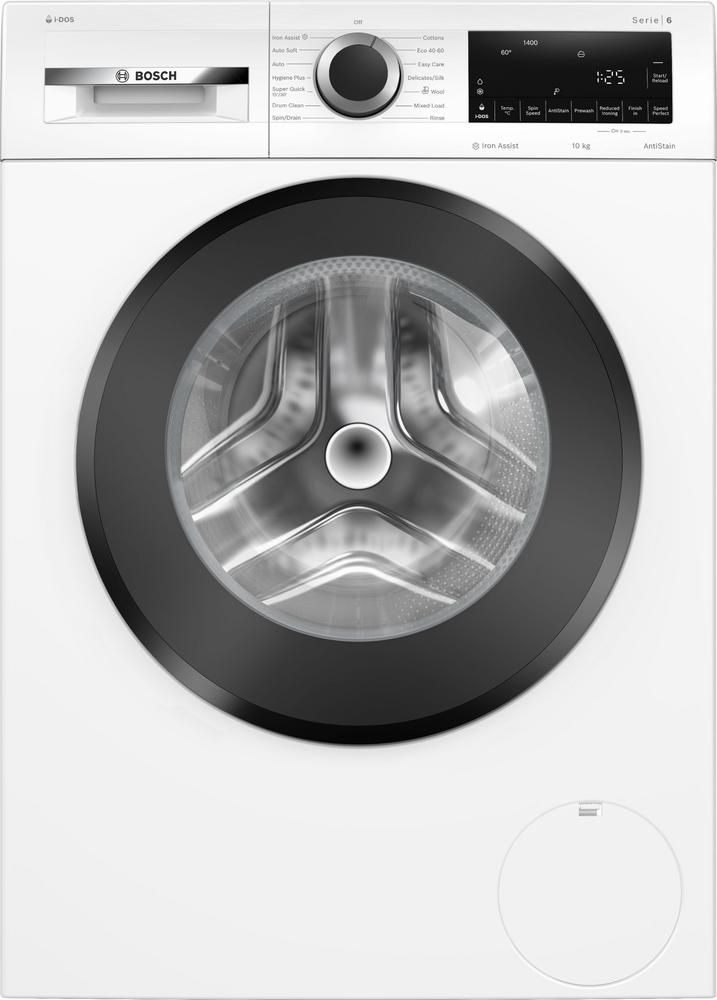
If your laundry basket always seems full, a bigger-capacity washing machine can feel like a revelation. The Bosch Series 6 WGG254Z1GB 10kg Washing Machine with 1400 rpm is designed to tackle family-sized loads while keeping energy use in check, making it an appealing option for busy homes. In this guide, we’ll look at when a 10kg machine makes sense, how this Bosch model fits into the wider line-up, and what to consider if you’re comparing it with other 8–9kg options.
Is a 10kg washing machine right for your home?
Capacity is one of the most important decisions you’ll make when choosing a new washer. A 10kg drum, like you get on the Bosch Series 6 WGG254Z1GB, is aimed squarely at medium to large households who get through a lot of washing each week.
As a rough guide, 10kg is well suited to:
- Families with two or more children
- Homes where you often wash towels, bedding and school uniforms together
- Anyone who prefers doing a couple of big loads rather than several smaller ones
It’s also a handy size if you regularly wash bulky items such as duvets, throws and thick jumpers. Instead of forcing them into a smaller drum, the extra space helps them move around properly and wash more evenly.
If you’re not sure a 10kg machine is necessary, it’s worth comparing it with a slightly smaller option. For instance, the Bosch Series 6 WGG244ZCGB offers a 9kg drum and similar modern features, but in a slightly more compact package and a stylish graphite finish. You can read our full review of the Bosch Series 6 WGG244ZCGB 9kg washing machine to see whether 9kg might suit your household better.
Why look at the Bosch Series 6 WGG254Z1GB?
The Bosch Series 6 WGG254Z1GB is a freestanding, white 10kg washing machine with a 1400 rpm spin speed and an efficient A energy rating. That combination of big capacity and strong efficiency is what makes it stand out if you’re trying to keep bills under control while juggling plenty of laundry.
Owners clearly seem happy with it too, with an average rating around 4.9 stars from well over a thousand reviews at the time of writing. Rather than repeat everything in detail here, you can read our full review of the Bosch Series 6 WGG254Z1GB 10kg washing machine for a closer look at everyday performance, noise levels and programme options.
For this guide, we’ll focus on how a machine like this fits into real life: what it’s like to live with a 10kg washer, how to load it properly, and what other Bosch models are worth considering if your priorities are slightly different.
Understanding spin speed and why 1400 rpm matters
A 1400 rpm spin speed, as found on the WGG254Z1GB and its Series 6 siblings, is a good sweet spot for modern washing machines. It’s fast enough to remove a lot of water from cottons and towels, meaning shorter drying times on the line or in a tumble dryer, without being so extreme that it becomes unreasonably noisy for most households.
In practical terms, that means:
- Heavy items come out much less soggy than they would at 1000 or 1200 rpm
- You can dry indoors more quickly in winter, reducing damp and condensation risks
- You may save energy if you also use a tumble dryer, as the dryer doesn’t have to work as hard
Most modern machines let you reduce the spin speed for delicate items, so you still have the flexibility to protect more fragile fabrics. The key is to match the spin to the type of load rather than leaving it on maximum for everything.
Energy ratings and long-term running costs
With electricity prices where they are, the A energy rating on the Bosch Series 6 WGG254Z1GB will be a major selling point for many. Higher efficiency means the machine is designed to use less electricity per wash compared with lower-rated models, particularly on eco and lower-temperature programmes.
If you’re replacing an older washer that’s ten years old or more, the difference in running costs can be significant over time. Pair that with the large 10kg drum, and you can potentially do fewer loads, which multiplies the savings.
It’s not the only efficient Bosch option, though. The Bosch Series 4 WAN28259GB, for example, is a 9kg A-rated washing machine that sits slightly lower in the range but still focuses on sensible energy use. If you’d like something a touch more affordable without losing that A rating, it’s worth reading our review of the Bosch Series 4 WAN28259GB 9kg washing machine as a comparison.
10kg vs 9kg vs 8kg: which capacity is best?
The Bosch laundry line-up includes a range of capacities, so it helps to understand how they stack up. The WGG254Z1GB is one of the larger freestanding models at 10kg, while the 9kg and 8kg options provide flexibility if your home is smaller or you’re more limited on space.
When a 10kg machine shines
Choose 10kg if you:
- Regularly wash a full basket of clothes, plus towels and bedding
- Have an active household with sports kits and school uniforms
- Want to wash duvets and large throws at home rather than going to a laundrette
The Bosch Series 6 WGG254Z1GB is built for exactly this kind of usage. If that sounds like you, you can dive into our in-depth review of the Bosch Series 6 WGG254Z1GB for more detail on how it handles big mixed loads.
Where 9kg hits the sweet spot
For many UK households, a 9kg drum is a very comfortable middle ground. It’s typically big enough for a couple with one or two children, and you can still wash bedding and towels without too much juggling. It often comes in a slightly neater footprint too, which can help if you’re fitting the machine into a tight space.
Bosch offers several 9kg options that sit close to the hero model in this guide. Aside from the graphite Bosch Series 6 WGG244ZCGB already mentioned, there’s also the Bosch Series 6 WGG24400GB 9kg Washing Machine with a white finish and A energy rating. If you like the idea of Series 6 features but don’t need the full 10kg drum, it’s well worth reading our review of the Bosch Series 6 WGG24400GB 9kg washing machine.
Thinking about an integrated 8kg option
If you’re planning a sleek kitchen with hidden appliances, an integrated machine may be more your style. The Bosch Series 8 WIW28502GB Integrated 8kg Washing Machine is designed to sit behind a cabinet door for a clean, built-in look. Its 8kg capacity will generally suit smaller families, couples or anyone who washes a bit less frequently.
Because it’s a Series 8 model, it typically brings some extra refinement and premium features compared with mid-range machines, even though it carries a C energy rating. To see how it compares in terms of daily usability and installation considerations, have a look at our full review of the Bosch Series 8 WIW28502GB integrated 8kg washing machine.
Freestanding vs integrated: which style suits you?
The Bosch Series 6 WGG254Z1GB is a classic freestanding model, which means it stands on its own feet and doesn’t need to be hidden behind cabinetry. That brings a few key advantages:
- Generally better value for the capacity and features you get
- Easier access for installation, maintenance and repair
- More flexibility if you decide to move it to another room later
Integrated machines, such as the Bosch Series 8 WIW28502GB, are mainly about aesthetics and seamless design. They’re ideal if your washer lives in the kitchen and you want it to blend in, or if you’re working with limited space and planning everything around your cabinetry layout.
In short, if capacity, cost and practicality are your priorities, a freestanding 10kg model like the WGG254Z1GB will likely be the better fit. If you’re after an upmarket, minimalist look and are prepared to pay a bit more, an integrated 8kg machine may make more sense.
How to get the most from a 10kg washing machine
Once you’ve chosen a larger machine, it’s worth adjusting how you use it to get the best cleaning and efficiency. Here are some easy wins for everyday laundry:
Load it properly
It can be tempting to stuff a huge drum right to the top, but even 10kg machines need room for clothes to move around. A good rule of thumb is to leave a hand’s width of space at the top of the drum for standard cotton loads. For bulky items, aim to load them loosely rather than tightly rolling or folding them.
Match programmes to your laundry
Modern washers, including Bosch Series 6 models, usually offer a selection of eco, quick, mixed and specialist programmes. For everyday clothing that isn’t heavily soiled, an eco or mixed cycle at 30°C or 40°C is usually more than enough and will keep running costs low. Save higher temperatures for bedding, towels or particularly grubby items.
Use the spin speed smartly
Take advantage of that 1400 rpm spin for towels, jeans and cotton bedding, where extra dryness is useful. For shirts, blouses and more delicate fabrics, consider reducing the spin to cut down on creasing. That way, you get the best of both worlds: fast drying times where it matters, and easier ironing where you need it.
Noise, placement and everyday practicality
Noise is a key concern, especially if your washer sits in a kitchen-diner or open-plan space. While individual noise levels vary by model, Bosch machines generally focus on stable spinning and decent sound insulation, which helps keep disturbance down during high-speed cycles.
To give any washing machine the best chance of running quietly:
- Make sure it’s installed on a solid, level floor
- Adjust the feet to eliminate wobble before you start using it
- Avoid mixing a single heavy item with a few light ones, as this can unbalance the drum
If you’re especially sensitive to noise, it can be worth checking user impressions and test notes for specific models. Our detailed write-ups for the WGG254Z1GB and its alternatives cover this kind of day-to-day experience.
Choosing between Bosch Series 4, 6 and 8
Because all the machines discussed here sit within the same overall family, it helps to think about what typically distinguishes the different series.
Series 4: straightforward and sensible
Series 4 models, such as the Bosch Series 4 WAN28259GB 9kg, tend to be the more affordable, no-nonsense choices. You still get a solid selection of programmes, an A energy rating in this case, and reliable everyday performance, but without as many of the premium touches.
Series 6: feature-rich all-rounders
Series 6 is where you often see extra convenience features, quieter operation and refined drum or motor technologies compared with entry-level models. The Bosch Series 6 WGG254Z1GB 10kg, WGG244ZCGB 9kg and WGG24400GB 9kg all sit in this bracket, balancing strong specs with family-friendly design.
Series 8: premium and integrated options
Series 8 models usually sit at the top end, with more advanced features, extra programmability or higher-end build details. The Bosch Series 8 WIW28502GB integrated 8kg machine reflects this focus on premium, fitted kitchens. If you’re happy to invest more for integrated styling and a richer feature set, Series 8 is where to look.
Care and maintenance tips for long-lasting performance
Whichever capacity or series you choose, a little routine maintenance keeps your washing machine working efficiently and smelling fresh.
- Run a drum clean: Use a maintenance or drum-clean programme every month or two, especially if you wash at low temperatures.
- Clean the detergent drawer: Pull it out regularly and rinse away any detergent or softener build-up to prevent mould.
- Wipe the door seal: After a wash, wipe around the rubber seal to remove trapped water and lint.
- Leave it ajar: Keep the door and drawer slightly open between washes so the interior can dry fully.
- Check the filter: Clear out coins, hair and fluff from the filter occasionally to help drainage and spin performance.
Good habits like these will help any machine – whether a big 10kg workhorse or a space-saving 8kg built-in unit – stay in top condition for longer.
Final thoughts: finding the right Bosch washer for you
Choosing a new washing machine is about more than just picking the biggest drum or the highest spin speed. You need a model that fits your space, matches your household’s laundry habits and keeps running costs sensible over time.
If you’re drawn to a large, efficient freestanding machine, the Bosch Series 6 WGG254Z1GB 10kg Washing Machine with 1400 rpm is a strong candidate, particularly for busy family homes. To see how it performs in real-world use, be sure to read our full review of the Bosch Series 6 WGG254Z1GB.
If you decide a slightly smaller drum or an integrated design would suit you better, the Bosch Series 6 WGG244ZCGB, Bosch Series 6 WGG24400GB, Bosch Series 4 WAN28259GB and Bosch Series 8 WIW28502GB are all well worth a look. Explore the linked in-depth reviews to compare features, programmes and user feedback, and you’ll be in a strong position to pick a machine that will quietly get on with the job for years to come.