
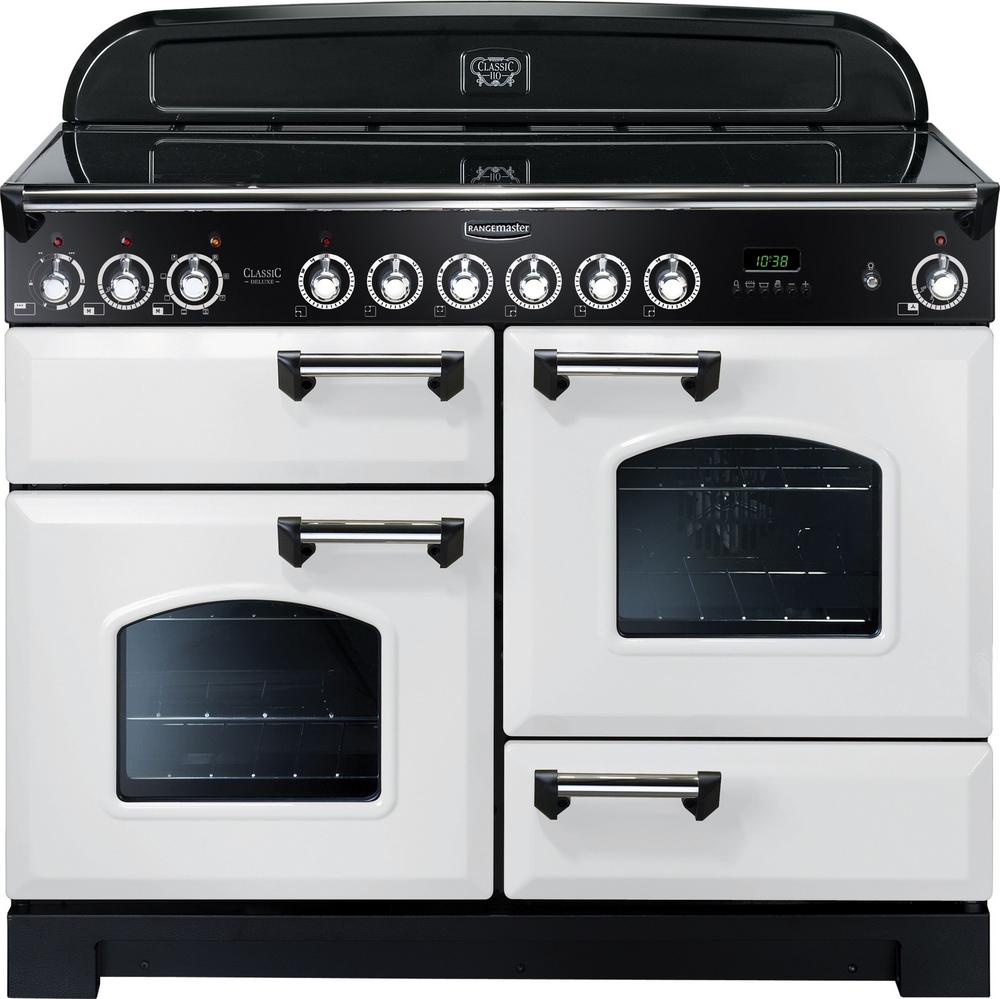
If you love cooking, a range cooker can transform the way you use your kitchen. The Rangemaster Estel Deluxe ESDL90EIPSLT/CM1 90cm Electric Range Cooker with Induction Hob in slate and chrome is a stylish, modern option that mixes serious performance with a contemporary look. In this guide we will explore what living with a 90cm electric range is really like, how to decide if it is right for your home, and where larger 110cm alternatives might fit in better.
Why consider a 90cm electric range cooker with induction?
The Rangemaster Estel Deluxe sits in a sweet spot between a standard 60cm cooker and a huge 110cm range. At 90cm wide, there is space for multiple oven cavities and a generous induction hob, without needing to redesign your entire kitchen.
Electric range cookers with induction hobs are increasingly popular because they combine efficient ovens, sleek looks and easy-clean glass hob surfaces. With models like the Estel Deluxe, you gain the capacity and presence of a traditional range, but with a clean-lined finish that suits modern, handleless or shaker-style kitchens alike.
If you want to dive into every last feature and real-world performance detail, you can read our full review of the Rangemaster Estel Deluxe ESDL90EIPSLT/CM1 once you have finished this guide.
Layout and capacity: what to expect from a 90cm range
One of the main reasons to move up to a 90cm range is the way it changes your cooking workflow. Instead of a single, deep oven cavity, you typically gain multiple ovens or a combination of oven and dedicated grill spaces. That means you can roast, bake and grill at different temperatures at the same time without constantly juggling shelves.
On an electric range like the Estel Deluxe, you can expect:
- At least two oven cavities, often both fan-assisted and independently controlled.
- A separate grill or built-in grilling function, so toast and finishing tasks do not interrupt your main cooking.
- A wide hob surface that spreads pans out, making it easier to see and stir everything.
For many busy households, this layout is far more flexible than a standard cooker, yet easier to accommodate than an ultra-wide 110cm model. However, if you regularly host large parties or batch cook on a big scale, you might want to consider a 110cm alternative such as the Rangemaster Nexus NEX110DFFBL/C 110cm Dual Fuel Range Cooker, which offers extra oven volume and a broader hob.
Induction hob benefits for everyday cooking
The hero feature on the Rangemaster Estel Deluxe is its induction hob. Induction uses magnetic fields to heat your pans directly, rather than slowly warming the glass or metal beneath them. This has several practical advantages in a busy kitchen.
- Speed: Water boils rapidly and frying pans come up to temperature quickly, rivaling or beating gas in many tasks.
- Efficiency: Less heat is lost to the surrounding air, so more of your energy bill ends up in the food you are cooking.
- Control: Power levels adjust almost instantly, which is perfect for delicate sauces or simmering.
- Safety: The surface stays cooler, and most zones detect when a pan is removed and cut power.
The trade-off is that you need induction-compatible pans, so it is wise to check your current set with a fridge magnet before you commit. If you prefer the feel of a traditional flame, a dual fuel model like the Rangemaster Nexus NEX110DFFCB/C 110cm Dual Fuel Range Cooker with Gas Hob might appeal more, blending gas burners with large electric ovens.
Design and finish: making a statement in slate and chrome
Range cookers are as much about style as they are about cooking. The Estel Deluxe in slate with chrome trim delivers a modern take on the classic range aesthetic. Slate finishes sit somewhere between black and graphite, giving a softer, more premium look that works well with pale cabinetry and darker worktops alike.
Chrome trim and handles add a subtle contrast and help tie the cooker in with stainless-steel appliances and fixtures. If you are planning a coordinated look across a wider appliance line-up, Rangemaster also produces Nexus models in different finishes that are worth considering. For example, the Rangemaster Nexus NEX110DFFSL/C 110cm Dual Fuel in Slate extends that slate colourway across a larger 110cm format, giving a more expansive look while maintaining a similar tone.
Choosing the right size: 90cm vs 110cm ranges
It is tempting to think bigger is always better, but there are good reasons why a 90cm range like the Estel Deluxe has become such a popular choice. Before deciding, think through the following points.
Kitchen space and layout
Measure the width available between your cabinets and consider any tall units, doors or walkways nearby. A 90cm cooker is usually straightforward to integrate into existing kitchens, while 110cm models can demand more planning, especially in narrower rooms.
How you cook
If most of your cooking is for a family of four or five, and you only occasionally host larger gatherings, a 90cm electric range often offers all the space you need. Those who batch cook for the freezer, regularly host big Sunday lunches, or have a keen baker in the house might appreciate the additional oven space and hob width on 110cm models such as the Rangemaster Nexus NEX110DFFWH/C 110cm Dual Fuel Range Cooker in White.
Energy usage and practicality
Larger ranges give you more ovens and burners, but that does not mean you have to power everything up at once. In everyday use, many owners find they stick to one main oven and a couple of hob zones, with the extra capacity saved for special occasions. Electric ranges with induction can be particularly efficient for day-to-day single-oven cooking.
Electric vs dual fuel: which fuel type suits you?
The Rangemaster Estel Deluxe is a fully electric range with an induction hob, making it a strong match for homes that either do not have mains gas or want a cleaner, contemporary solution. However, dual fuel models in the same brand family offer a gas hob with electric ovens, which some cooks still swear by.
When an all-electric induction range makes sense
- Your home runs mainly on electricity, potentially including renewables like solar panels.
- You prefer a sleek glass hob that is easy to wipe clean and free of pan supports.
- You want precise low-heat control for sauces and chocolates, as well as fast boil times.
When dual fuel could be better
- You love cooking over a visible flame and often use woks or specialist pans.
- You are used to gas and prefer the tactile feedback of turning a burner knob.
- You want a wider hob with mixed fuel options, as seen on Nexus models.
If you are unsure which camp you fall into, browsing a few different models and reading through hands-on impressions can really help. You can start with our in-depth insights by heading over to the full review of the Rangemaster Estel Deluxe 90cm Electric Range Cooker, then compare it to the various Nexus dual fuel options linked throughout this article.
Installation, power supply and ventilation
Before you fall in love with any range cooker, make sure your home can support it. Electric ranges usually require a dedicated high-amperage connection on its own circuit, and you will need a qualified electrician to install and sign off the work. Check the manufacturer’s guidance for cable rating and fuse size, then confirm with your installer.
Ventilation is just as important. A 90cm cooker needs an extractor hood or other ventilation solution that at least matches its width, and ideally offers a comfortable clearance above the hob. Planning this early can save headaches when the appliance arrives, especially if you are also adding splashbacks or decorative shelves around the cooker.
Living with a range cooker day to day
Once installed, the real benefits of a range cooker appear in small, everyday details. On a model like the Estel Deluxe, having multiple ovens means you can leave one set up for baking and another for grilling or roasting, with your preferred shelf positions ready to go. This makes weeknight dinners easier and cuts down on pre-heating and reorganising.
The induction hob encourages more precise, tidy cooking. Because spills do not bake on as readily, a quick wipe after the surface cools is usually enough to keep the glass looking fresh. Over time, many owners find that they rely less on the microwave and more on the hob and ovens, simply because everything is so accessible and responsive.
Care, cleaning and keeping your cooker looking new
Range cookers are a long-term investment, so a bit of routine care goes a long way. For electric ovens, regularly removing loose crumbs and wiping up spills before they bake on is key. Many modern ovens include easy-clean enamel or pyrolytic/self-clean options, but even with these, keeping on top of splashes makes deep cleans much quicker.
On the induction hob, avoid dragging gritty pans across the surface and use a soft cloth and non-abrasive cleaner to remove marks. For the slate and chrome exterior, a microfibre cloth and a gentle cleaner are usually all you need to maintain the finish; harsh abrasives and scouring pads can dull or scratch the surface over time.
When to look at larger alternatives
While the 90cm format of the Estel Deluxe suits most families, there are genuine reasons to consider sizing up. If you have a large open-plan kitchen, a 110cm range can provide better visual balance against long runs of cabinets and big islands. Extra ovens can be reserved for special diets, such as gluten-free baking, or designated as a lower-temperature proving or warming space.
The Rangemaster Nexus series offers several 110cm dual fuel options in a range of finishes, from the bold black Nexus NEX110DFFBL/C to the softer slate Nexus NEX110DFFSL/C and bright white Nexus NEX110DFFWH/C. If you prefer a pure gas hob instead of mixed fuel, the Nexus NEX110DFFCB/C with Gas Hob provides that classic cooking feel on a broader canvas.
How to decide which model is right for you
To narrow your choice, start with a short checklist:
- Available width: Measure your space and decide if 90cm or 110cm is realistic without major cabinetry changes.
- Fuel type: Decide whether an all-electric induction model or a dual fuel gas hob setup matches your cooking habits.
- Design and finish: Think about how slate, black, white or stainless will sit with your cabinets and worktops.
- Oven layout: Consider how many ovens you truly use and whether specialised cavities would help.
- Budget: Factor in installation, ventilation and any new cookware needed for induction.
Once you have a feel for these points, reading detailed hands-on impressions really helps solidify your choice. For the 90cm electric option, you can learn more by heading over to our full review of the Rangemaster Estel Deluxe ESDL90EIPSLT/CM1 90cm Electric Range Cooker with Induction Hob, then compare what you learn with the Nexus alternatives.
Final thoughts
A range cooker is a centrepiece purchase, and getting it right will pay off every day you cook. A 90cm electric range with induction, like the Rangemaster Estel Deluxe, offers an excellent balance of capacity, control and contemporary styling for most modern kitchens, while the 110cm Nexus models provide extra space and traditional dual fuel flexibility for those who need it.
Take your time to think about how you really cook, measure your kitchen carefully, and then explore the in-depth reviews linked throughout this guide. With that information at your fingertips, you will be well placed to choose a range cooker that looks fantastic and works hard for many years to come.