
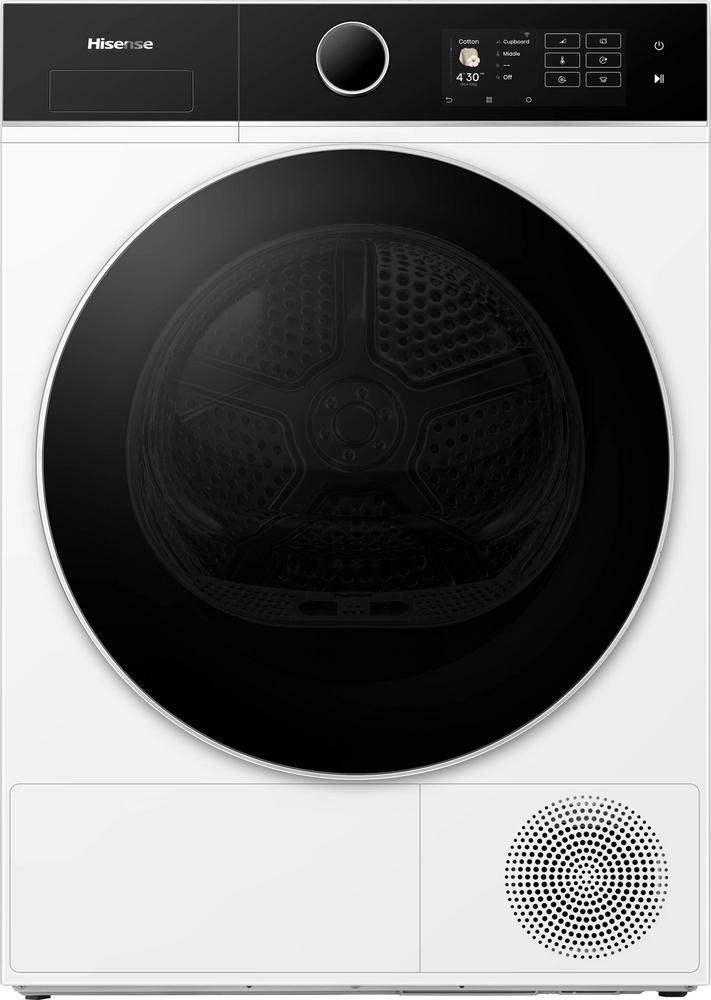
Choosing a new tumble dryer used to be as simple as picking a vented or condenser model and hoping your energy bills would cope. With modern heat pump technology and Wi‑Fi control, there is now much more to think about – but also far more to gain in terms of running costs, convenience and fabric care. In this guide, we use the Hisense 5i Series DH5I104BBAB 10kg Heat Pump Tumble Dryer as a real-world example of what to look for, and how it compares with strong alternatives from Hisense, Samsung and AEG.
Why consider a 10kg heat pump tumble dryer?
A 10kg drum size suits busy households that regularly wash bedding, towels and family laundry. It lets you dry more in one go, reducing the number of cycles you run each week. Pair that capacity with heat pump technology and you have a machine designed to keep energy use under control despite heavy use.
The Hisense 5i Series DH5I104BBAB sits firmly in this space. It is an A+++ rated, 10kg heat pump tumble dryer in a smart black finish, aimed at households who want efficiency without giving up on capacity or features like Wi‑Fi connectivity. If you want a deep dive into the performance, controls and noise levels, you can read our full review of the Hisense 5i Series DH5I104BBAB, but here we will focus on buying and usage tips.
Understanding A+++ heat pump technology
Heat pump tumble dryers work differently from older vented and condenser models. Instead of constantly heating fresh air from the room, they reuse warm air within a closed system, extracting moisture and recirculating the heat. This is why well-designed models can reach A+++ ratings.
With a 10kg A+++ appliance like the Hisense 5i Series DH5I104BBAB, the main benefits are:
- Significantly lower electricity use per cycle compared with older C or B rated machines.
- Gentler drying temperatures, helping to protect fabrics from shrinkage and damage.
- More flexibility in placement as no external vent is required.
Do keep in mind that heat pump dryers usually run longer cycles. In practice, many households find that the extra time is a fair trade-off for the energy savings, especially if they can schedule loads around their day.
Capacity: is 10kg the right size for you?
Capacity is about more than how much you can cram into the drum. A 10kg dryer like the Hisense 5i Series DH5I104BBAB is designed for large mixed loads and bulky items, which can be transformative if you are used to smaller machines.
As a rule of thumb:
- Singles or couples with modest laundry might lean towards 8–9kg, such as Samsung’s 9kg heat pump options.
- Families with children, sports kits or regular towel and bedding loads will appreciate the extra space of a 10kg drum.
- Anyone washing duvets or thick blankets will find a larger drum easier to load and more effective at tumbling big items.
If you like the idea of a roomy 10kg drum but want to stay within the Hisense ecosystem, the Hisense 7S Series DH7S107BB is a natural alternative, with a similar capacity and A+++ efficiency but a slightly more premium positioning.
Wi‑Fi connected tumble dryers: what do you really gain?
Wi‑Fi connectivity is now common on higher-end tumble dryers, and the Hisense 5i Series DH5I104BBAB embraces this trend. For many households, the most useful aspects are quite simple:
- Start, pause or monitor a cycle from another room.
- Check how long is left on a programme without walking to the utility space.
- Receive notifications when drying is finished or when filters need cleaning.
Some smart dryers also integrate with broader home platforms and energy monitoring tools. Whether you find this valuable depends on how connected your home already is. If you are curious but not convinced, opting for a Wi‑Fi model such as the Hisense 5i Series means you can experiment; you are not forced to use the app if you prefer the front-panel controls.
Comparing Hisense, Samsung and AEG heat pump dryers
Once you know you want a heat pump dryer, the next question is brand and feature set. The Hisense 5i Series DH5I104BBAB competes directly with some very capable models from Samsung and AEG, particularly around the 9–10kg mark.
Hisense 5i Series vs Hisense 7S Series
If you like the look of the 5i Series but wonder if you should spend a bit more within the same brand, the Hisense 7S Series DH7S107BB is the obvious comparison. Both are 10kg, A+++ heat pump dryers in black with Wi‑Fi, making them well suited to modern kitchens and utility rooms.
The 7S Series nudges the spec and feel upwards, so it is worth considering if you value a slightly more premium user experience or additional specialist programmes. If your priority is strong efficiency and capacity at a keen price, the 5i Series remains a very attractive option.
Looking at 9kg Samsung options
Samsung has become a major player in heat pump tumble dryers, especially around the 9kg capacity sweet spot. Two models that often appear on the same shortlist as the Hisense 5i Series are the Samsung Series 6 AI Energy OptimalDry DV90T6240LH and the Samsung Series 6 DV90T6240LE/S1, both 9kg A+++ heat pump dryers.
These models trade a little capacity compared with the 10kg Hisense for Samsung’s familiar design language and well-developed smart features. They are especially appealing if you already own other smart appliances from the same ecosystem and want everything controlled in one place.
Considering an AEG fabric‑care specialist
AEG heat pump dryers are often chosen for their fabric care focus. The AEG AbsoluteCare TR849P4B is a 9kg A++ rated heat pump dryer that sets itself apart with tailored drum movements and temperature controls designed to protect delicate items.
If your main priority is gentleness on fabrics and you are happy with a slightly lower energy rating than A+++, this type of machine is worth a close look. It is a good example of how not every buying decision should be driven purely by the label; consider what and how you actually dry every week.
Key things to check before you buy
Regardless of brand, there are a few practical details worth double-checking when shopping for a heat pump tumble dryer:
- Dimensions and door swing: Ensure the width, depth and height fit your space, and that the door can fully open without hitting walls or cupboards.
- Drainage options: Check whether you will empty a water tank or connect a drain hose, and that your preferred option is supported.
- Filter access: Filters should be easy to reach and clean; this makes regular maintenance far less of a chore.
- Noise levels: If the dryer sits near living spaces or bedrooms, a quieter model can make a real difference, especially with longer heat pump cycles.
- Programme selection: Look for cycles that match your wardrobe – for example, dedicated sportswear, wool, bedding or quick refresh options.
For a detailed look at how this plays out on a specific model, you can read our full review of the Hisense 5i Series DH5I104BBAB 10kg Heat Pump Tumble Dryer, which covers real-world installation and day-to-day use.
Making the most of an A+++ heat pump dryer
Once your new dryer is in place, a few habits will help you get the best from it and keep running costs down.
Load size and sorting
Heat pump dryers are efficient, but they still benefit from sensible loading. Try to:
- Avoid overfilling the drum; clothes need room to tumble and separate.
- Sort by fabric type where possible – heavy cotton towels and delicate synthetics dry at different rates.
- Untangle large items like duvet covers so smaller garments do not get trapped inside.
A 10kg machine like the Hisense 5i Series DH5I104BBAB gives you scope for generous loads, but it still pays to think about how mixed your laundry is.
Using sensor drying and appropriate programmes
Modern dryers use sensors to stop automatically when clothes reach a chosen dryness level. For everyday loads, this can prevent over‑drying, protect fabrics and shave time off each cycle. Reserve high‑temperature cupboard‑dry settings for towels and heavy cottons, and opt for gentler options on mixed fabrics and delicates.
Specialist programmes – for outdoor wear, mixed loads or bedding – can also make a noticeable difference. They adjust drum movements and temperatures for better results, so it is worth learning which settings best match your laundry.
Maintenance and care for long-term efficiency
A well‑looked‑after heat pump dryer should serve you reliably for years. Thankfully, the basics of maintenance are straightforward.
Filter cleaning
The fluff filter is your first line of defence against reduced performance. Cleaning it after every cycle keeps air flowing freely through the drum and heat exchanger. If you share the household chores, make it part of the routine so nobody forgets.
Keeping the heat pump system clear
Heat pump dryers have a heat exchanger that can gradually collect lint and dust. Depending on the design, you may need to open a hatch and gently clean this area from time to time. Follow the manufacturer’s instructions – using the wrong tools or too much water can cause damage.
Ventilation around the appliance
Although heat pump dryers do not vent outside, they still need some air circulation around them. Avoid boxing your dryer tightly into a cupboard without ventilation, and keep the surrounding area reasonably dust‑free. This helps the heat pump operate efficiently and can also reduce noise and vibration.
Choosing between similar models: how to decide
When several dryers look similar on paper – for example, the Hisense 5i Series DH5I104BBAB, the Hisense 7S Series DH7S107BB, and 9kg models like Samsung’s DV90T6240LH or AEG’s TR849P4B – the decision often comes down to priorities rather than raw spec sheets.
- Maximum efficiency and large capacity: A 10kg A+++ model is ideal if you run frequent, full loads.
- Balanced capacity and compactness: A 9kg A+++ Samsung dryer may better suit smaller spaces or households that rarely fill a 10kg drum.
- Fabric care above all: A dedicated fabric‑care design, such as AEG’s AbsoluteCare approach, can be attractive if you own a lot of delicate or high‑value clothing.
- Smart home integration: If you are invested in a particular smart ecosystem, that may sway you towards one brand’s connected platform over another.
Reading in‑depth guides for each candidate is the best way to see how these priorities map onto real features and day‑to‑day usability.
Final thoughts
Heat pump tumble dryers have moved from niche to mainstream, and models like the Hisense 5i Series DH5I104BBAB show why. A large 10kg drum, A+++ efficiency and Wi‑Fi control combine to deliver low running costs and modern convenience, especially for family households or anyone with regular bulk laundry.
If you are ready to narrow your shortlist, start by deciding whether 10kg or 9kg is the better fit for your space and laundry habits. Then compare a few well‑matched models – such as the Hisense 5i Series, the Hisense 7S Series DH7S107BB, Samsung’s Series 6 heat pump dryers and AEG’s AbsoluteCare range – using detailed product reviews to guide your choice. With a little upfront research, you can choose a dryer that quietly gets on with the job, keeps bills in check and looks after your clothes for years to come.