
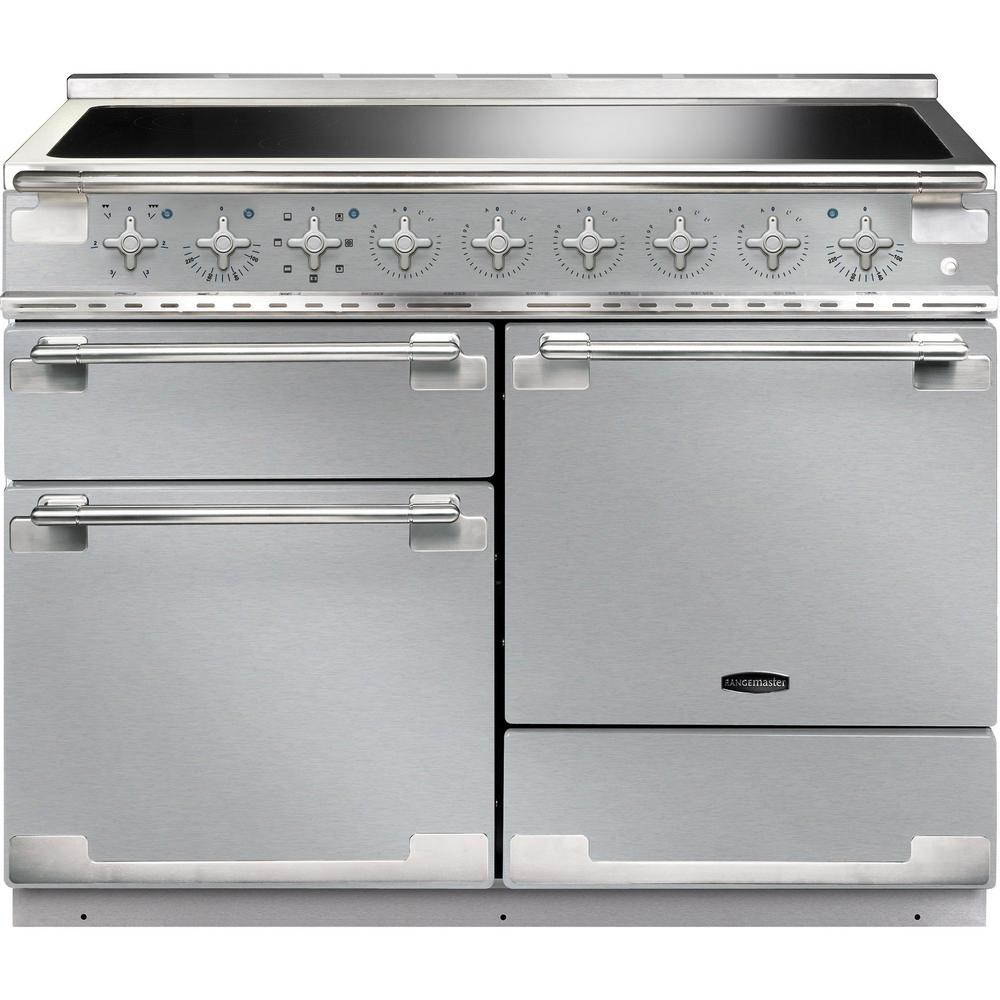
If you love to cook and you’re planning a statement kitchen, a full-size electric range cooker with induction hob is one of the most satisfying upgrades you can make. The Rangemaster Elise ELS110EICA 110cm Electric Range Cooker with Induction Hob in China Blue is the kind of appliance that anchors a room: wide, stylish and packed with flexible cooking space. This guide walks through the key things to think about when choosing a large induction range, using the Elise family as a real-world example, and points you to in-depth reviews if you want to dive into the details.
Why consider a 110cm induction range cooker?
Moving up to a 110cm range gives you far more oven and hob capacity than a standard 60cm cooker. That extra width typically means several full-size cavities plus a generous grill and storage or warming space, so you can roast, bake and grill at once without juggling shelf positions.
An induction hob on top completes the package. It offers rapid heat, fine temperature control and a flat glass surface that’s easy to wipe clean. For family cooking, dinner parties and batch cooking days, a set-up like the Elise ELS110EICA feels noticeably more relaxed than wrestling with a single oven and four small burners.
If you want to see how this looks in practice, including the exact layout of the Elise’s ovens and hob zones, you can read our full review of the Rangemaster Elise ELS110EICA 110cm electric range cooker.
Design and colour: making the cooker part of the room
A big range cooker is as much a design choice as a practical one. The Elise series leans into that with bold, modern colours and clean lines rather than faux-traditional styling. The China Blue finish on the ELS110EICA creates a confident focal point that works especially well in light, neutral kitchens where you want a splash of character.
If blue isn’t for you but you like the overall look and specification, there are close alternatives in the same range with different finishes:
- The Rangemaster Elise ELS110EICR 110cm Electric Range Cooker with Induction Hob in Cream softens the look with a warmer, classic tone that suits shaker-style units and rustic schemes.
- Dropping to 100cm wide, the Elise ELS100EIMG in Mineral Green introduces a contemporary, muted green that pairs beautifully with wood and brass accents.
- For a more dramatic feel, the Elise ELS100EICB in Charcoal Black brings a sleek, almost industrial edge that sits well in modern, monochrome kitchens.
- If you like blue but want something subtler than China Blue, the Elise ELS100EISB in Stone Blue offers a softer, grey-blue tone.
Thinking about colour early matters, because a range cooker can outlast your cabinets. Pick a shade that complements both your current scheme and anything you’re likely to repaint in future.
110cm vs 100cm: which Elise size makes sense?
The ELS110EICA is a 110cm-wide model, while several of its Elise siblings come in a 100cm width. On paper, 10cm doesn’t sound like much, but in a real kitchen it can be the difference between a snug fit and a layout compromise.
Choose a 110cm model like the Elise ELS110EICA if:
- You have a generous run of units and want the cooker to be the main feature.
- You regularly entertain or cook large Sunday roasts with multiple side dishes.
- You prefer more physical separation between ovens, for example using one mainly for roasts and another for baking.
A 100cm alternative, such as the ELS100EIMG Mineral Green or ELS100EICB Charcoal Black, can be a smarter choice if:
- Your kitchen is more compact or has awkward corners and doors nearby.
- You still want dual or triple oven flexibility, but you’re willing to shave a little capacity.
- You’d rather save some workspace either side of the cooker for prep.
In both sizes, you still get the essence of the Elise range: multiple electric ovens, an induction hob and that distinctive styling. It’s mainly a question of space and how much you’ll truly use the extra width.
Living with an induction hob on a range cooker
Induction on a wide range like the ELS110EICA gives you a lot of usable cooking real estate. The hob zones are usually well spaced, so you can have several large pans on the go without handles clashing or pans overlapping.
Day to day, induction shines in three areas:
- Speed: Water for pasta can be boiling in a few minutes, and the heat drops off quickly when you turn a zone down, so you’re less likely to scorch sauces.
- Control: Fine increments make it easier to hold a gentle simmer or melt chocolate without fiddling.
- Clean-up: The glass top is flat, and because the surface itself doesn’t get as hot as traditional electric, spills are less likely to bake on.
The trade-off is that you need induction-compatible pans and a suitable electrical supply. If you’re upgrading from gas, factor in the cost of any new cookware and the electrician’s work when you budget for a premium range.
How an Elise range cooker can change how you cook
One of the biggest shifts when you move to a range like the Elise ELS110EICA is how you plan meals. With multiple ovens and plenty of hob space, you can cook more components at their ideal temperature rather than crowding everything into one hot box.
Typical changes owners notice include:
- Roasting meat in one oven while baking dessert in another, with no flavour crossover.
- Keeping plates warm or holding finished dishes at a low temperature without drying them out.
- Using a smaller oven for weekday meals to save time and energy, then firing up all cavities for big family gatherings.
If you want a closer look at internal configuration, shelving and how evenly the Elise cooks across its cavities, it’s worth taking the time to read our full review of the Elise ELS110EICA range cooker, which goes into far more depth on real-world usage.
Energy ratings and running costs: what to expect
The Elise series sits in a premium bracket and carries respectable energy ratings for a range of this size. You’re still heating multiple sizeable cavities when you use the whole appliance, but modern insulation and electric oven design mean heat is retained far better than on older cookers.
Induction hobs are inherently efficient because they transfer energy directly into the pan. That means less wasted heat in the room and a cooler-feeling kitchen, particularly useful in open-plan spaces. To keep bills sensible:
- Use the smallest oven that will comfortably fit your dish for everyday cooking.
- Match pan size to hob zone diameter where possible.
- Take advantage of residual heat by turning zones off a minute or two before the end of cooking for dishes like pasta or vegetables.
Installation, electrics and ventilation
Before you commit to a 110cm electric range cooker, check the practicalities. These appliances usually require a dedicated high-amperage circuit and an isolator switch within easy reach. If you’re replacing a gas cooker or an older electric model, get a qualified electrician to confirm your consumer unit and cabling are up to the job.
Ventilation is another important piece of the puzzle. Although induction produces less ambient heat and steam than gas, you’re still boiling and frying over a wide hob area. A suitable extractor hood or downdraught system will help keep smells, grease and moisture under control, especially in busy, open-plan homes.
Keeping your Elise range cooker looking its best
A well-cared-for range cooker can keep its showroom appeal for many years. A few simple habits make a big difference with enamelled and painted finishes like those on the Elise models.
- Wipe splashes quickly: Tomato sauces and sugary spills can dull or stain if left; a soft cloth and warm soapy water after cooking usually do the job.
- Use the right cleaners: Avoid harsh abrasives or steel wool on the hob and door glass. A non-scratch cream cleaner and microfibre cloth are typically enough.
- Protect the finish: Take care when moving heavy pans near the fascia and edges to avoid chips, and don’t lean grill trays or oven shelves on painted surfaces.
Induction hobs also appreciate a little care. Lifting pans rather than sliding them helps prevent fine scratching, and wiping the hob before cooking removes any grit that could mark the glass under a heavy pan.
Comparing Elise alternatives: which one suits your kitchen?
Within the Elise line-up, the underlying feel and functionality are closely related, so most people will choose between models based on size, colour and subtle spec differences. As a quick guide:
- Rangemaster Elise ELS110EICA 110cm in China Blue: Best suited to larger kitchens and households that entertain regularly, where the extra width and striking colour will really stand out.
- Elise ELS110EICR 110cm in Cream: Similar scale and layout, but with a softer, more traditional colour that blends gently into classic cabinetry.
- Elise ELS100EIMG 100cm in Mineral Green: A slightly more compact option that still feels luxurious, with a contemporary green finish for modern or rustic-leaning schemes.
- Elise ELS100EICB 100cm in Charcoal Black: Ideal if you’re leaning towards darker worktops, black appliances or a more industrial vibe.
- Elise ELS100EISB 100cm in Stone Blue: A versatile choice if you want a coloured cooker that’s still fairly neutral and easy to pair with changing wall colours.
Each of these models has its own in-depth write-up, so once you have a shortlist based on size and colour, it’s worth following the links to check details such as oven configurations, control layouts and any small feature differences that might matter in daily use.
Planning your kitchen around a statement range cooker
A 100–110cm range will dictate much of your kitchen layout, so it’s sensible to design around it rather than treating it as an afterthought. Start by placing the cooker on a long run of units with good worktop space either side, so you’ve got landing zones for hot trays and plenty of room for prep.
Think about what you want within arm’s reach: oils and seasonings, chopping boards, utensils and your most-used pans. Many people place pan drawers or a pull-out near the cooker, with the fridge just a few steps away. If you’re using a bold finish like China Blue or Mineral Green, echo the colour subtly in handles, textiles or a splashback to pull the look together.
Is the Rangemaster Elise range right for you?
Choosing a large induction range cooker is a big decision, both financially and in terms of how you’ll use your kitchen. The Elise ELS110EICA and its close relatives are aimed at people who cook often, value solid-feeling hardware and want an appliance that makes a visual statement as well as a practical one.
If that sounds like you, the next step is to look more closely at how each model handles, how evenly it cooks and what owners think after living with one. For a detailed, hands-on perspective on the China Blue 110cm model, head over to our full review of the Rangemaster Elise ELS110EICA electric range cooker with induction hob. From there, you can easily compare it with the 100cm and alternative colour options to find the best fit for your home.