
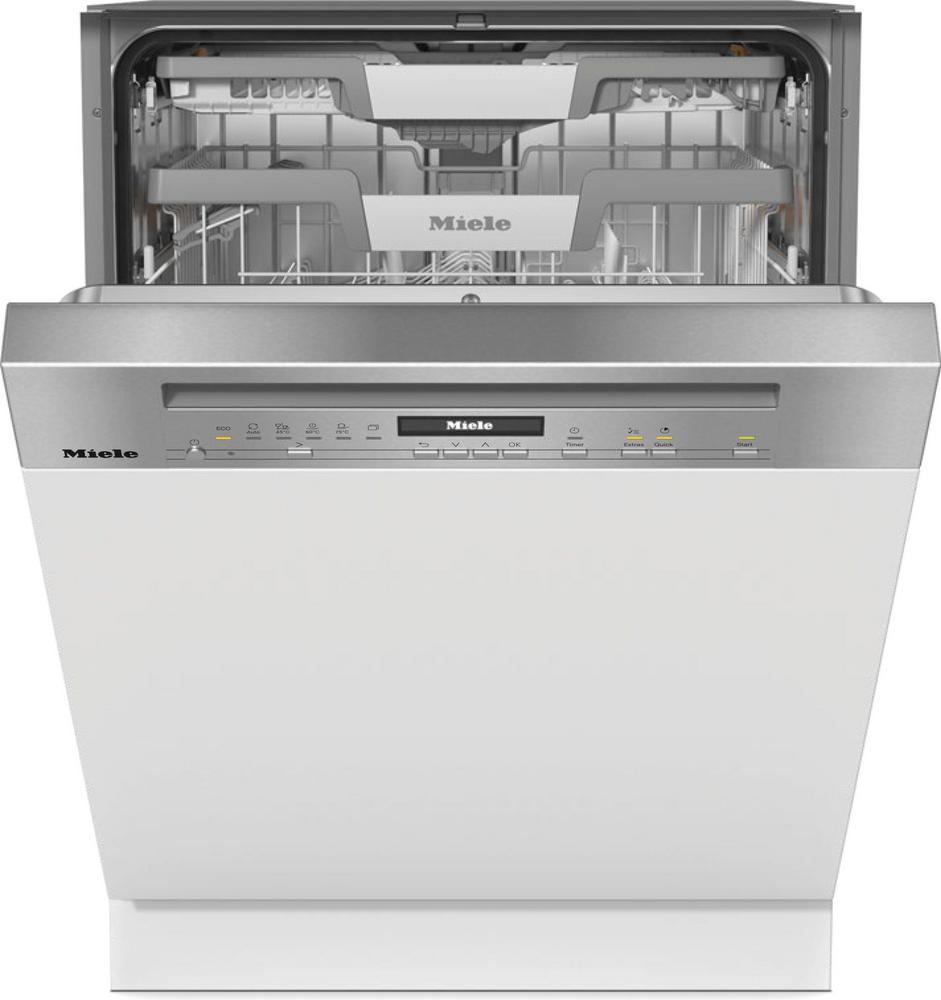
Fitting a hardworking dishwasher into a smaller UK kitchen can feel like a juggling act. That’s exactly where slimline models come into their own, and the Miele G5740SC Slimline Dishwasher in white is a strong example of how you can save space without giving up performance. In this guide, we’ll look at what living with a slimline machine is really like, how the G5740SC compares with full-size alternatives, and how to choose the right dishwasher layout for your home.
Why choose a slimline dishwasher for a smaller kitchen?
If you’re working with a compact galley kitchen, a narrow terrace or a flat with limited cabinetry, every centimetre matters. A slimline dishwasher is designed to tuck into narrower gaps than full-size models, while still giving you the convenience of automatic washing and drying.
The Miele G5740SC Slimline Dishwasher – White – C Rated is aimed squarely at these spaces. It gives you the benefits of a modern freestanding dishwasher in a slimmer body, helping you reclaim your sink from the daily pile of plates. If you want to dig into the nitty-gritty of programmes, rack layouts and user impressions, you can read our full review of the Miele G5740SC Slimline Dishwasher once you’ve finished this guide.
Understanding dishwasher sizes: slimline vs full-size
Before you fall in love with any one model, it helps to understand how slimline and full-size dishwashers differ in everyday use.
Capacity and loading flexibility
Slimline dishwashers like the G5740SC are narrower than standard machines, which naturally limits how many place settings you can fit in. This isn’t always a problem if you run a cycle once a day and don’t let crockery pile up, but it’s something to keep in mind if you host big Sunday roasts.
By contrast, full-size models such as the Miele G5132 SC Full Size Dishwasher or the Miele G5632 SC WH Full Size Dishwasher are designed to swallow bigger pots, roasting tins and more place settings per cycle. Families who cook from scratch most days often find that extra capacity worthwhile.
Who is a slimline dishwasher best for?
- Singles or couples in flats and smaller homes
- Households with limited under-counter space
- Kitchens where a washing machine or tumble dryer already claims a full-size slot
- People who prefer to run lighter daily loads instead of a big weekly clear-out
If that sounds like you, a space-saving model such as the Miele G5740SC slimline can feel like a huge upgrade in day-to-day convenience without asking you to redesign the kitchen.
What the Miele G5740SC Slimline is designed to offer
While this article isn’t a full product review, it’s useful to highlight what this type of machine is trying to deliver so you can decide whether it matches your priorities.
Focus on build quality and longevity
Premium slimline dishwashers typically emphasise solid construction, smooth-running racks and reliable long-term performance. The Miele G5740SC sits in that camp, targeting buyers who’d rather invest in one well-built appliance than replace a cheaper machine every few years. If you want a deeper dive into how sturdy it feels in real use, you can head over to our in-depth Miele G5740SC slimline review for more detail.
Energy rating and running costs
This slimline model carries a C rating under the current energy label scheme, which is stricter than the older A+ to A+++ system. In real-world terms, that puts it in a respectable bracket for everyday running costs, especially when used on eco programmes. If you’re upgrading from an older dishwasher, you’ll likely notice lower energy use and better water control, even if some full-size alternatives now nudge ahead on paper.
Practical everyday convenience
A modern slimline dishwasher shouldn’t feel like a compromise. Expect dedicated glass and intensive settings, automatic sensing that adapts water and temperature to how dirty the load is, and flexible racks that let you fold down tines to take on bulkier cookware. The real trick is how easily it swallows your typical mix of mugs, bowls and pans without you having to play Tetris every evening.
Comparing the Miele G5740SC with full-size alternatives
If you’re on the fence between slimline and full-size, it’s worth looking at how the G5740SC stacks up against other high-quality dishwashers that could also suit your home.
Staying with the same brand: Miele full-size options
For kitchens that can spare the width, the Miele G5132 SC Full Size Dishwasher is a natural step up in capacity. You still get a freestanding white appliance with a strong reputation for cleaning and drying, but the extra internal space makes it easier to deal with larger families or more ambitious cooking.
The Miele G5632 SC WH Full Size Dishwasher is another freestanding white model that keeps a similar design language while offering the full-width interior. If you like the idea of Miele’s build and wash quality but regularly struggle with big pots, either of these could make more sense than squeezing everything into a slimline frame.
Looking at integrated and connected alternatives
If you prefer a built-in look, the Siemens IQ-500 SN95YX02CG Wifi Connected Fully Integrated Full Size Dishwasher goes down a different route. It’s a fully integrated full-size model with a black control panel and a sliding door fixing kit, designed to sit behind a kitchen cabinet door for a clean, minimalist finish.
This Siemens option also leans into smart features like Wi-Fi connectivity. If you like the idea of checking cycle progress from your phone or tweaking settings through an app, it’s worth reading up on how connected dishwashers fit into modern kitchens.
Considering style-led designs
For homeowners who care as much about how an appliance looks as how it performs, the Smeg DFFABBL Full Size Dishwasher takes a very different visual approach. This full-size black dishwasher leans into a more retro-inspired, design-focused appearance that can become a focal point rather than blending into the background.
Compared with the understated white finish of the Miele G5740SC, a boldly styled dishwasher like the Smeg is more of a statement piece. It suits kitchens where the appliance is on show and where you want it to echo other design-led touches in the room.
How to measure up and plan your dishwasher space
Once you’ve narrowed down the type and size of dishwasher you want, careful measuring makes installation much simpler.
Key measurements to take
- Width: Check the gap between your cabinets or existing appliances. Slimline dishwashers are narrower than full-size models, but you still need to allow for a little wiggle room.
- Height: Measure from the floor to the underside of your worktop, especially if your flooring has been raised since the kitchen was first fitted.
- Depth: Consider both cabinet depth and how far the appliance door will protrude when open.
- Door swing: Make sure nearby cupboards, radiators or doorways won’t clash with the dishwasher door or block your access to the racks.
It’s a good idea to sketch your kitchen layout and note down water and waste pipe locations. This makes it easier to see whether a slimline model like the Miele G5740SC will slide into an awkward corner, or whether minor plumbing tweaks might give you the freedom to consider full-size alternatives.
Making the most of a slimline dishwasher
Whichever model you choose, using a slimline dishwasher effectively is about smart loading and choosing the right programmes for your routine.
Smart loading tips
- Angle plates and bowls so water can run off easily rather than pooling.
- Avoid nesting spoons and stacking plastic tubs tightly together, as this can block the spray.
- Use the top rack for cups, glasses and smaller bowls; the bottom for plates, pans and larger items.
- Take advantage of adjustable elements – fold-down tines, knife racks and removable cutlery baskets – to fit tricky cookware.
With a slimline interior, it’s particularly important not to overfill the dishwasher. Giving water and detergent room to circulate usually delivers better results than squeezing one more plate in.
Choosing the right cycles
Most modern dishwashers, including the Miele G5740SC, offer a mix of eco, intensive and quick programmes. As a rule of thumb:
- Eco cycles are best for everyday mixed loads and lowest running costs.
- Intensive cycles suit heavily soiled pots, baked-on trays and very dirty crockery.
- Quick or express programmes work well for lightly soiled dishes or when you’re in a hurry, but may use more water and energy.
Getting to know these options can make a notable difference to how satisfied you are with a slimline machine. It’s worth experimenting for a week or two until you find the routines that suit your household best.
Keeping your dishwasher clean and efficient
Regular maintenance doesn’t need to be complicated, but it does help your dishwasher run more quietly, clean more thoroughly and last longer.
Weekly and monthly tasks
- Rinse the filter: Remove food debris and rinse under the tap to maintain good water flow.
- Wipe the door seals: A quick clean with a damp cloth helps prevent mould and odours.
- Run a hot maintenance cycle: Use a dishwasher cleaner or a dedicated hygiene programme once a month to clear grease and limescale.
- Check spray arms: Make sure the holes are clear; a cocktail stick can dislodge any trapped seeds or grains.
In hard water areas, it’s also worth checking your salt and rinse aid settings. Premium machines tend to give you fine control over these, helping minimise limescale build-up on heating elements and cloudiness on glassware.
Balancing style, features and budget
There’s no single “best” dishwasher, only the one that best fits your kitchen, habits and budget. The Miele G5740SC Slimline Dishwasher in white is aimed at buyers who need a narrower footprint but still want the reassuring feel of a premium appliance. It will particularly suit smaller UK homes where space is tight but expectations for cleaning performance are high.
If you have room for a larger machine and you like the idea of staying with the same brand family, it’s well worth looking at full-size options like the Miele G5132 SC and Miele G5632 SC WH. Those who favour smart-home integration and a built-in look might prefer the Siemens IQ-500 SN95YX02CG, while design-conscious buyers could be drawn to the Smeg DFFABBL in black.
Next steps: choosing with confidence
Picking a dishwasher is about more than a single spec or feature list. Start by being honest about your space, the size of your household and how often you’ll realistically run a wash. From there, decide whether a compact premium model like the Miele G5740SC slimline or a larger full-size alternative will fit better into everyday life.
When you’re ready to look at the detail – from loading diagrams and programme lists to long-term ownership impressions – you can read our full review of the Miele G5740SC Slimline Dishwasher and compare it with the other models linked throughout this guide. With the right information to hand, you’ll be able to choose a dishwasher that quietly does its job for years, letting you get on with more enjoyable parts of your day.